| | |
0020358
|
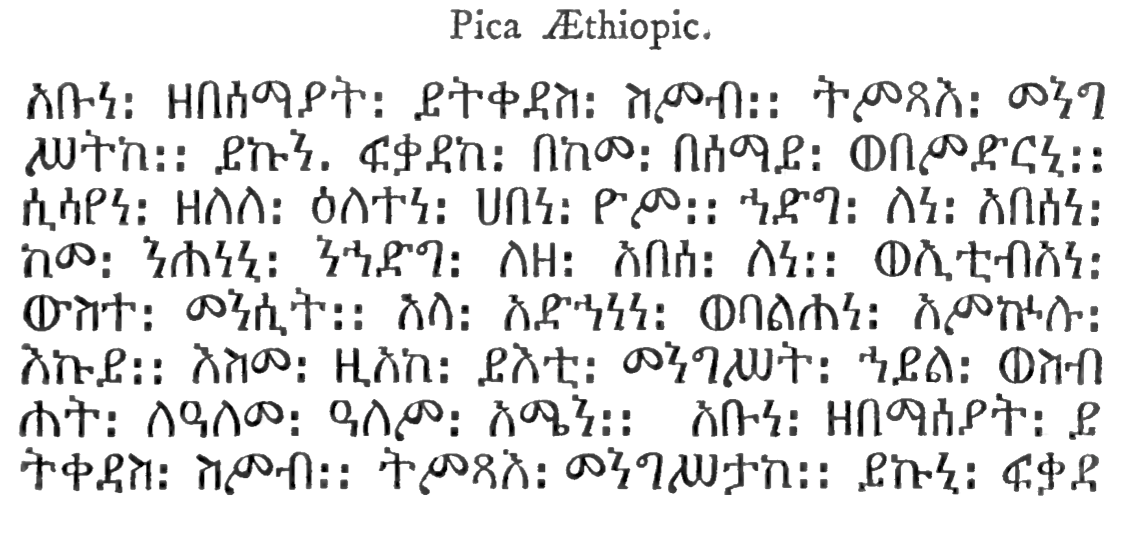
An Ethiopic font archive: A1-Desta, A1-Kidan, A1-Qelem, A1-Tesfa, A2-Desta, A2-Kidan, A2-Qelem, A2-Tesfa, Addis-One, Addis-Two, AddisProOne, AddisProTwo, Ethiopia-Jiret-Set-I, Ethiopia-Jiret-Set-II, Ethiopia-Jiret, GF-Zemen-Primary, GF-Zemen-Secondary, GF-Zemen-Unicode, GF-Zemen2K-Ahadu, GF-Zemen2K-Kileitu, GF-Zemen2K-Selestu, GS-GeezMahtemUnicode, Ge'ez-1-Normal, Ge'ez-1-Numbers-Normal, Ge'ez-2-Normal, Ge'ez-3-Normal, Geez-Unicode, GeezA, GeezB, GeezDemo, GeezNet, GeezSindeA, GeezSindeB, GeezTypeNet, VG-Geez-Numbers, VG2-Agazian-Black, VG2-Main, VG2-Title, VG2000-Agazian-Black, VG2000-Main, Visual-Geez-Unicode-Agazian, Visual-Geez-Unicode, efonts. [Google]
[More] ⦿
|
A12N
|
Mailing list for Africanization. Issues about African fonts are discussed here. [Google]
[More] ⦿
|
ABB
|
Designers of the Open Font Library Ethiopian font Macro Ge'ez (2007). [Google]
[More] ⦿
|
Abbas Alamnehe
[Senamirmir Projects]
|
[More] ⦿
|
Aberra Molla
[Ethiopic.com]
|
[More] ⦿
|
ACIS Consulting
|
Creators and vendors of an Ethiopic text family, HahuLite: "HahuLite is a program that runs on an IBM PC (or compatibles) that has Windows 95. This program enables you to write in Tigrigna and other languages that use the Geez alphabet, directly from your PC keyboard without any changes or additions to your existing Windows programs!" ACIS Consulting is based in Toronto. [Google]
[More] ⦿
|
Ade Leye
|
Lagos, Nigeria-based designer of the handcrafted typeface Finito (2015). [Google]
[More] ⦿
|
Adebowale Adegoke
|
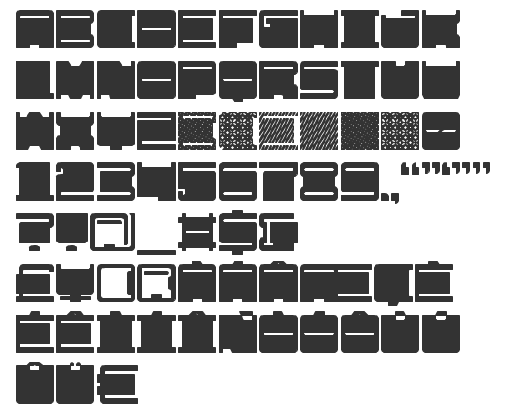
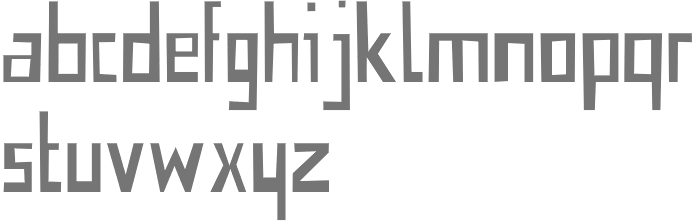
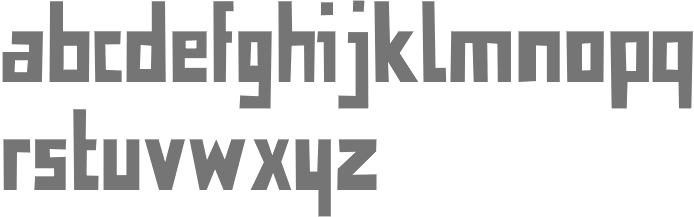
Lagos, Nigeria-based designer in 2020 of Business Icons and Masegfo (a free squarish typeface). [Google]
[More] ⦿
|
Adinkra Symbols
|
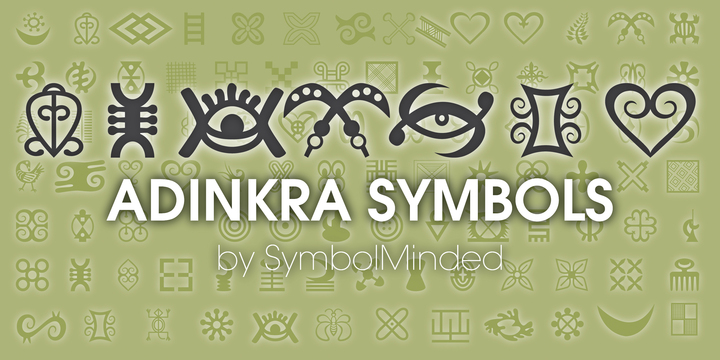
Symbology from the Asante people of Ghana and the Ivory Coast. Waiting to be made into a font! Alternate URL. [Google]
[More] ⦿
|
Adrien Midzic

|
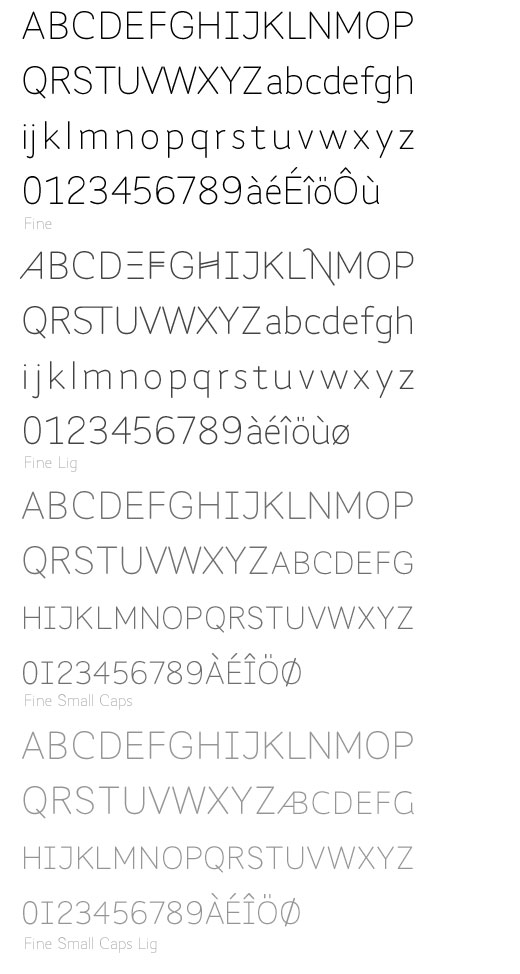
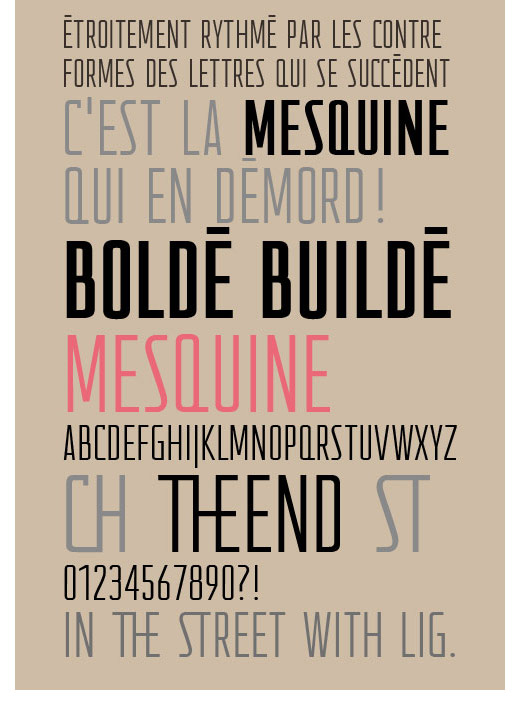
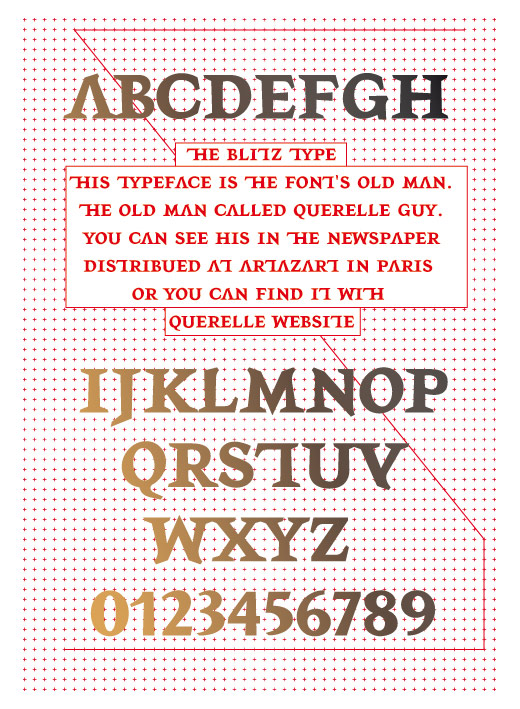
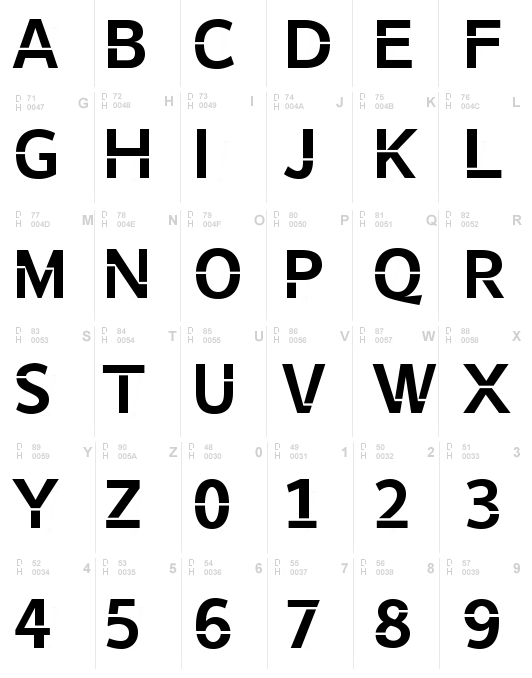
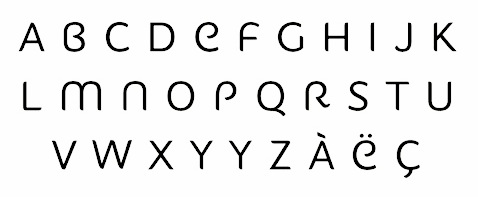
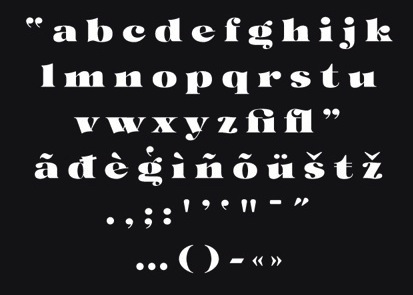
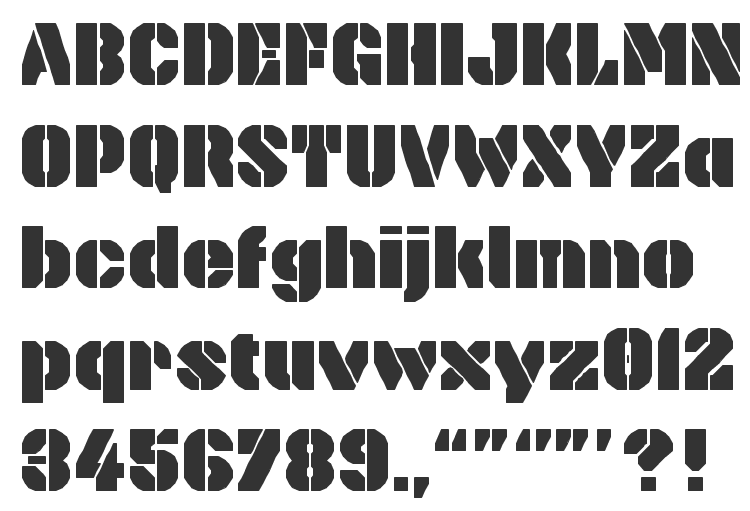
 Fatnobrain was Adrien Midzic's design studio in Paris. Born in 1982, he co-founded Pizza Typefaces with Luc Borho in 2018. Midzic designed these typefaces or type families: Fine (lineal), Blokus (free pixel font, 2009), Cimen (strong sans, designed for Smacl Entraide), Mesquine (lineal), Blitz, Cucha, Stencil Reverse, Huit (2009, a gorgeous didone headline face), Stenha (stencil).
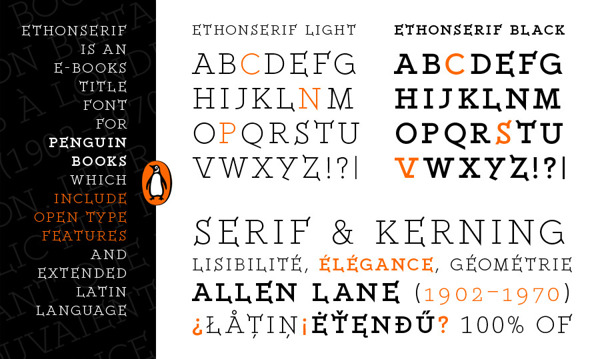
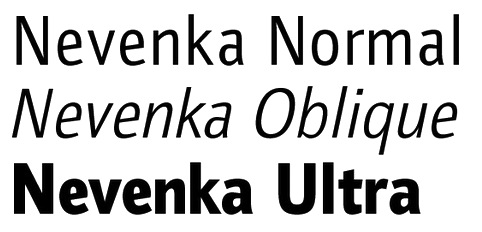
 Fonts made in 2010: The ETH family (art deco sans). Custom typefaces by Midzic: Aquitaine (2013, for Région Aquitaine), Nilka (2013, for his personal identity), No End (2013, a fat didone), Ethon Serif (2013, a perked up serif typeface for Penguin Books), Kasai Est (2011, for the Congo-based Kasai Est Magazine), Festival De Film Documentaire (2011), Nevenka (2011, condensed sans). In 2014, Adrien Midzic, Jason Vandenberg, Jérémie Hornus, Julien Priez and Alisa Nowak co-designed the creamy script Vanilla FY. It was renamed Vanille FY after a few days. Still in 2014, Adrien Midzic, Jérémie Hornus and Alisa Nowak co-designed the very humanist sans family Saya FY and Saya Semisans FY. Adrien Midzic and Joana Correia co-designed Saya Serif FY (2015). At the free font cooperative Velvetyne, he published the sans typeface Lack (2014). In 2015, he made the 3-style sans typeface Suber for an art fair in Paris. The roman transitional typeface Bota Serif (2015), which was inspired by Cochin (designed by Charles Peignot in 1912) is a custom font designed for Hotel des ventes de Poitiers. In 2017, it was finally released for retail. In 2016, Adrien designed the bold titling typeface Debeo and the modern condensed Latin/Arabic typeface 29LT Adir (with Naji El Mir; at 29 Letters). In 2017, he published the piano key typeface Mixal, which became a large experiment on variable fonts and is free for everyone. Typefaces from 2018: Kern, Kern Office (a sans with some Futura features), Forno (sans), VTF Lack (a free single weight monoline geometric sans for Latin, Greek and Cyrillic, published by Velvetyne), Metal (an all caps multi-width variable font originally designed for marché Dauphine), Orelo (a 120-style high-contrast fashion mag font family; +Orelo Hangul, 2020). Typefaces from 2019: Ultra Solar (experimental), 1871 Mane (a custom sans typeface), Wasa (a tense sans in seven styles), Shrill, Gangster Grotesk (free), Stupid (a hacker / hipster font), Kern (geometric sans). Typefaces from 2020: Shreck Issue (very tall and ultra-condensed), Metal (brutalist), Version ACT (a two-axis variable font), Debeo (a heavy sans), Dozza (a hybrid family named after ITC Mendoza by Jose Mendoza Almeida), XMX (experimental). Typefaces from 2021: Campingo (a roundish informal typeface inspired by camping and outdoor life), Bota (with Ines Davodeau: first designed for Boissnot&Tailliez, Bota is a modern interpretation of Georges Peignot's Cochin (2012)), Pleasure (hipsterism pushed to the fringe of addiction), Model Standard (ModelStandard Mono, ModelStandard SemiMono, ModelStandard Sans). Dafont link. Klingspor link. Behance link. Another Behance link. Hellofont link. Velvetyne link. [Google]
[MyFonts]
[More] ⦿
|
Afotey Clement Nii Odai
[Vikers Junior (or: VType, or: Rerd Systems)]
|
[MyFonts]
[More] ⦿
|
African Design Matters
[Simon Charwey]
|
Type designer specializing in font support for African scripts and African Latin-extended projects who has an MFA from the School of Art at Yale University. Creative director at Ubani and African Design Matters. [Google]
[More] ⦿
|
African Drum Rhythms
[Lennart Hallström]
|
Free Djembe truetype font for Djembe drum music notation. By Lennart Hallström from Stockholm. [Google]
[More] ⦿
|
African Languages
|
A list of links for African languages south of the Sahara. [Google]
[More] ⦿
|
Afrikan Alphabets
[Saki Mafundikwa]
|
Saki Mafundikwa (Harare, Zimbabwe) is director of the Zimbabwe Institute of Vigital Arts (ZIVA). Author of Afrikan Alphabets, the story of writing in Afrika (Mark Batty Publ., 2003). In this book, he covers all south of the Sahara, and divides things as follows:
A. Liberia and Sierra Leone:
a. The Vai syllabary---212 characters 1883
b. The Mende syllabary---195 characters 1921
c. The Loma syllabary---185 characters 1930
d. The Kpelle syllabary---88 characters 1930
e. The Bassa 'Vah' alphabet---30 characters, 5 diacritics 1920
f. The Gola alphabet---30 characters 1930
B. Guinea, Senegal and Mali,
a. The Mandingo alphabet---25 characters, 8 diacritics 1950
b. Bambara "Ma-sa-ba" script 1930
c. The Wolof alphabet---25 characters, 7 diacritics 1960
d. The Fula (Dita) alphabet---39 characters 1958
e. The Fula (Ba) alphabet
f. The Gerze script
C. Cote d'Ivoire
a. The Bete syllabary---401 characters 1956
b. The Guro script
D. Cameroon and Nigeria
a. The Bamum syllabary---80 characters 1895
b. The Bagam or Eghap syllabary---100 plus characters 1917
c. The Ibibio-Efik alphabet---34 characters 1930
d. The Yoruba holy alphabet
e. Nsibidi
f. A syllabary found among the Djuka of Suriname
[Google]
[More] ⦿
|
Afronsu Afronsu
[Rabisco (was: AfroBreak)]
|
[More] ⦿
|
Afro-Roman
|
A roman font with diacritics for many African languages. As always, very expensive at Linguist's Software. [Google]
[More] ⦿
|
AKOFAType
[Kwesi A. Amuti]
|
Located in Powder Springs, GA, AKOFAType has published the following dingbats with symbology from Ghana: Adinkra Calabash, Adinkra FineFine, Adinkra WantaWanta (2007). The designer is Kwesi A. Amuti (b. East Lansing, MI, 1974). He is working on Steady Rockin (a display face) and Fat Head. In 2013, he published Ehmbeecee, a typeface with frames. In 2014, he made the elliptical sans typeface Cabeza Grossa and the snowflake typeface Flurry. Creative Market link. Typedia link. Klingspor link. [Google]
[MyFonts]
[More] ⦿
|
Alan M. Stanier
|
Alan M. Stanier from Essex University (UK) has created the following metafonts: ams1, cherokee, cypriote, dancers (the "Dancing Men" code of Conan Doyle), estrangelo (ancient Syriac language), georgian, goblin, iching, itgeorgian, ogham (found on ancient Irish and pictish carvings), osmanian (twentieth-century font used in Somalia), roughogham, shavian, southarabian (for various languages circa 1500BC), ugaritic (ancient cuneiform alphabet). More direct access. [Google]
[More] ⦿
|
Alan Wood's Unicode Resources
|
Great Unicode jump page. Has a page showing all fonts that support the various Unicode ranges. Check, for example, his Shavian Unicode sub-page. Unicode font utilities. Some font downloads, including the Unicode font MPH Damase (2005, Mark Williamson). [Google]
[More] ⦿
|
Alexander Bielovich
|
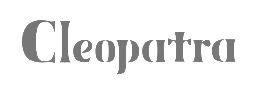 Graphic designer at Gorilla Creative Media in sunny Durban, South Africa. Creator of the decorative typefaces Obelisk MXVV (2015, stone carving emulation) and Cleopatra (2013). Behance link. Dafont link. [Google]
[More] ⦿
Graphic designer at Gorilla Creative Media in sunny Durban, South Africa. Creator of the decorative typefaces Obelisk MXVV (2015, stone carving emulation) and Cleopatra (2013). Behance link. Dafont link. [Google]
[More] ⦿
|
Alexandre Claro
|
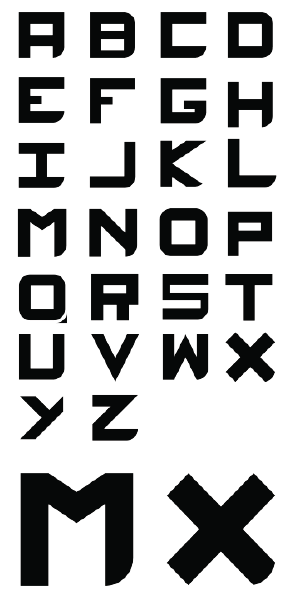
Luanda, Angola-based designer originally from Aveiro, Portugal, who created the connect-the-dots typeface Joao Marinho (2013), the techno typeface Jotanis (2013), the modular typeface MX (2013), and the hexagonal industrial display typeface AKJ (2013). [Google]
[More] ⦿
|
Alexandre Marc
|
French youngster (b. 1994) who created the simple hand-drawn typeface Newjosh (2012) and the grungy typeface Smoky Cloud (2012). He also made the African look caps typeface Tribalistik Tatwu (2012). [Google]
[More] ⦿
|
Allen R. Walden
|
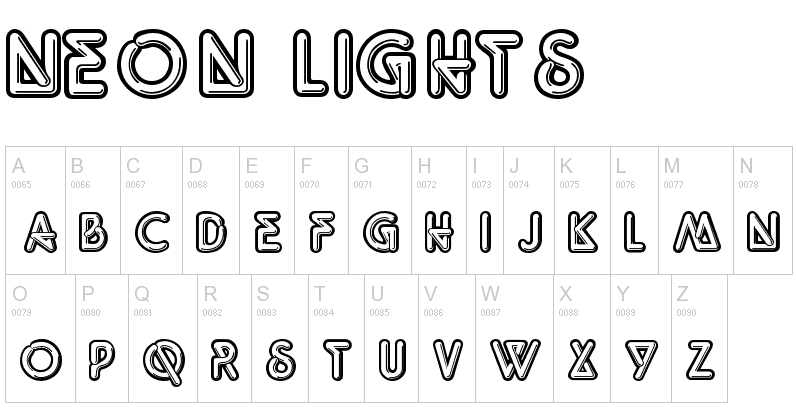
 Type designer. Not to be confused with "Walden Font", a commercial foundry run by Oliver Weiss. Dafont link. Full list of his work: African (1993, a jungle font), Amelia, Asimov, Beveled, CalculatorItalic, Checkbook (MICR-like font), CrystalItalic, FinalFrontier (1993), FinalFrontierOldStyle, FinalFrontierShipside, Goethe, Japan, Jurassic, Lansbury (1993), Neon Lights (1993, based on Quantum), NewYorker (after Rea Irvin's irvin Font for tThe NewYorker), OliviaBrush, StencilExport (1993: based on Gerhard Schwekendiek's Gesh Export, 1972), Terminator (techno).
 Lansbury is a free art nouveau typeface that mimics the font used in the TV series Murder She Wrote. The actual font used for the title of that series was URW's Art Gothic (specimen). Fletcher Gothic (1992, Casady&Greene) is another free version of it. [Google]
[More] ⦿
|
Almamoun Ahmed
|
Sudanese type designer who created the Arabic display typeface Isra (2005), which won the first prize for Arabic display type at Linotype's 1st Arabic Type Design Competition in April 2006. That typeface can be bought from Linotype. [Google]
[MyFonts]
[More] ⦿
|
Amy Dietrich
|
 American designer, b. 1967, California. Married to Ken Russell, who runs Atlantic Fonts in Camden, ME.
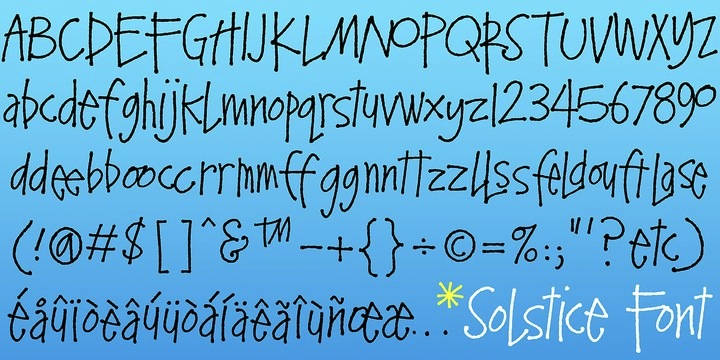
 At Atlantic Fonts, she designed the hand-printed typefaces Kinglet (2012, curly), Honey Bee (2011), Once (2010) and Clue (2010). In 2013, Amy published the playful poster typefaces Trail Map (2013) and Merci. Farmstand (2013) is a hand-printed typeface that is accompanied by the dingbat font Farmstand Goodies. Wheat (2013) is a stylish rough-edged script face. Eeeek (2013) is a Halloween dingbat typeface. Solstice (2013) is hand-printed. Typefaces from 2014: Shoebox, Reading (bouncy typeface), Lion (an African-themed typeface), Suntea (a children's book script), Fini (cartoon font), Fini Things (girly dingbats), Catbird (whimsical). Typefaces from 2015: Goby (a great children's book font with fun sea life dingbats called Goby Graphic), Laughing Gull (a fun cartoonish font), Digby (Atlantic Fonts). Typefaces from 2016: Sanderling(children's script), Dinghy (beatnik style) and Dinghybats, Storyboard (a primitve painter's font), Quince (a handcrafted typeface), Kiwi (a juice bar font accompanied by the dingbat font Kiwi Fruits). Typefaces from 2017: Meow (a children's script), Answer (handcrafted, unicase), Peapod (a textured patterned all caps typeface). Typefaces from 2018: Junglegym, Turmeric. Typefaces from 2019: Pattycake (a children's book font), Espadrille (a mixed case monoline display sans), Galavant (a cartoon font with interlocking letters), Seaglass. Typefaces from 2020: Darcy (a wonderful beatnik typeface), Parula (hand-drawn with lots of oomph due to its energetic line variations). Typefaces from 2021: MollyO (a scrapbook script), Rabbet (a fat finger font). Old URL under the name Amy Dietrich Russell. [Google]
[MyFonts]
[More] ⦿
|
Andrej von Walter
|
Cape Town, South Africa-based graphic designer who was also born in Cape Town and grew up in Namibia, Creator of the multiline typeface Reading Together (2014), which pays attention to blind people. Behance link. [Google]
[More] ⦿
|
Andrew Cunningham
|
Andrew Cunningham (Multilingual Technical Officer, Accessibility and Evaluation Unit, Vicnet, State Library of Victoria, Australia) is developing fonts for Dinka, a language of South Sudan. [Google]
[More] ⦿
|
Andrew Hart
|
 Andrew Hart is a Corona-based American digital photographer (b. 1988), who runs a small free font archive. Another archive of his. Dafont link. Another URL. Yet another URL. And still another one. And another one. And one more. His later fonts refer to SickCapital.Com.
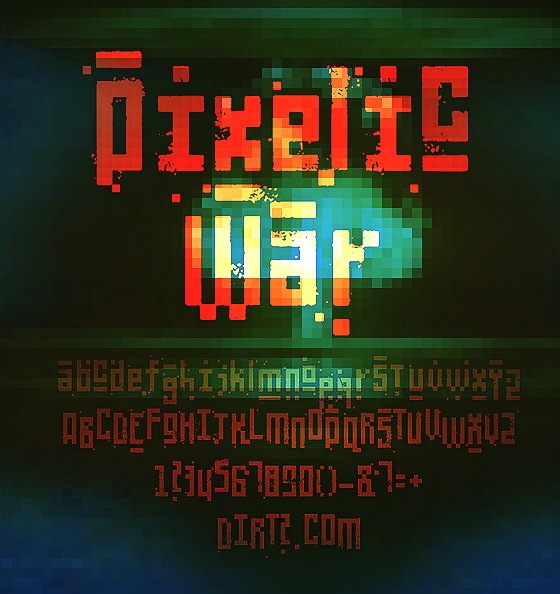
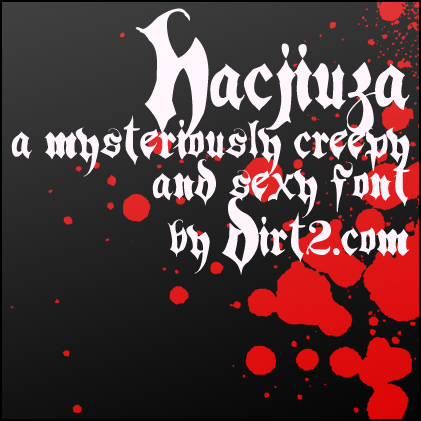
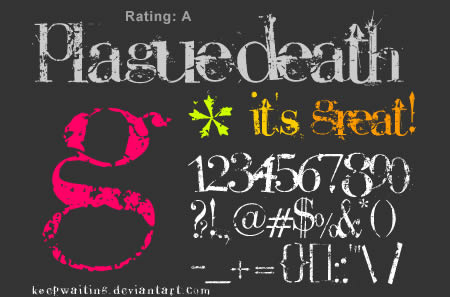
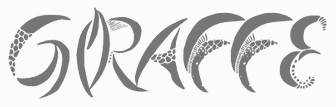
 His own fonts include Gothickella (2017, blackletter), Sailorette Tattoo (2015), Elkwood (2014, sans), Snowinter (2014, sans), Rebel Pixy (2014, tattoo script), Pride of the Young (2014, hipster style), Scribblet (2014), Tall & Slim (2014, a great tall-legged poster typeface), Tribal Threat (2014), Boldenstein (2014), Fireflies (2014), Rio Frescata (2014, curly), Alpaca Scarlett (2014), Alpaca Solidify (2014), Vanity Script (2014: a vampire script), SC Gretchin and Timmy (2013), Fun In The Jungle (2013), Pixelic War (2013), A Glitch In Time (2013), Giraffe And Co (2013, an African-themed typeface), Chameleon Dreams (2013: a fantastic wacky party typeface), Angelic Serif (2012), Angelic Peace (2012), Pyrite Script (2012), Pyrite Crypt (2012), Body Piercing And Chains (2012), Love til Killed (2012), Hollywood Capital (2012), Donaldo Regrecka (2012), Deadly Black Chain (2012), Dirt2 Copperbolt (2012, grungy copperplate), Truskey (2011, grunge), Sick Capital Kingston (2011), Full Moon On (2011), Grafitik Riot (2011, graffiti face), Electric Panda (2011), Last Draft (2011, grunge typewriter), CaliforniabyDirt2 (2010), JusticebyDirt2 (2010), SC Gum Kids (2010), SC Tinas Baby Shower (2010), Little Ryan (2010, handwriting), Sick Capital Vice (2010), Star Avenue (2009), Cute Tattoo (2009), DuerTWO (2009), Dirt2Stickler (2009), Ithornët (2009, grungy blackletter), NoXWay (2009, graffiti grunge), Skulls and Splatters (2009), Hacjiuza (2009, hand-drawn blackletter; +Dirty), Popstar Autograph (2009, comic book style script), The Quickest Shift (2009, curly script), DuerTwoo (2009, bloody horror font), Malgecito (2009, grunge), Ithornët (2009, grungy medieval pirate font), Little Bliss (2009), Loyal Fame (2009, curly script), Angelic War (2009, grunge), Soulstalker (2009, grungy blackletter), Kings of Pacifica (2009, ransom note font), GanixApec (2009), GoodPeace (2009), KatyBerry (2009), OffTheDrugs (2009), ThinFranq (2009), WILDAFRICA (2009, African-theme multiline face), St. Andrew (2009, a spray type font), Hawaii Lover (2009, grunge calligraphic script), Aristotle Punk (2009, grunge), Juicy Hunt (2009, grunge), Dead Hardy (2009, Victorian), Kate Perry (2009, fifties script), Kate Berry (2009, fifties script), Vloderstone (2009, hairline slab serif), Good Peace, Off The Drugs, Thin Franq (2009, hairline), Ganix Apec (2009, sans), Jailbox1 (2009, grunge), Blast Beat (2008), Ghosttown-BC (2008, Western style), Dead Secretary (2008, grunge), DIRT2-DEATH (2008, grunge), Robot Head (2008), Alpaca 54 (2007, grunge), Hawaii Killer (2007, Coca Cola grunge), Splinter2 (2007, grunge based on Franklin Gothic), Everyday Ghost (2007, grunge), Plague Death (2006, grunge), SEXtalk69 (2007), Screamz1 (2007). [Google]
[More] ⦿
|
Anton Scholtz
[Design Africa]
|
[More] ⦿
|
Antonia Schneider
[Yoruba Fonts]
|
[More] ⦿
|
Antonio J. Morata
|
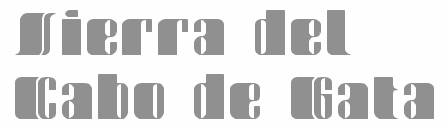 Antonio J. Morata (Almeria, Spain, b. 1968) is a FontStructor (aka elmoyenique) who used FontStruct to make several modular typefaces starting in 2010. The typeface names start with z. We list them alphabetically:
 - Je suiz Charlie (2015).
- zabadoo eYe FS (2013, bilined), zadartopia eYeFS (2014), zadora-q-eYeFS (pixelized), Zaffron EyeFS (2013), zaftig eYe FS (2013), zage eYe FS (2013), zagreb-eYeFS (2009), zagzig eYe FS (2012), zagzig Linear eYe FS (2013), zahoree eYeFS (2012, dot matrix), Zakapunt eYeFS (2010), Zapatiesta EyeFS (2013, a cut paper font), Zakyra eYe-FS (2010, a western font modeled after Kyra 1 my Michel Troy), zalamera eYeFS (2011), zalooneYeFS (Western face), zamantha eYeFS (2012), zame-eYeFS, Zamzibar eYeFS (2012, octagonal), zandal eYe FS (2013, +2b), zandalo eYe FS (2014), zanexos eYe FS (2015, kitchen tile face), zanzibar-eYeFS, zancle-eYeFS, zancle-rev-eYeFS, zanadalo eYe FS (2014, Tuscan), Zangona eYe FS (2013), zanity eYe FS (2012), zanta eYe FS (2013), zapphire eYeFS (2012, kitchen tile face), zapristi-eYeFS (outlined and oblique), zarcs-eYeFS, zarina-eYeFS (2011, blackletter), zaturdaynote eYe FS (2014: dot matrix font), zaved eYeFS (2012), zaxet eYeFS (2014, Western), zayre-eYeFS, zaza eYeFS (2011).
- zblackmagic-eYeFS (2011, Based on the Tomeri Nu-No font by Nuria González and Noël Nanton), zbrickfont eYeFS.
- Zcare Myself EyeFS (2013), zcell-eYeFS (2010, fat counterless, and outlined), zcell rnd eYeFS (2012), zchwarze eYe FS (2014), zchwarze deco eYeFS (2014), zcloudy eYeFS (2012), zcout eYeFS (2010, a mini-stencilled art deco face), zcrackers eYe/FS (fa, counterless and starred), zcratched eYe FS (2014).
- zdurer (blackletter).
- zeagull eYe FS (2014), zebralbox eYeFS (2013), zebralkey EyeFS (2013), zeelandia-eYeFS (horizontally striped), zeenvoudige eYeFS (2011), zefaleas eYeFS (2013), zegovia eYeFS (2012), zelada eYeFS (2011), Zelectra eYeFS (2013), zelemin eYe FS (2013), zelfvolution eYeFS (stencil), zenda-eYeFS, zeneka eYe FS (2013), zenequalia eYe FS (2014), zenix-eYeFS (2011), zenoid eYe FS (2012), zenon eYeFS (2011, horizontal stripes), zenovia-eYeFS (2011), zentenial eYeFS (2015), Zenzilla EyeFS> (2013), zeres eYeFS (2011), zerone eYeFS (2011, a modular piano key face), Zertera eYeFS (2015, textured), zetentas-eYeFS (disco light face; +Light), zeventy-eYeFS (2011), zextile-eYeFS.
- zfraktur eYe FS (2011, blackletter).
- Zhadowlite eYeFS (2014), zhadows eYe/FS (shadow face), zhalloween eYe/FS (pixel face), zhapp3y-eYeFS (alphading), zhappy eYeFS (2011, fat art deco), zhappy5th eYeFS (2013), Zharkonada eYeFS (2014), zharona-eYeFS (2010).
- ziabelle-eYeFS (shadow face), ziberia eYeFS (2011: extended to a full-fledged commercial typeface, KD Ziberia, by Zhalgas Kassymkulov, in 2021), zibernia blk eYe/FS (2011), zibernia blk x thal eYe/FS (2011), zicrets eYeFS (2013), Zilken eYe FS (2013), zilverstone eYeFS (2011, blackletter), zimbawee-eYeFS, zimbelino eYeFS (2013), zimonart eYe FS (2014), zinabrium eYeFS (2013), zincline eYeFS (2014), zinders eYeFS (2012), zinergy-eYeFS (3d face), zinergy blk eYe/FS, zinfont eYeFS, zinnamon eYeFS (2011), zinus eYeFS (2013), zirconite eYeFS (2011, slab face), zircus eYeFS (2010), zirius eYeFS (2011).
- Zkalpel eYe FS, Zkalpelbar eYe FS (2014, blackletter), zkandia-eYeFS (stencil), zkinlight eYeFS (2013).
- zlabyrinths eYeFS (2011, improved by fanstruct1 in zlabyrinths eYeFS v2, 2012), zlash eYe FS (2011, a keyhole face), zloty eYeFS (2011, art deco face).
- zmorse xDad eYe FS (2011, a texture / African typeface based on morse code).
- znederland eYe FS (2012), znipped eYe FS (2012, heavy angular face).
- zpanish caravan eYe/FS (2011, a bullet hole face), zpeedo eYe FS (2013, race car font), zpido eYeFS (2012), zpixel eYeFS (2011), zporty eYeFS (2012, textured face).
- zquadrata eYeFS (2010), zquared-eYeFS.
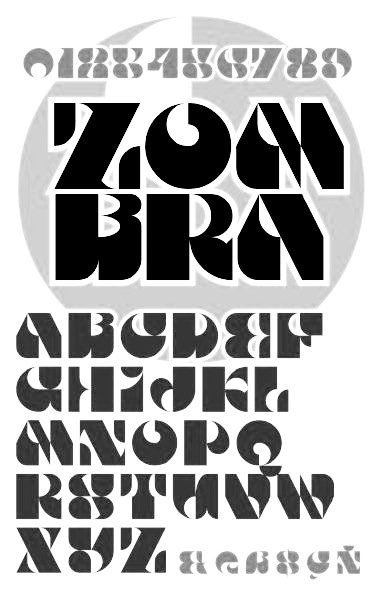
- Zocratic EyeFS (2013, kitchen tile face), Zocraticrux eYeFS (2014), Zoftly 70 EyeFS (2013, LED font), Zombra eYeFS (2013, influenced by Orthmar Motter's Motter Ombra, 1973), zometimes eYeFS (2014), zonatta eYeFS (2013), zonora eYeFS (2011, a Far West face), zooctogonal eYeFS (2013), zoolphabet eYeFS (2010, animal dingbats), zorongo eYeFS (2014: inspired by the MuirMcneil poster lettering for Braun systems), Zoulsister Plus eYe FS (2016), zoutheast eYe FS (2012, Western), zouthwest eYe FS (2012, Western), zoutland eYeFS (2011, octagonal), zouvenir 2U eYeFS (2013), zovietztyle eYeFS (2013, constructivist), zozial-eYeFS, zozial-sqrd-eYeFS.
- Realta2 (2013), zreeways eYe FS (2014: multilined face), zround eYeFS (2010).
- Ztardust eYe FS (2014),
 ztarsky-eYeFS (+Round: art deco ultra black), ztainless eYe FS (2014), ztamina eYe FS (2014: shaded), ztator eYeFS (2012), ztay eYeFS (a condensed almost art nouveau face), Zteamboat EyeFS (2013), ztedelijk-Crouwel eYe/FS (2011, based on Wim Crouwel's stedelijk Museum poster), zteefunny eYe FS (2011, ultra fat keyhole face; + zteefunny dm eYeFS), ztencils eYeFS (2011, army stencil face), ztires-eYeFS (2011, texture face), ztoasts eYeFS (2013), ztonewall eYeFS (2013), ztorm eYeFS (2013, blackletter), ztrands eYeFS (2011), ztrange eYeFS (2010), ztrange blk eYeFS (2011), Ztrangelovedoc (2016), Ztratos eYe FS (2014), ztream eYeFS (2011), ztrong eYeFS (2013, sci-fi), ztrontiumdog eYe FS (2013, fat stencil), ztructures eYe FS (2012, crosshaired), zturdy-eYeFS (ultra-fat), ztylo eYeFS (2011, art deco). ztarsky-eYeFS (+Round: art deco ultra black), ztainless eYe FS (2014), ztamina eYe FS (2014: shaded), ztator eYeFS (2012), ztay eYeFS (a condensed almost art nouveau face), Zteamboat EyeFS (2013), ztedelijk-Crouwel eYe/FS (2011, based on Wim Crouwel's stedelijk Museum poster), zteefunny eYe FS (2011, ultra fat keyhole face; + zteefunny dm eYeFS), ztencils eYeFS (2011, army stencil face), ztires-eYeFS (2011, texture face), ztoasts eYeFS (2013), ztonewall eYeFS (2013), ztorm eYeFS (2013, blackletter), ztrands eYeFS (2011), ztrange eYeFS (2010), ztrange blk eYeFS (2011), Ztrangelovedoc (2016), Ztratos eYe FS (2014), ztream eYeFS (2011), ztrong eYeFS (2013, sci-fi), ztrontiumdog eYe FS (2013, fat stencil), ztructures eYe FS (2012, crosshaired), zturdy-eYeFS (ultra-fat), ztylo eYeFS (2011, art deco). - zumbaya eYeFS (2014), zummertime eYe FS (2012), zunivetica eYe FS (2013), zunset eYeFS (2012), Zuspiria eYe FS (2015), zuzanna eYeFS (2013, Western, Italian).
- zweater eYeFS (2011, knitted look), zweet eYeFS (2013), zwimming eYeFS (2011), zwire blk eYeFS (an LED face), zwiss-eYeFS.
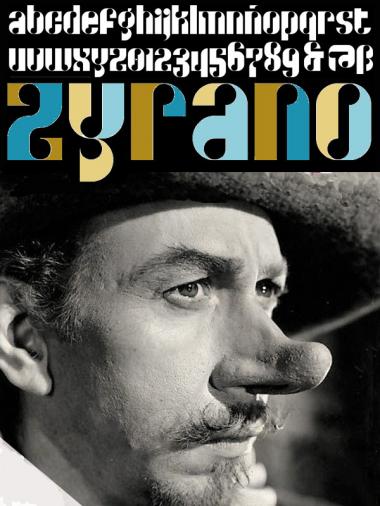
- zybaris eYeFS (2012), zybona-eYeFS (athletic lettering), zychotropic eYeFS (2013, an Italian Western face), zydonia eYeFS (2012), zykedelia-eYeFS (2012), zylone-eYeFS (2011), zylvania eYeFS (2013, retro automotive script), zynopsis eYe FS (2013), zyrano eYeFS (2013), zyrens eYeFS (2013), Zyrup Eye FS (2013).
Dafont link. [Google]
[MyFonts]
[More] ⦿
|
Armando Nhabanga
|
Maputo, Mozambique-based designer (b. 2001) of the free foliate sans typeface [Google]
[More] ⦿
|
ASE
|
Outfit that created ESU, a font with Yoruba characters. [Google]
[More] ⦿
|
Ato Yigezu Bisrat
|
Born and died in Addis Ababa, 1926-1979. Educator (at Addis Ababa University), author, and calligrapher, who was frequently called upon by Emperor Haile Selassie for calligraphy and lettering. His Gothic Goffer (blackletter-style) characters were extended into a font by Abbas Alamnehe (2006). [Google]
[More] ⦿
|
Attila Zigó
[Bumbayo Font Fabrik]
|
 [More] ⦿
|
Audry Kitoko Makelele
[Aukim Visuel]
|
[MyFonts]
[More] ⦿
|
Aukim Visuel
[Audry Kitoko Makelele]
|
 Graduate of the Academy of Fine Arts in Kinshasa, b. 1986. Kinshasa, Congo-based designer of the modular typeface Kitoko (2017) and Matondo Pro (a 32-style organic monolinear sans) (2018). In 2020, he published the organic sans family Kumba (Claw, Sketch, Scrawl, Sans, Expanded), the monolinear mechanical typeface families Ekela (216 styles), Ekela Circle and Ekela Round, the inline typeface Lakisa Stencil and the 62-style condensed techno / elliptical typeface Bokeseni.
 Typefaces from 2021: Aukim (a 54-style sans), Nsai (a 36-style partly geometric sans), Kenga Kaya, Bilokos (a 72-style chamfered family), Bilokos Pro (72 styles; octagonal), FT Beton (octagonal, brutalist), Yemeyi (a 60-style quirky sans), Kumba (now a 36-style techno sans). Fontsquirrel link. [Google]
[MyFonts]
[More] ⦿
|
Azka Ryzki
[Vable Studio]
|
[More] ⦿
|
B. Benedicto
|
Designer based in Fortaleza, Brazil. At Type Cooper 2020, Benedicto developed the text typeface Oniresii with diacritics for the Yoruba language wh=hich is spoken in Nigeria. [Google]
[More] ⦿
|
Bambara
|
The Bambara "Ma-sa-ba" syllabary was devised by Woyo Couloubayi in the Kaarta region of Mali in 1930 and has a total of 123 characters. [Google]
[More] ⦿
|
Bamum
|
From Cameroon: this script had originally 466 pictographic and ideographic symbols and was devised by sultan Ibrahim Njoya king of the Bamoun. These are interesting characters, and should be fun to design in a font. [Google]
[More] ⦿
|
Bassa font
|
Free font Bassa by the Bassa Vah Association, 1998, at Varnie Karmo's home page. Bassa is used in Liberia. [Google]
[More] ⦿
|
Bassa (Kwa)
|
Bassa font which used to be at Dr. Berlin's archive. [Google]
[More] ⦿
|
Baynham Goredema
|
Johannesburg, South Africa-based designer of the pattern typeface Haus Ethnik Dingbats (2014: a collection of dingbats inspired by various ethnic patterns from Zimbabwe and modifications thereof), the blackboard bold typeface This Flag (2016) and the brushed revolution font Tajamuka Script (2016). Behance link. Dafont link. [Google]
[More] ⦿
|
Becca Hirsbrunner Spalinger
|
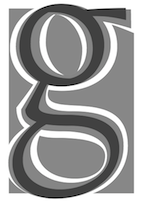 American type designer who graduated from the MATD program at the University of Reading in 2015. Her graduation typeface was Etincelle, which was designed with long ascenders and descenders to better blend with the deep swashes of a specific style of Arabic used for Ajami languages in northern Nigeria and southern Niger. In addition to Arabic, Etincelle currently includes Greek, Cyrillic, and extended Latin characters. Etincelle Arabic Bold is the first attempt at a typeface design based on handwritten manuscripts from Nigeria, in a style of writing called Rubutun Kano by the speakers of the Hausa language.
 Becca is affiliated with SIL International, where she was involved in the following projects: - Gentium. This famous free typeface supports a wide range of Latin-based alphabets and includes glyphs that correspond to all the Latin ranges of Unicode. Gentium Plus supports a wide range of Latin, Greek and Cyrillic characters. It was developed between 2003 and 2014 by J. Victor Gaultney (main designer), Annie Olsen, Iska Routamaa, and Becca Hirsbrunner. CTAN download link.
- In 2011-2012, George Nuss designed the Arabic typeface Fouta for the Guinean community. This was at the basis of the free font Harmattan (2015, Becca Hirsbrunner and Iska Routamaa at SIL International; Google Font link). SIL explains: Harmattan, named after the trade winds that blow during the winter in West Africa, is designed in a Warsh style to suit the needs of languages using the Arabic script in West Africa. The font does not cover the full Unicode Arabic repertoire. It only supports characters known to be used by languages in West Africa. This font provides a simplified rendering of Arabic script, using basic connecting glyphs but not including a wide variety of additional ligatures or contextual alternates (only the required lam-alef ligatures.) This simplified style is often preferred for clarity, especially in non-Arabic languages, but may be considered unattractive in more traditional and literate communities.
- Alkalami (2015-2017, SIL): Alkalami is designed for Arabic-based writing systems in the Kano region of Nigeria and Niger. Alkalami is the local word for the Arabic "qalam", a type of sharpened stick used for writing on wooden boards in the Kano region of Nigeria and in Niger, and what gives the style its distinct appearance. The baseline stroke is very thick and solid. This style of writing African ajami has sometimes been called Sudani Kufi or Rubutun Kano.
[Google]
[More] ⦿
|
Ben Grib
[Black Bird Foundry]
|
[More] ⦿
|
Benjamin Yang
|
In 2009, Benjamin Yang (SIL) published Vai Slant Unicode, a Unicode extension of SIL's Vai font (for the language used in Liberia). [Google]
[More] ⦿
|
Bisharat
|
African font links. Unicode tables for African fonts. Great jump page. [Google]
[More] ⦿
|
Black Bird Foundry
[Ben Grib]
|
 Ben Grib (Black Bird Foundry, and Black Bird Press, South Africa) created the Western signage typefaces Excelsior and Indiana Headline in 2015. He also made the handcrafted signage typeface Deputy Serif (2015). On Behance, we read that the foundry is associated with Chris Bushey in Bongoville, Gabon. Chris made the Victorian signage typeface Fancy Pants (or Foxtrot). They also made several great sets of icons and drawing including Animalia, Le Kitchen and Fruits. [Google]
[More] ⦿
Ben Grib (Black Bird Foundry, and Black Bird Press, South Africa) created the Western signage typefaces Excelsior and Indiana Headline in 2015. He also made the handcrafted signage typeface Deputy Serif (2015). On Behance, we read that the foundry is associated with Chris Bushey in Bongoville, Gabon. Chris made the Victorian signage typeface Fancy Pants (or Foxtrot). They also made several great sets of icons and drawing including Animalia, Le Kitchen and Fruits. [Google]
[More] ⦿
|
Black Graphic Design
|
Abuja, Nigeria-based designer of the blocky New Alphabet (2019). [Google]
[More] ⦿
|
Brana
|
Free Ethiopic software that includes the Ethiopic fonts Brana I and Brana II. [Google]
[More] ⦿
|
Brett T. Johnson
[Simeon out West Foundry]
|
[MyFonts]
[More] ⦿
|
Brian Jangima
|
 During his studies in Nairobi, Kenya, Brian Jangima created the free typeface Erster Caps (2015) and the free squarish typeface Cherrie Serif (2016). [Google]
[More] ⦿
During his studies in Nairobi, Kenya, Brian Jangima created the free typeface Erster Caps (2015) and the free squarish typeface Cherrie Serif (2016). [Google]
[More] ⦿
|
Bright Ackon-Goode
|
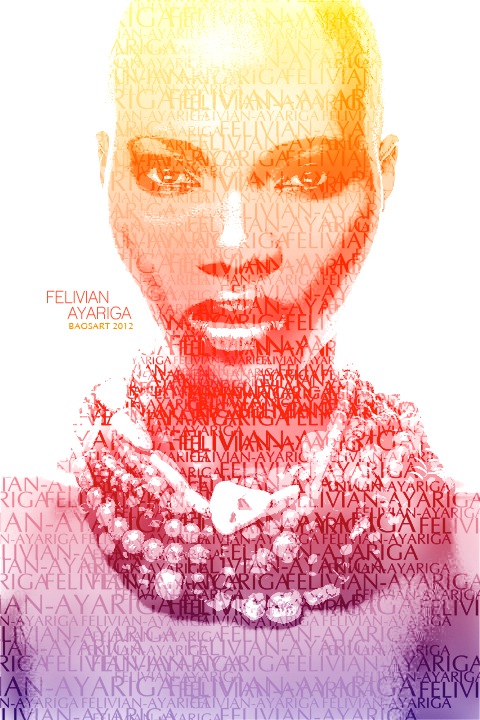
Graphic designer in Cape Coast, Ghana, who created a typographic poster in 2012 called Felman Ayariga. He is associated with Bagsart Designs, and with the University of Science and Technology in Kumasi. [Google]
[More] ⦿
|
Bumbayo Font Fabrik
[Attila Zigó]
|
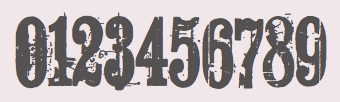 Hungarian foundry with commercial and free fonts, est. 2005 by Attila Zigó. On Deviantart, they claim to be from Rwanda. They specialize in grunge type--some of the fonts are quite gorgeous indeed. Has a fontmaking service.
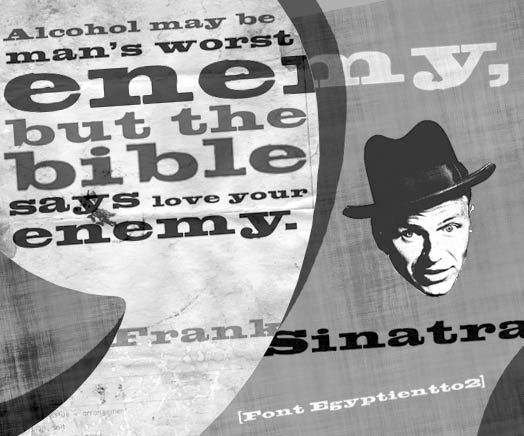
 - Free typefaces: Ruohomatto Sans (2018, what a font with leprosy would look like), Spirit Ginger (2017, grungy), Mentha Rapture (2017), Bad Skizoff (2017), Sad Kropotkin Laugh (2017), Tallierst Grustampa (2017), Baroness Kuffner (2017), FaggottPin Strada (grungy old typewriter), Crnagorszkij Buddah Orkesztar, El Tercer Hombre (2017, grungy letterpress), Burliweh Sans (2017, grunge), Wehryze Copiya (2017, grungy), Night Cola (2016), Slawterhouse Swinggang (2016), Drugstore Waltz (2016), Lost Lubbock Motels (2016, uber-grungy lettering), Amsterdrum Grotesk (2016), Bad Suabia Swing (2015, grunge), Zubajda (2014, grungy), Dioszeghiensis (2014, grungy blackletter), Mahrpedig Sans, Kinizsi Frakturetta (2012, blackletter), Ed Gein Gwilty and Ed Gein Ynnocent (2008), Miguel Sangotisch (2010, blackletter), Kopanyica Strasse (2010, grunge), Third Man (2010, grunge), Pahuenga Cass (2010, grunge), McKoy (2010, grunge), Eordeoghlakat (2010, grunge mechanical face), Santa Gravita (2010, grunge), Fibyngerowa (2010, grunge), Pahuenga Cass (2009, grunge), Liszthius-Alkimista (2008, a lovely 3d-look grunge face), Rueckwarzsalto (2008, grunge), Szorakatenusz (2008), Grymmoire (2008, grungy blackletter), Hrawolam (2008, children's hand), Certto Headline (2008, 3d outline grunge), Kopanyica Strasse (2008), Pokoljaro (2008, medieval look, rough outlines), Fibyngerowa (2008, splatter grunge), Conrad Veidt (2007), Baron Kuffner (2007, grunge inspired by B-movie posters), Karloff (2007), Deutschische (2006, blackletter), Egyptientto2 (2005, slab serif), Bumbayo (2006), Gepetto (2005), Gipsiero (2006, grunge), Lugosi (2005), Matejino (2005), Matejo (2005), McKoy (2005), Tuce (2005), 3rd Man (2007, grunge), Kyselak (2007), Latabár (2007, grunge).
- Commercial: Der Erlkoenig (2007), Otranto (2007), Schkorycza (2006), Dajcsise (2005), Engelfeuer (2005), Gomulka (2005), Haniltom Gothic (2005), Perfuct (2005, a great irregular printed typeface), Osiris Records (2007, grunge), Thelema (2007, medieval hand).
Klingspor link. Dafont link. Devian Tart link. [Google]
[More] ⦿
|
Bureau Bunk
[Jan Bunk]
|
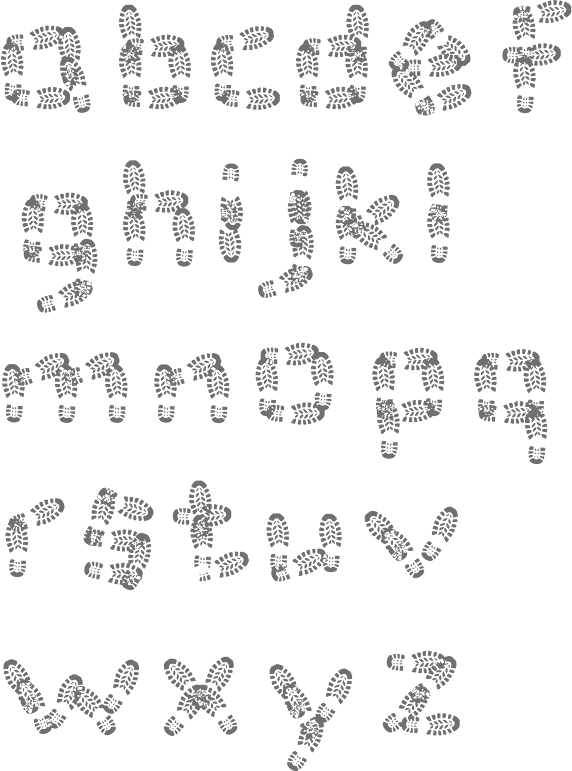
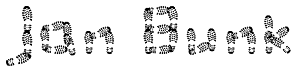 Dutch foundry located in Rotterdam. It is run, so MyFonts says, by Jan Bunk (b. 1968, Monrovia, Liberia) from Monrovia, Liberia. He made Foot Print (2011). [Google]
[MyFonts]
[More] ⦿
Dutch foundry located in Rotterdam. It is run, so MyFonts says, by Jan Bunk (b. 1968, Monrovia, Liberia) from Monrovia, Liberia. He made Foot Print (2011). [Google]
[MyFonts]
[More] ⦿
|
Castle Type
[Jason Castle]
|
 Designs by Jason Castle from San Rafael, CA, who studied psychology at Dominican University of California. He does custom font design and sells commercial typefaces through MyFonts and FontShop. Blog. These include:
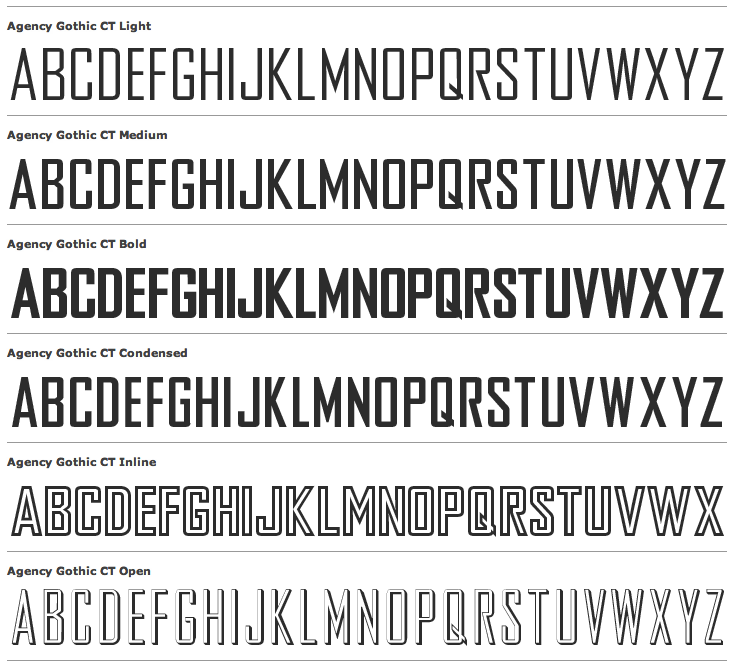
 - A: AfrikaBorders, Afrika Motifs, Agency Open (M. F. Benton, 1934, revival Jason Castle), Agency Gothic Inline, Ampersands, Azbuka (2005, a heavy slab serif).
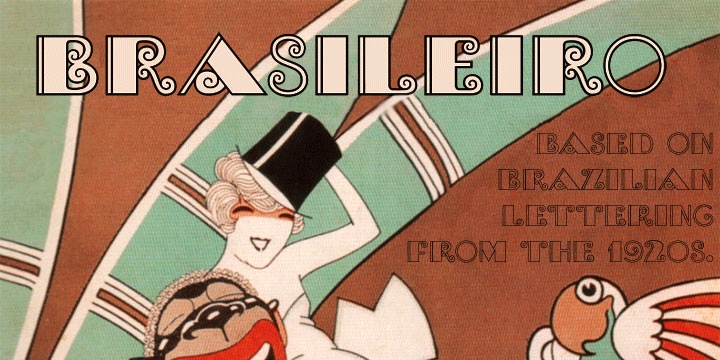
- B: Brasileiro (2007, an art deco face).
- Carisma (2007, a clean geometric sans), Carlos (art deco inspired by Elektra), Castle Fleurons, Chinoise (2008, based on hand lettering that is reminiscent of a style of ancient Chinese square-cut ideograms), Cloister Black, Copperplate Script, Cradley (2015, a Caslon titling family with Greek and Cyrillic, named after the birthplace of William Caslon).
- D: Deko Initials (1993, discontinued in 2007; based on NADA0 drawn in 1972 by Marcia Loeb), Dionisio (2008, didone).
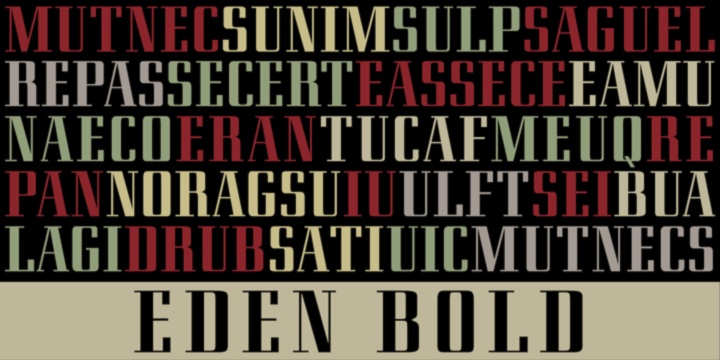
- E: Eden (Bold, Light; originally designed by Robert H. Middleton in 1934).
- F: Fat Freddie, Futura CT and Futura CT Inline (2007, based on Futura ND, but discontinued after only a few weeks).
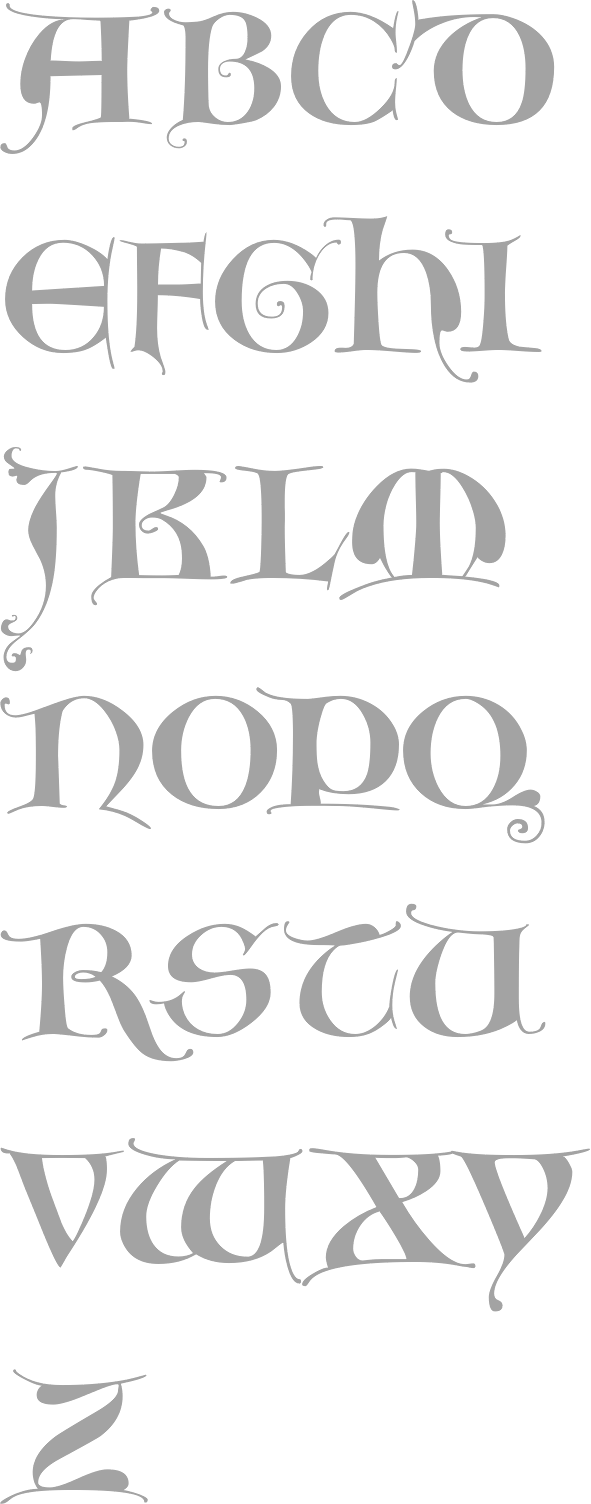
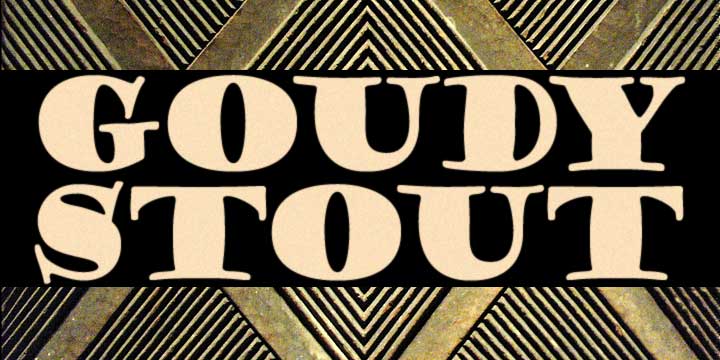
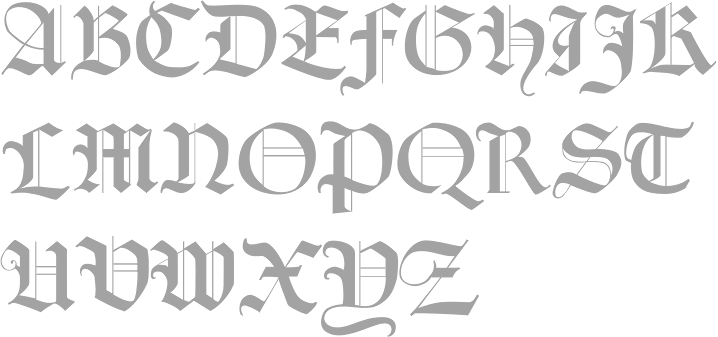
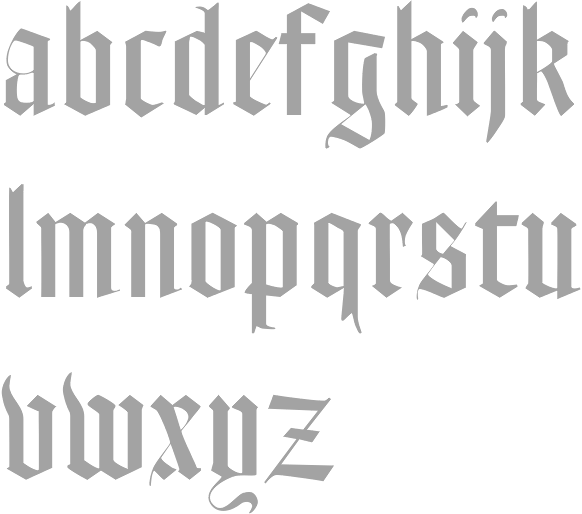
- G: Goudy Lombardy (Lombardic), GoudyStout, Goudy Text, Goudy Trajan (1994-2010, free; +alternates).
- H: Handsome (2002, nice finger dingbats, aka fists).
- J: Jensen Arabique (left field art deco, based on work of Gustav Jensen, 1933).
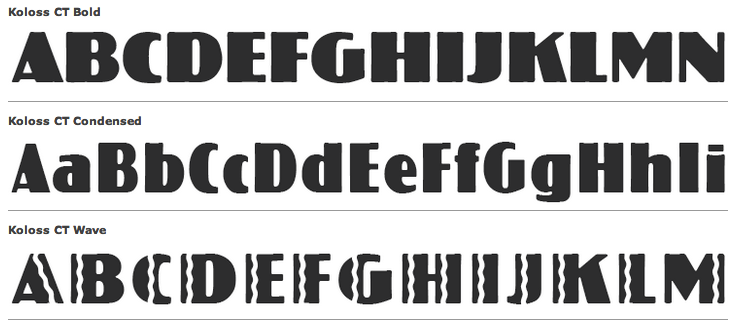
- K: Koloss (art deco).
- L: Latin CT (2008, 6 styles), Latin Wide, Laureat, Lise Informal (2008, hand-printed), Lombardy.
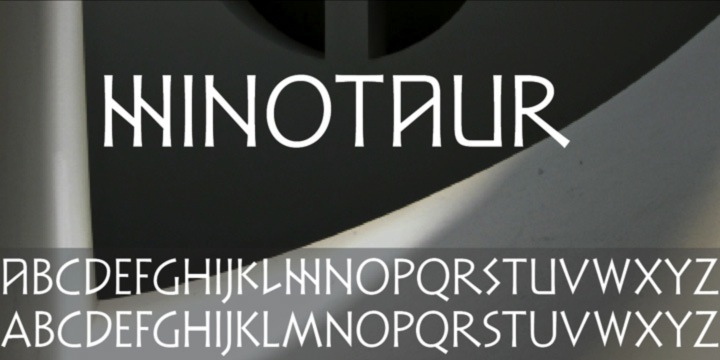
- M: Maximilian CS (Rudolf Koch, 1917), Metropolis Bold and Shaded (based on the 1932 Stempel cut as designed by W. Schwerdtner), Minotaur (2008, an original monoline design based on an Oscan votive inscription from the second century BC; looks like simulated Greek).
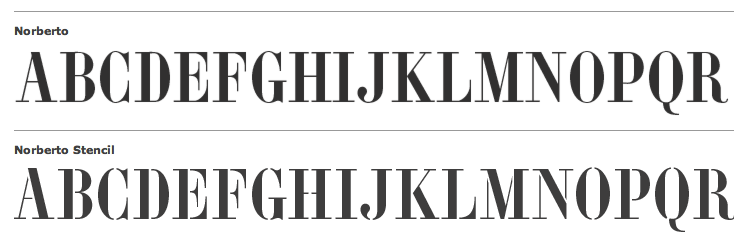
- N: Norberto (2009, an all-caps Bodoni; +Stencil).
- O: Ogun (2008, inspired by an Egyptian-style Russian block alphabet and useful for athletic lettering; formerly named Azbuka).
- P: Plantain (2002, a digital version of Plantin Adweight, a 1913 typeface by F. H. Pierpont), Plantain Stencil (2009), Progreso (2010, a condensed, unicase, serif gothic type design inspired by the hand-lettering on Russian posters from the 1920s).
- R: Radiant, Radiant Extra Condensed CT (both Radiants are revivals of Roger Middleton's typeface by that name, 1940), Ransahoff (2002, ultra condensed didone), Rudolf (1992, based on Rudolf Koch's German expressionist work such as Neuland).
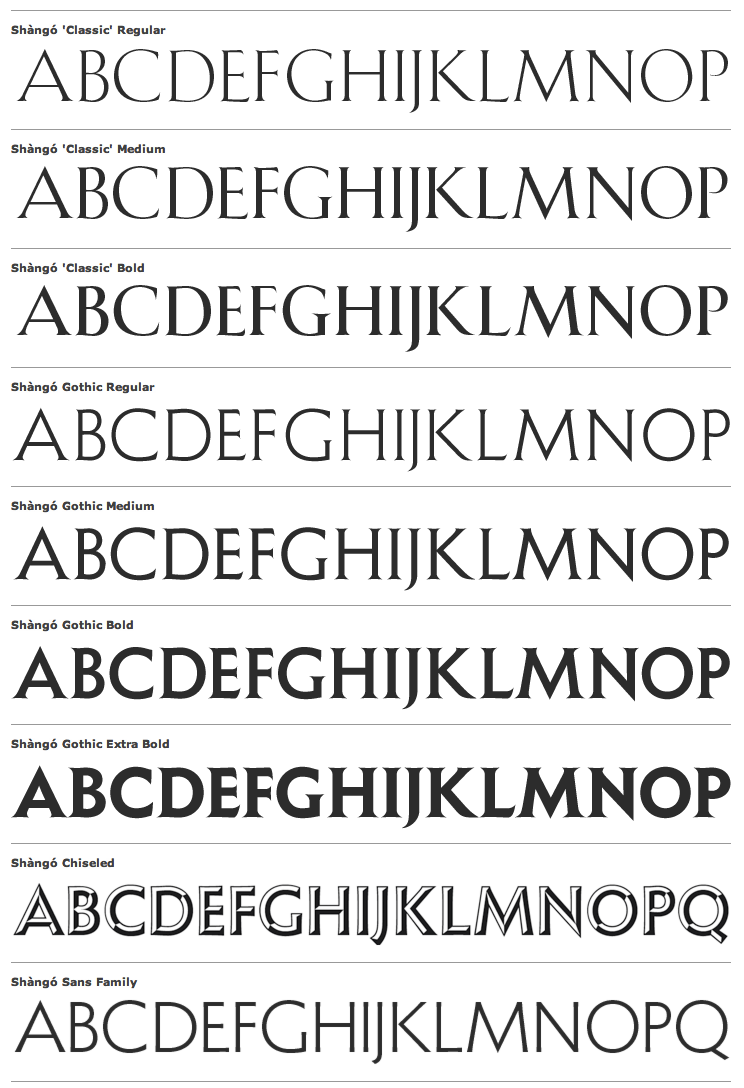
- S: Samira (2008, art nouveau style; based on Peter Schnorr's Schnorr Gestreckt, from 1898), Shango (1993, based on Schneidler Initials by F.H.E. Schneidler (1936), and including a digital version of Schneidler Cyrillic (1992); extended in 2007 to Shango Gothic and in 2008 to a 3-d shadow version, Shango Chiseled, and in 2009 to Shango Sans), Sculptura (2005, an all caps typeface based on Diethelm's Sculptura from 1957), Sencia (2008, based on Spanish art deco stock certificate lettering from 1941), Sonrisa (2009, art deco family---Sonrisa Thin is free), Standard CT (a neo-grotesque family), Standard CT Stencil (2012: free).
- Tambor (Light, Black, Inline, Adornado) (1992) (note: Jason claims that it was remotely based on Rudolf, which in turn was based on calligraphy of Rudolf Koch), Trio (an art deco sansserif), Trooper Roman (discontinued).
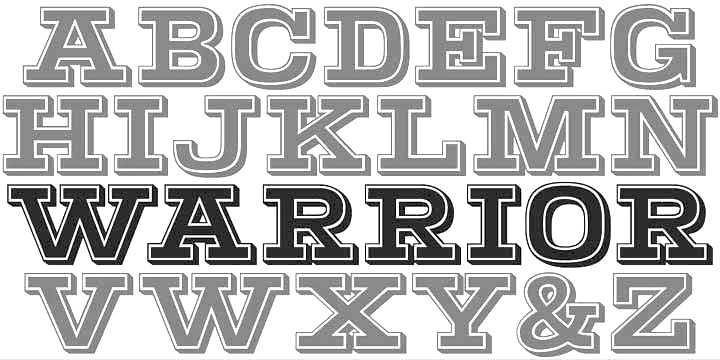
- V: Vincenzo (2008, a slabby didone), Warrior (2009, a 3d font based on Ogun; +Shaded).
- X: Xavier (art deco family based on Ashley Crawford by Ashley Havinden, 1930, revival by Jason Castle in 1992).
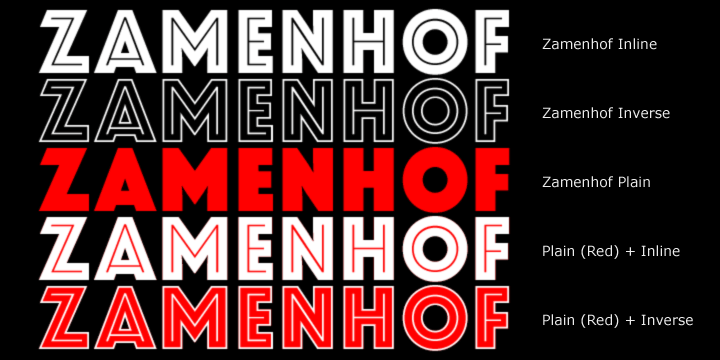
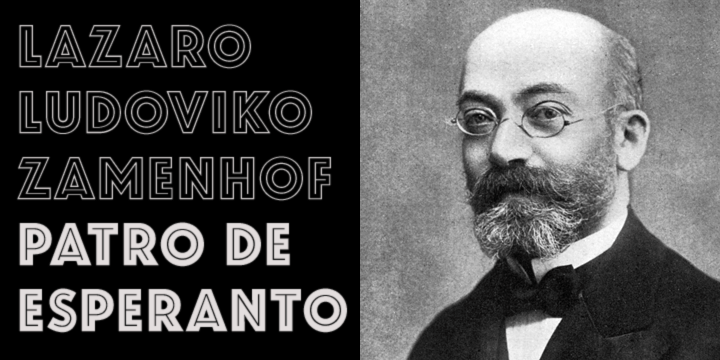
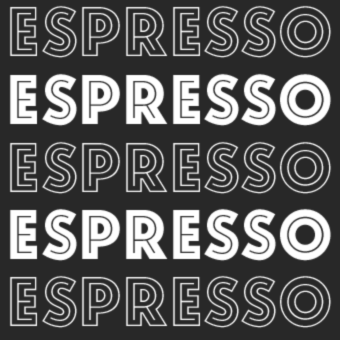
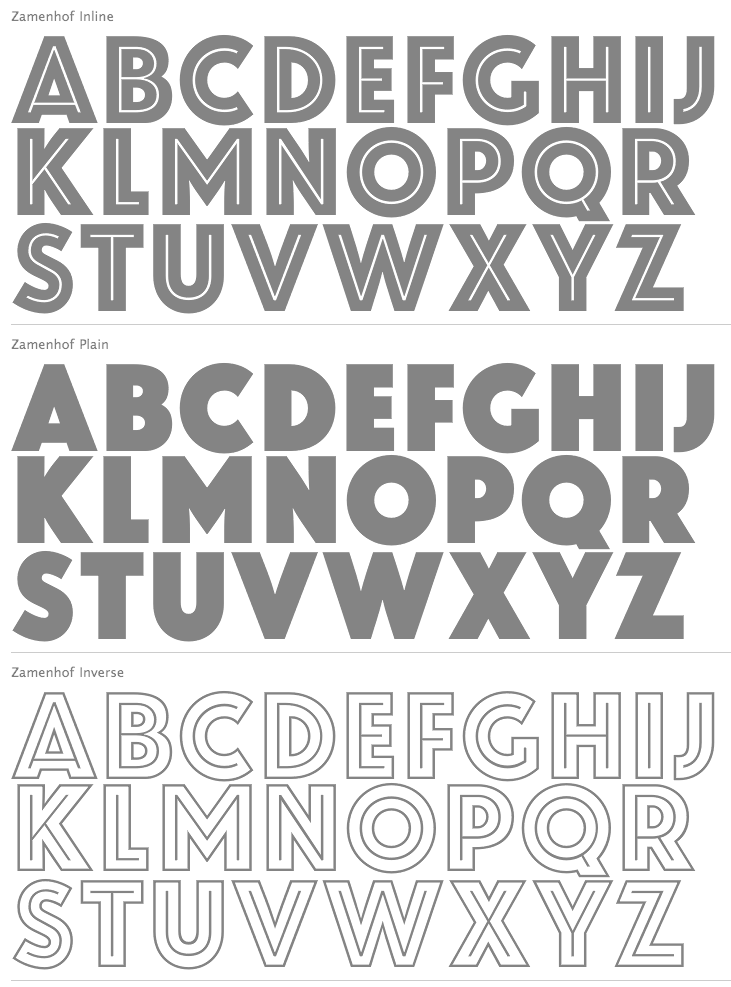
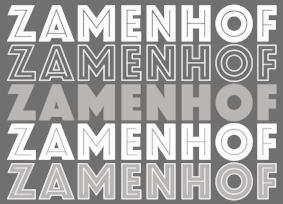
- Z: Zagora, Zamenhof (2011: an all caps poster face with constructivist ancestry, named after the inventor of Esperanto), Zuboni Stencil (2009, Latin and Cyrillic, constructivist and perhaps even military).
Klingspor link. Behance link. View Jason Castle's typefaces. [Google]
[MyFonts]
[More] ⦿
|
Chacross Mafuala
|
Kinshasa, Congo-based designer (b. 1998) of the wild script typeface Chacross script (2019). [Google]
[More] ⦿
|
Charles Allen
|
Type designer of the photolettering era (1960s) who created the chiseled 3d typeface Sculpture. Nick Curtis's Haut Relief (2007) is based on this typeface. The African-themed Djibouti of Nick Curtis (2007) is based on West's African Queen, also a 1960s font. [Google]
[More] ⦿
|
CheapProfonts
[Roger S. Nelsson]
|
 Started in 2008, this web place by Norwegian entrepreneur Roger S. Nelsson (based in Honningsvåg, Norway) sells fonts by Ray Larabie, Brian Kent, Nick Curtis, Derek Vogelpohl and Kevin King that were originally freeware fonts. Nelsson reworked them (more glyphs, more multilingual) and asks about 10 dollars per font now. He says his fonts now cover these Latin languages: Afrikaans, Albanian, Basque, Belarusian (Lacinka), Bosnian, Breton, Catalan, Chamorro, Chichewa, Cornish, Croatian, Czech, Danish, Dutch, English, Esperanto, Estonian, Faroese, Filipino (Tagalog), Finnish, French, Frisian, Galican, German, Greenlandic, Guarani, Hungarian, Icelandic, Indonesian, Irish (Gaelic), Italian, Kashubian, Kurdish (Kurmanji), Latvian, Lithuanian, Luxembourgian, Malagasy, Maltese, Maori, Northern Sotho, Norwegian, Occitan, Polish, Portuguese, Rhaeto-Romance, Romanian, Saami (Inari), Saami (Lule), Saami (North), Saami (South), Scots (Gaelic), Serbian (latin), Slovak(ian), Slovene, Sorbian (Lower), Sorbian (Upper), Spanish, Swedish, Tswana, Turkish, Turkmen, Ulithian, Walloon, Welsh, Yapese.
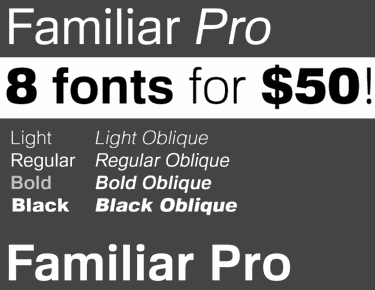
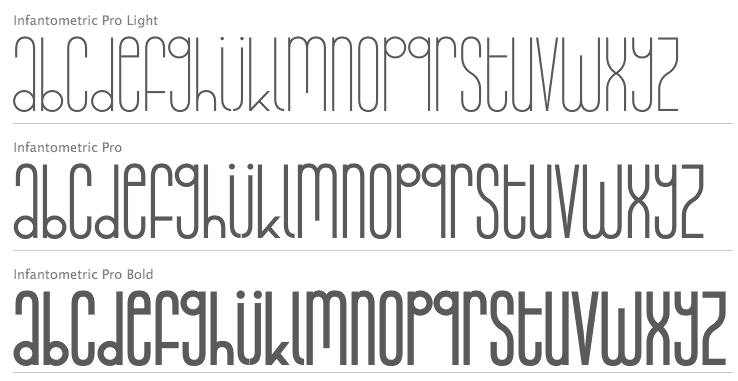
 Designer at FontStruct in 2008 of cowboy_hippie and Syndrome X (DNA-look typeface inspired by Syndrome BRK by Brian Kent). Nelsson's fonts are Classic Trash BRK Pro, Dynamic BRK Pro, Galapogos BRK Pro, Genotype BRK Pro, King Cool KC Pro (kid's hand; done with Kimberly Geswein), Lamebrain BRK Pro, Matrise Pro and Matrise Text Pro (dot matrix), Phorfeit BRK Pro, Syndrome BRK Pro, Technique BRK Pro, Vigilance BRK Pro, Grapple BRK Pro. The "BRK" refers to Brian Kent, the original free font designer. In 2009, he added a number of fonts that were done by Nick Curtis some years before that (hence the "NF"): Boogie Nights NF Pro (art deco face), Copasetic NF Pro, Coventry Garden NF Pro, Pro, Fontleroy NF Pro, Hamburger Heaven NF Pro, Monterey Popsicle NF Pro, and Wooden Nickel NF Pro. Trypewriter Pro (2009) is based on Kevin King's Trypewriter. Helldorado Pro (2009) is a Tuscan wood type style typeface based on a font by Levente Halmos. Designer of Isbit Pro (2012, a magnificent melting ice cube-shaped superlliptical typeface family), Familiar Pro (2011, designed with the same metric as Helvetica but "better than Arial"), Bloco Pro (2010, fat counterless face), Trump Town Pro (2009, athletic lettering slab serif), Geometric Soft Pro (2009), Geometry Script Pro (2010, upright connected script), DIN Fun Pro (2011), Infantometric Pro (2012), Foobar Pro (2012) and Cheap Pro Fonts Serif (2009). Typefaces from 2013: Adultometric Pro (narrow monoline sans). Dafont. Fontspace link. Fontsquirrel link. Catalog of Nelsson's bestselling typefaces. [Google]
[MyFonts]
[More] ⦿
|
Chris Houston
[Retype]
|
[More] ⦿
|
Chris MacGregor
[PenUltimate Type Foundry]
|
[More] ⦿
|
Chris MacGregor
|
Union Type Supply used to be run by Chris MacGregor in Houston, TX, who was (is?) a web communications specialist at Halliburton. He also used to run Penultimate Type in Seabrook, TX. He founded About with Don Synstelien. His typefaces: Zehrgut (grunge face), Orti (by Jean-Jacques Tachdjian---a filled-in display face), Utile (high-contrast serif font designed by Matthew Chiavelli, Jeff Gillen, Chris MacGregor and Jean-Jacques Tachdjian), Afrobats, Bridgework, Citore, Emulate, Emulate Bold, Epaulet (1994), Tagged, Boxonoxo, Burner, Datapad, Empanel, Emulate, Esboki, Esdeki, Estuki, GleeClub, HiroItalic, HiroOutline, HiroSharp, Hiro, IttoBlock, IttoRound, JaySetch (named after Jay Setchell, who was Chris MacGregor's boss at Imagination Plus, The Woodlands, TX), LeslieSmith, Manitu, Metolurgy, MittenHollowHollow, MittenLeftLeft, MittenRightRight (1996), PepClub, Planet100, PlanetFiveHundred, PlanetSevenHundred, PlanetThreeHundred, ReverberateBold, Reverberate, Tagged, Tshtars, Unite, UtileCaustic. Some typefaces in this list were published by [T-26] (such as Epaulet, Emulate, Mitten, Tagged). On-line gallery. [Google]
[MyFonts]
[More] ⦿
|
Christine Voigts
|
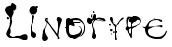 Namibian-German designer of Linotype Dropink (1999), an adorable font in which letters are written with a scratchy inky fountain pen. One of my favorites in its genre.
 Fontshop link. [Google]
[MyFonts]
[More] ⦿
|
C.J. Camilo-Images
|
Graphic designer in Pretoria, South Africa, who created the multilined grunge typeface Star Line in 2014. Camilo-Images is originally from Angola. [Google]
[More] ⦿
|
Cornell University Africana Library
|
African writing systems. Charts with hand-drawn glyphs. Covers Amharic (Ethiopia), Ethiopic writing system, Mende (Sierra Leone), Meroitic (hieroglyphic-style writing, Meroe people of Sudan), Egyptian writing system, Nsibidi (Ejagham people of Nigeria), Oromo, Vai (West Africa). [Google]
[More] ⦿
|
Cristina Saez
|
Barcelona, Spain-based designer of the African-themed typeface Arec (2017). [Google]
[More] ⦿
|
Custor Computing PLC
|
Creators of the Ethiopic fonts Visual Geez Unicode Agazian and Visual Geez Unicode. Downloadable here. [Google]
[More] ⦿
|
Daisy Gandazha
|
Student at ZIVA, a typography and graphic design school in Harare, Zimbabwe, led by Saki Mafundikwa. In 2001, she designed an angry letter font. [Google]
[More] ⦿
|
Dale Halvorsen
|
Designer of Mugabe, "dingbats for an oppressive regime" (quotes by Sean O'Toole. This typeface was reviewed in the magazine National Typographika 2 (i-jusi magazine volume 17). [Google]
[More] ⦿
|
Daniel Johnson
|
 Canadian type designer. His typefaces:
 - Aguardiente (2010, heavy sans).
- Deka (2010, a monospace font designed for very small display sizes).
- Didact Gothic (2010, a simple and readable sans i in the form most often used in elementary classrooms).
- He contributed to the GNU Freefont project. In particular, he created by hand a Cherokee range specially for FreeFont to be "in line with the classic Cherokee typefaces used in 19th century printing", but also to fit well with ranges previously in FreeFont. Then he made Unified Canadian Syllabics in Sans, and a Cherokee and Kayah Li in Mono. And never to be outdone by himself, then he did UCAS Extended and Osmanya. His GNU Freefont ranges:
- Armenian (serif) (U+0530-U+058F)
- Cherokee (U+13A0-U+13FF)
- Unified Canadian Aboriginal Syllabics (U+1400-U+167F)
- UCAS Extended (U+18B0-U+18F5)
- Kayah Li (U+A900-U+A92F)
- Tifinagh (U+2D30-U+2D7F)
- Vai (U+A500-U+A62B)
- Latin Extended-D (Mayanist letters) (U+A720-U+A7FF)
- Osmanya (U+10480-U+104a7)
- Grana Padano (2010).
- Judson (2010, designed for African literacy).
- Jura (2009). A sans family with support for Burmese, Cyrillic and Greek; redesigned and improved by Alexei Vanyashin in 2016; a variable font was added in 2019 by Mirko Velimirovic). Johnson explains: Jura is a family of sans-serif fonts in the Eurostile vein. It was originally inspired by some work I was doing for the FreeFont project in designing a Kayah Li range for FreeMono. (Kayah Li is a language used by a minority people group in Burma. Because the Burmese government suppresses the teaching of minority scripts, the Kayah Li script is taught only in schools in refugee camps in Thailand.) I wanted to create a Roman alphabet using the same kinds of strokes and curves as the Kayah Li glyphs, and thus Jura was born. Github link for Jura.
- Megrim (2010, a monoline drawing table sans).
- Pacaya (2013, a medium-weight sans).
- Pfennig (2010, an extensive humanist sans family).
- Rahel (2009, Hebrew).
- Sacco-Vanzetti (2009, sans).
- Stanislav Caps (2013).
- Travelogue (2008).
- Triad Postnaya (2010). An old Church Slavonic typeface and its Latin simulation twin. Free at the Open Font Library. Triod Postnaya attempts to mimic the typefaces used to publish Old Church Slavonic service books prior to the 20th century. It also provides a range of Latin letters in the same style.
Klingspor link. Fontspace link. Dafont link. Kernest link. Fontsquirrel link. Google Plus link. [Google]
[More] ⦿
|
Daniel Kahn
|
Under the name NKO Computers, Daniel Kahn made Kankan (2009), which is based on Michael Everson's Conakry font. This is a font supporting the N'ko script of West Africa. [Google]
[More] ⦿
|
Daniel Yacob
[LiveGe'ez]
|
[More] ⦿
|
Darien Valentine
[Fixedsys]
|
[More] ⦿
|
Dave West
|
 Type designer of the photolettering era (1960s) whose work is slowly but surely being digitally revived by Nick Curtis, and by Photo-Lettering, the House Industries subsidiary that bought the PhotoLettering Inc type collection. FontShop link. His typefaces:
 - The slightly psychedelic typeface West Banjo. Nick Curtis's Fiddle Sticks (2007) is based on this typeface. For another digital revival, see Plinc Banjo (2017, Mitja Miklavcic at House Industries.
- Elephant Gothic, a fat deco face. Remade by Nick Curtis as Elephunky NF (2011).
- Nick Curtis believes that Stymie Black Flair may also be due to him, and he based his Tutti Paffuti NF (2007) on the latter face.
- African Queen was revived by Curtis as Djibouti NF (2007), a minimalist tribal African alphabet.
- Nickelodeon. Revived by Curtis as Lily Hilo NF (2008).
- Barnum Block (Western face), done in 1960 at PhotoLettering Inc. This became Cg BarnumBlock at Compugraphics. The Compugraphics collection is now sold by Monotype. See also PL Barnum Block.
- Behemoth (1960, PhotoLettering): a slab serif. This too became a Compugraphics face, Cg Behemoth Semi Condensed. See also PL Behemoth Semi Condensed.
- Bubble Gum (late 1960s). This bubblegum / cartoon font was finally digitized in 2011 by Jess Collins for House Industries, and is now called Plinc Bubblegum (2021).
- Futura Casual inspired Nick Curtis to draw Occidental Tourist NF (2010).
- Walnetto Casual (Photolettering) is another psychedelic face. For a digitization, see Nick Curtis's Jackalope NF (2010). West Barnum Ultra, designed by Dave West and digitized by Ben Kiel&Adam Cruz at House Industries in 2011, was film no. 5494 in the original Photo-Lettering archive.
- West Thud.
- West Kerpow, a comic book typeface, late 1960s. This was digitized in 2011 by Allen Mercer at House Industries as Plinc Kerpow.
- West Italiano, or simply Italiano. A Bodoni-style italic. In 2015, Steve Ross and Ken Barber at House Industries digitally revived this typeface as Plinc Italiano.
- West Emperor Script. A connected didone script.
- West Nouveau Compact (Pyschedelitype 5619 in the PLINC collection of 1968). See, e.g., Pyschedelitypes (Alphabet Directions No. 8), Photo-Lettering, Inc., 1968. In the Curvy Block Lettering style of Viennese secessionist Alfred Roller. The same face appears in Castcraft's Encyclopedia of Phototype Styles (1978) as Cetus Black.
- West Fifth Dimension (1971), an Alfred Roller-inspired psychedelic typeface that was shown in PLINC's Alphabet Thesaurus Vol. 3 (1971).
[Google]
[MyFonts]
[More] ⦿
|
David Samuel Oluwadamilare
|
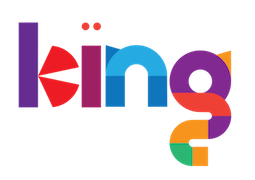 Lagos, Nigeria-based designer of the colorful children's book font Kidag (2018) and the modern stencil typeface Quaf (2018). [Google]
[More] ⦿
Lagos, Nigeria-based designer of the colorful children's book font Kidag (2018) and the modern stencil typeface Quaf (2018). [Google]
[More] ⦿
|
David Samuel Oluwadamilare
|
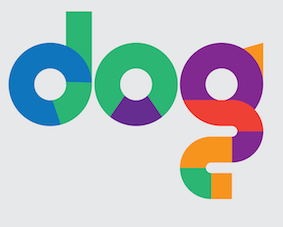 Or just David Samuel. Designer and illustrator in Lagos, Nigeria, who developed the children's book color font Kidag in 2018. [Google]
[More] ⦿
Or just David Samuel. Designer and illustrator in Lagos, Nigeria, who developed the children's book color font Kidag in 2018. [Google]
[More] ⦿
|
Degi Kurniawan
[D&K Project]
|
 [MyFonts]
[More] ⦿
[MyFonts]
[More] ⦿
|
DejaVu Fonts
[Stepan Roh]
|
The DejaVu fonts form an open source font family based on the Bitstream Vera Fonts. Free download. Its purpose is to provide a wider range of characters (see Current status page for more information) while maintaining the original look and feel through the process of collaborative development. Included are DejaVuSans-Bold, DejaVuSans-BoldOblique, DejaVuSans-Oblique, DejaVuSans, DejaVuSansCondensed-Bold, DejaVuSansCondensed-BoldOblique, DejaVuSansCondensed-Oblique, DejaVuSansCondensed, DejaVuSansMono-Bold, DejaVuSansMono-BoldOb, DejaVuSansMono-Oblique, DejaVuSansMono-Roman, DejaVuSerif-Bold, DejaVuSerif-BoldOblique, DejaVuSerif-Oblique, DejaVuSerif-Roman, DejaVuSerifCondensed-Bold, DejaVuSerifCondensed-BoldOblique, DejaVuSerifCondensed-Oblique, DejaVuSerifCondensed. Authors and contributors comprise Adrian Schroeter, Ben Laenen, Dafydd Harries, Danilo Segan (Cyrillic), David Jez, David Lawrence Ramsey, Denis Jacquerye, Dwayne Bailey, James Cloos, James Crippen, Keenan Pepper, Mashrab Kuvatov, Misu Moldovan (Romanian), Ognyan Kulev, Ondrej Koala Vacha, Peter Cernák, Sander Vesik, Stepán Roh (project manager; Polish), Tavmjong Bah, Valentin Stoykov, and Vasek Stodulka. The idea is to eventually cover most of unicode. Currently, this is covered: Latin (+supplement, extended A and part of extended B), IPA, Greek, Coptic, Cyrillic, Georgian, Armenian, Hebrew, N'ko, Tifinagh, Lao, Canadian aboriginal syllabics, Ogham, Arabic, math symbols, arrows, Braille, chess, and many dingbats. Alternate download site. Wiki page with download information. Fontspace link. Open Font Library link. [Google]
[More] ⦿
|
Denis Moyogo Jacquerye
|
Denis Moyogo Jacquerye is the Belgian co-leader of the DejaVu font project (free fonts based on Bitstream Vera), the default GUI for fonts on several Linux OS distributions. He is working on extending various Open Source fonts to support African orthographies in Latin script. He is collaborating with a network of experts in African languages localization as part of the Pan Africa localization Network (ANLoc). Denis, with a Bs.C in Computer Science and a minor in Linguistics from McGill University, has experience in the Language Technology industry, Open Source software, Font Engineering and Unicode software support for African language. Denis currently lives in Brussels. He designed the open license font family Molengo (2010, sans), which is part of the Google open font directory. He also participated in the GNU Freefont project, where he added new glyphs and corrected existing ones in the Latin Extended-B (U+0180-U+024F) and IPA Extensions (U+0250-U+02AF) ranges. Speaker at ATypI 2008 in St. Petersburg on African fonts. [Google]
[More] ⦿
|
Denis Roegel
[LaTeX Navigator]
|
[More] ⦿
|
Dennis Amoah
|
In 2017, during his studies in Cambridge, UK, Dennis Amoah designed the decorative typeface Afro, which uses patterns inspired by those seen in various forms of African folk art, from countries such as Morocco, Ghana, Zimbabwe and Tunisia. Behance link. [Google]
[More] ⦿
|
DEPOTzNET
|
Organized font archive. Many subcategories including Party fonts, Holiday fonts, Balloons, Halloween, Christmas, screen fonts, phonetic fonts, African, Balinese, Bengali, Burmese, Cambodian, Croata-glagolitic, Cyrillic, Ethiopic, Georgian, Greek, Hebrew, Hindi, Hmong, Japanese, Javanese, Khmer, Lao, Malayan, Nepali, Nko, runes, Tamil, Vietnamese. [Google]
[More] ⦿
|
Deryk Hopley
|
Student at ZIVA, a typography and graphic design school in Harare, Zimbabwe, led by Saki Mafundikwa. In 2001, she designed an artsy initial caps font. [Google]
[More] ⦿
|
Design Africa
[Anton Scholtz]
|
Design Africa is an outfit run by Anton Scholtz and Merle from Musgrave, KwaZulu-Natal, South Africa. Their commercial fonts have Latin letters but an African look: Umkhonto, Ubuvila, Amanzi, Assegai, Bongo, Doorn Display, Doorn Body, Zebra, Utshani, Tabwa, Amabhokisi, Baobab, Siyabonga, Inja. When you visit them, do not forget to look at their great ethnic patterns. [Google]
[More] ⦿
|
Desiree Seeto
|
During her studies in Brisbane Australia, Desiree Seeto designed the Africa-themed typeface Twiigle And Tak (2018). [Google]
[More] ⦿
|
Diane Collier
[Kigali Designs]
|
[More] ⦿
|
Die Weberei
[Felix Holland]
|
Architect, web designer and hobby typographer Felix Holland runs Die Weberei in Kampala, Uganda. His first font is this sans (2006). [Google]
[More] ⦿
|
Diego Mier y Terán
|
Diego holds a Masters from the KABK in Den Haag, 2004. His thesis project was entitled Tuhun. A typographic exploration of the Mixtec language. He made the stencil typeface Nairobi Quality, the text typeface Tuhun (2006), the text typeface Viko (2004), and a font for the Mixtec language of Oaxaca, Mexico. Currently living in Mexico and working with his wife, Kythzia Barrera, in their studio called Frutas y Verduras. He teaches at the Universidad Iberoamericana, in Mexico City. Mainly interested in typography, graphic design and organic agriculture. Speaker at ATypI 2009 in Mexico City, where he explained the challenges posed by native languages in Mexico. [Google]
[More] ⦿
|
Dixie's Delights
[Michelle Dixon]
|
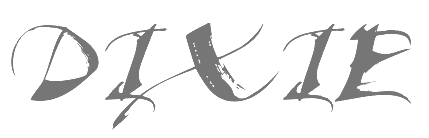 This used to be a wonderful page, but Michelle Dixon seems to have retired from the font making business. There used to be five shareware dingbats fonts: African Ornaments One, Cave Painting Dingbats One, Mayan Dingbats, Pre-Columbian Ornaments One, and Printers' Ornaments One (Mac PS), plus about 45 other original fonts (not shareware). In her wonderful collection, the following of Michelle Dixon's creations stand out: Arrighi Copybook, ItalianMosaicOrnaments, Beautiful, LondonHouse, Love Letter Typewriter, Gaudy Medium, Rusty Nail-Medium (the last four are all old typewriter fonts), and the display fonts Isla Bella (art nouveau), La Negrita, Arty Nouveau, Victorian, Art Nouveau Fonts, Bad Dog-Black, Berlin, Caslon Frenzy, Dixon's Vixens Caps, AntiqueMonoTW, DangerousTypoWriter, Elegant Nouveau Initial Caps, Fruitbasket, Matador, Manhattan, Modern Scribe, Ovid, Spillage, Tacos, Tolstoy, Typewriter, Love Letter, Basketcase, ChiliPepperDingbats, Postage Stamps, Garish Monde, Taco Modern, and Beautiful Ink. All fonts are between 5 and 30 dollars a piece, but often there are four fonts per face. In August 98, the absolutely gorgeous calligraphic font Beautiful Ink became available as a 10USD shareware font in Windows TrueType. Many designs are by Blake Haber, who is Michelle Dixon's husband. Located in Santa Barbara, CA.
 Dafont link. Alternate URL. [Google]
[More] ⦿
|
Diyann Selman
|
Student at ZIVA, a typography and graphic design school in Harare, Zimbabwe, led by Saki Mafundikwa. In 2001, she designed a font in which the letters are inspired by African icons. [Google]
[More] ⦿
|
D&K Project
[Degi Kurniawan]
|
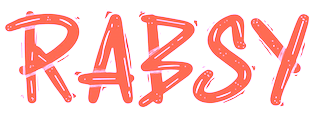 Bali, Indonesia-based designer and animal photographer, b. 1984. Creator of the high-contrast serif typeface Asmath (2018) and the brush fonts Rabsy (2018), Rabsy Pattern (2018: African patterns), Cherry Rush (2018) and Rasquake (2018).
 Typefaces from 2019: Sketch Time (dry brush), Gudvayne (a spiky text typeface), Sweet Escape, Toast and Honey, Gudnite (brush), Mikadoby, Hello Dear, Hanomali, Rushink (dry brush), Rabsy Clean (brush), Brushield (dry brush), Holiday Sun, All Pony, Sexy Beachy, Juice Day, Holy Rock (brush), Rampage Kid (brush), Kinder Boy (brush), Whiskey Coke, Kid Rough, Mybread (dry brush), Parkway Lush (brush script), Theygi (a great angular wood-carved display typeface), JakAs (script), Chelsea Queen (script). Typefaces from 2020: Beat Word (a cartoon font). [Google]
[MyFonts]
[More] ⦿
|
D-Net Communications (or: DNC)
|
Hommersaak, Norway-based foundry interested in African and technical typefaces. The fonts are sold through MyFonts. Their collection: Christmas (dings), Elektronika (dings), TechTools (dings), ABCKids, Gates (dings), Transistors (dings), Ariya (Yoruba based on Arial), Igba (Yoruba based on Times New Roman), Eagle (Nigerian), Eredo (Edo). [Google]
[MyFonts]
[More] ⦿
|
Downsign
[Sam Omo]
|
Benin City, Nigeria-based designer of the dual character font Downsign (2019). [Google]
[More] ⦿
|
Duchet Chanford
|
Ghana-based creator of Duchet Chanford (2012). [Google]
[More] ⦿
|
Dumadi Studios
[Toni Dzulham]
|
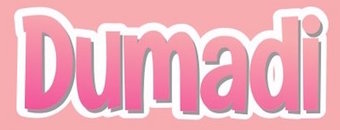 Known as Toni Dzulham and Dumadi Pangandaran. Pangandaran, Indonesia-based designer, b. 1991, of the casual monoline typeface Dumeng (2018) and the modular typeface Herison (2018). Typefaces from 2019: Marlina (script), Lucky Star (a fat brush script), Bllastt (brush script), Chickybom (a cartoon font), Babell (a heavy all caps sans), Mellows, Sarllett (signage script), Whoody (a cartoon font), Dumadi (a children's book font), Attasiyap, Comic Comoc (a fat comic book font), Hermazz (a comic book font), Multikultural (monoline script), Husaeni (squarish).
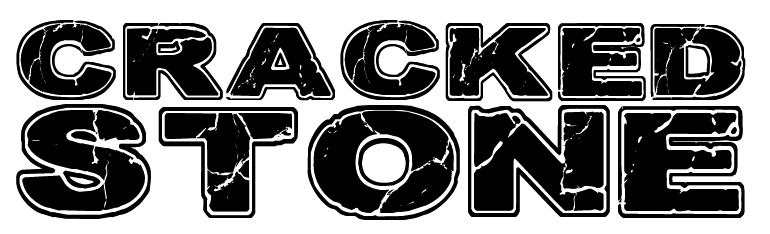
 Typefaces from 2020: Masquero, Sarttink Signature, Helga Brush (dry brush), Royal Mission (dry brush), Black Archer, B=derby Jookes, Flower Mager, Remover, White Allies, Bogarts Metal, Avaca Davra (a brush font), Brandon Bromley, Magic Broom (an all caps cartoon font; +Monogram), Cooper Jackson, Rofland, The Bambank Script, Ravella, The Mummy (like a glaz krak font), Hormath, Night Hunter, Common Rejection, Qadar (all caps, dry brush), Salty Candy, Uravika Classy (informal, comic book style), Derick Skone (a heavy all caps brush font), Ninja Fighter, Milton-Keynes, Relaxnes, Shatomi (a signature font), King of Monster, The Beauty, Moomy Craft, Lockdown, Baby Balloon, Andry, Kero Kero, Rostyana (a rhythmic signage script), Cracked Stone, Fros Bold (a layerable cartoon font), Boochain, Ghaisan (a signage script), Bimbey (a layerable font with shadow effects), Sikat (constructivist), Love Hunter, Anyfreak, Ruang Jenuh. Typefaces from 2021: Blotchy Bitter Texture (grungy textured caps), Breakiss (a dry brush script), Pastilaris (a monolinear display sans), Block Paper (a paper strip collage typeface), Bogie Bogie (a flat top logo font), Shibori (hand-crafted and preppy), Exercise (a display font with tiki or tribal influences), Untrouble (futuristic), Content Creator (a fat finger font), Homeville (a retro script), Saya Satpol (a bold sketched typeface), Walktimes (a squarish blcky typeface with stencilized glyphs at the lowercase positions), Faxnes (a brush script), Pisangkeju (a monolinear scrapbook font), Regorden (script), Strange Agent (a brush font), Holicya (a heavy retro signage script), Honey Pools (a fat finger font), Tomket Boys, Ambiguous (a brush script), Buco Nero (a dry brush font), Little Sooner, Swishine, Lonely Together, Milton Keynes (a creamy signage script), Shallow Thoughts (a fat finger font). Home page. [Google]
[MyFonts]
[More] ⦿
|
Ebrima Jammeh
|
As a student at the College For Creative Studies, Detroit MI, Ebrima Jammeh designed the African tribal typeface Mandin (2016). [Google]
[More] ⦿
|
Elizabeth Awuah
|
Pickerington, OH-based designer of the set of dingbats called Global Footrints Ghana (2017) and of the Africa-themed typeface Tribal Warrior (2017). Behance link. [Google]
[More] ⦿
|
Emanes Design (or: Emanes Dsign)
|
Tangerang, Indonesia-based designer of the lava lamp typeface Morgana (2019), the script typefaces Merlinian (2019), Firstlove (2019) and Cherryball (2019: a rabbit-eared typeface), the free outline typeface Metrool (2019) and its solid companion Metroil (2019). Typefaces from 2020: PapaKilo (a tribal font), MamaKilo (a tribal font), Ahoyaha (script), Ziclose (a bold sans), Fipty Serif, The Djuckie, Grage, Viyola, Digichild, Calimindo (a signature font), Elegiant, Elegature, Elegrand, Blora, Blora Shadow, Blora Extrude, Perihelonion, Aphelonion. Home page. [Google]
[More] ⦿
|
Emmanuel O.K. Duah
|
Graphic designer in Kumasi, Ghana, who created OK Flint Font (octagonal and modular) in 2015. [Google]
[More] ⦿
|
Eric Wannin
[Quartet Systems]
|
[More] ⦿
|
Ethar Elnour
|
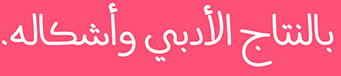 Khartoum, Sudan-based designer of the nice Arabic handwriting font Molhim (2016). [Google]
[More] ⦿
Khartoum, Sudan-based designer of the nice Arabic handwriting font Molhim (2016). [Google]
[More] ⦿
|
EthiO Systems
|
Commercial Ethiopic software and fonts: handwriting fonts such as WashRa (1995), Ethiopia (1996), Wookianos (1997), YebSe (2000). Plus a free Sabaean Script font. Based in Houston. [Google]
[More] ⦿
|
Ethiolist
|
Vendors of AddisWord and AddisPro for Ethiopic. With this software comes the Ethiopic font AddisWord. [Google]
[More] ⦿
|
Ethiopic Fonts
|
Fidel's site with links to Ethiopic fonts. Includes four BDF screen fonts for X11. Covers Amharic, Ge'ez, Tegrinya. [Google]
[More] ⦿
|
Ethiopic Unicode Fonts
|
List of Ethiopic Unicode fonts, compiled by David McCreedy. [Google]
[More] ⦿
|
Ethiopic.com
[Aberra Molla]
|
Free Ethiopic truetype font, Geezedit Amharic P by Aberra Molla. Also has many links related to Ethiopic typesetting. [Google]
[More] ⦿
|
EthioSoft
|
Ethiopic commercial software. Includes the EthioSoft font. [Google]
[More] ⦿
|
EthioSys
|
Ethiopian script typography. Fonts: WashRa, Ethiopia, Wookianos, WebSe. [Google]
[More] ⦿
|
Ethiowalia.com
|
Free Ethiopic font AMH3. [Google]
[More] ⦿
|
Evolys Digital
|
Zimbabwe-based designer of the sans typeface Dado Sans Pro (2017), Maleo Semi Serif (2017), the brush script typefaces Gushungo (2017) and Digreto (2017), the futuristic typeface Avanteus Broken (2017), the handcrafted typeface Amara Heavy (2017), the brush script Simplistic (2017), and the nice signage typeface Burn The Bridges (2017). [Google]
[More] ⦿
|
Extended Ethiopian
|
Four free Ethiopian truetype fonts: EthiopicElementsNormal, EthiopicN1846Normal, EthiopicRareNormal, EthiopicVariantsNormal. Alternate site. [Google]
[More] ⦿
|
Fatima Abbas
|
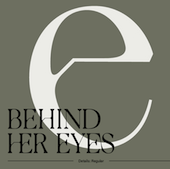 Fatima Abbas is a Sudanese graphic design student at Virginia Commonwealth University School of Arts in Qatar. In 2021, she designed the display typeface Brier which is characterized by tiny broken strokes in the crossbars and elephant feet. [Google]
[More] ⦿
Fatima Abbas is a Sudanese graphic design student at Virginia Commonwealth University School of Arts in Qatar. In 2021, she designed the display typeface Brier which is characterized by tiny broken strokes in the crossbars and elephant feet. [Google]
[More] ⦿
|
fc fonts for African languages
[Jörg Knappen]
|
Jörg Knappen's fc fonts for African languages. In metafont. The following languages are supported: Akan, Bamileke, Basa (Kru), Bemba, Ciokwe, Dinka, Dholuo (Luo), Efik, Ewe-Fon, Fulani (Fulful), G\~a, Gbaya, Hausa, Igbo, Kanuri, Kikuyu, Kikongo, Kpelle, Krio, Luba, Mandekan (Bambara), Mende, More, Ngala, Nyanja, Oromo, Rundi, Kinya Rwanda, Sango, Serer, Shona, Somali, Songhai, Sotho (two different writing systems), Suaheli, Tiv, Yao, Yoruba, Xhosa and Zulu. Plus Maltese and Sami. Jörg Knappen works at the University of Mainz in Germany. [Google]
[More] ⦿
|
Feedel web site: Ethiopian font
|
Fekade S. Mesfin's page on the shareware font "feedel" and other stuff about Ethiopian fonts. [Google]
[More] ⦿
|
Felix Holland
[Die Weberei]
|
[More] ⦿
|
Felix Kett
|
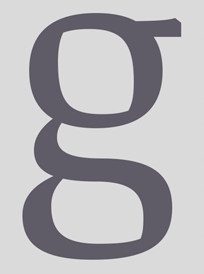 German graduate of the MATD program at the University of Reading, class of 2019. Felix's graduation typefaces there was Memirati. He writes: Memirati (in Amharic: to lead) is a typeface family designed to perform well on small-screen devices and in situations where space and readability are most important. It brings together the unique features of the Latin and the Ethiopic script but tries not to equalise them. Instead, it aims for a harmonic side-by-side which is achieved through acknowledging the calligraphic nature of both scripts. [Google]
[More] ⦿
German graduate of the MATD program at the University of Reading, class of 2019. Felix's graduation typefaces there was Memirati. He writes: Memirati (in Amharic: to lead) is a typeface family designed to perform well on small-screen devices and in situations where space and readability are most important. It brings together the unique features of the Latin and the Ethiopic script but tries not to equalise them. Instead, it aims for a harmonic side-by-side which is achieved through acknowledging the calligraphic nature of both scripts. [Google]
[More] ⦿
|
Felix Obinna
|
Lagos, Nigeria-based designer of Flutterwave (2019). [Google]
[More] ⦿
|
Fidel (other site)
|
Fidel's Ethiopic fonts, in BDF and truetype formats. [Google]
[More] ⦿
|
Fixedsys
[Darien Valentine]
|
Free truetype fonts: Tai Le Valentinum (for the Tai Le script used in China, Burma and Laos), Valentine Arabic, the faux pixel font Sounds of Apathy, and the unicode faux pixel font Fixedsys Excelsior 2.0 (2007). The latter covers Latin, Greek, Cyrillic, Hebrew, Armenian, Tamil, Hylian, N'Ko, Ethiopic, blackletter, Dehong Dai, Pahawh Hmong, Thaan, Arabic, Thai, Ogham, runic, and IPA. All fonts made by Darien Valentine in 2004. See also here. [Google]
[More] ⦿
|
Fontikon
[Michela Graziani]
|
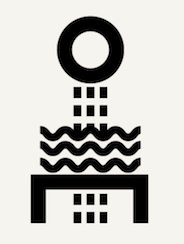 Rome, Italy-based designer. In her Fontikon font project (2020), ishe has produced eight fonts, each with letters and culture symbols: Alchemy Complex, Adinkra Wisdom, Aztec Empire, Celtic Iron, Lovecraftian Neue, Japan Kamon, Viking Norse, Slavian Ustav.
 Her Symbolikon set (2020) contains over 800 symbols / icons from the following cultures: Adinkra, Africa, Alchemy, American Native Rock Art, Ashtamangala, Asia, Astrology, Aztec, Buddhism, Celtic, Central America, Central Europe, Chakra, Christianity, Egyptian, Flowers, Greek Mythology, Hopi, Inca, Islam, Lakota Sioux, Latvian, Lovecraftian Mythos, Maori, Mapuche, Maya, Mu, Norse, Norse Runes, North America, North Europe, Pacific Area, Sacred Geometry, Slavic, South America, South Europe, Taino, Tarot Major Arcana. [Google]
[More] ⦿
|
Ge'ez -- Amharic
|
Ge'ez is the ancient language in which the scriptures of the Ethiopic Orthodox Church are written. Amharic is the majority language spoken in modern Ethiopia: it descended from Ge'ez, but is quite different. [Google]
[More] ⦿
|
Ge'ez Free Zemen
|
The free GF Zemen truetype fonts (gfzemen1.ttf and gfzemen2.ttf) are encoded in the "Ethiopian ASCII" system developed by EthiO Systems. "gfzemenu.ttf" is a Unicode encoded font for Ethiopic. Yonas Fissehi told me that he created a BDF font for X-Windows that was the precursor to gfzemen. He believes that GFZemen's credit should go to Yitna Firdyiwek of "Goha Tibeb"---Biruk Asrat ported the files. [Google]
[More] ⦿
|
GeezEdit 1.1
|
According to some sources, Mike Murray is selling stolen goods, in this case GeezEdit 1.1 (20 USD). Here is the blurb: " This is a stolen product. Cnet should be ashamed for being used by such a stupid thief. Mike Murray is in possession of numerous illegal fonts reverse engeneered from a free GeezEdit Amharic P font. Very ugly characters have been concocted out of smaller pieces and thrown into three arbitrary and imaginary typefaces.". [Google]
[More] ⦿
|
GeezFont
|
Dead link. Before its death, it had commercial Ethiopic software, free trial download. Has some Ge'ez fonts: GeezBausi, GeezAddis, GeezBasic, GeezLong, GeezThin, GeezDirib. [Google]
[More] ⦿
|
GeezSoft
|
Free truetype font for Ethiopic: GeezTypeNet. [Google]
[More] ⦿
|
Geneviève Cugnart
|
Geneviève Cugnart is a French-American graphic designer. Born in the United States, she studied graphic design at L'Ecole de Design Nantes-Atlantique before graduating from the MATD program at the University of Reading, class of 2020. Her graduation typeface was Mihuri, a book text typeface intended for typesetting multilingual publications. She writes: Covering Latin, Hebrew, and Ethiopic, each script retains its own structure while matching the on-page texture of the others. Inspired by the high-contrast modulation of Ethiopic broad-nib calligraphy, Mihuri explores what happens when the expansion contrast model is applied to letterforms based on broad-nib construction. [Google]
[More] ⦿
|
Georg Kerpert
|
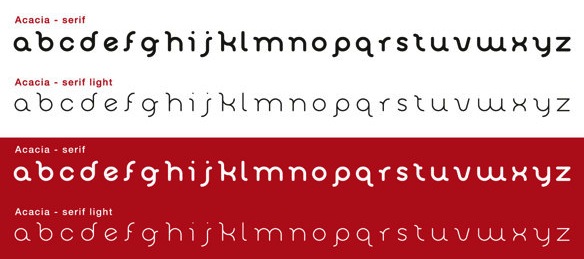
Graphic designer in Johannesburg, who created the rounded sans typeface Acacia (2013). [Google]
[More] ⦿
|
George Ryan
|
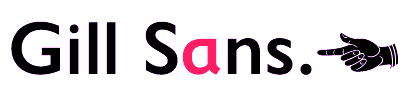 American designer, b. Rockville Centre, NY, 1950. George Ryan held senior positions at Linotype and Bitstream since 1979, where he has been involved in the production of over 2500 fonts. In 2004, Ryan joined Agfa Monotype, and is now a Monotype typeface designer. Creator of these typefaces:
 - The amazingly beautiful text font Kennedy GD (1995, Galapagos).
- Other Galapagos fonts: McLemore (2002), Geis (2002), Jorge (2002), Culpepper (2002, an extension and interpretation of Rudolf Koch's Neuland, 1923), the elegant formal script font Tiamaria (2002, connected script), the fat art nouveau font Robusto (2002, based on letters found in a book about Oswald Cooper), Prop Ten (2002).
- The hand-printed comic book style typeface ITC Kristen (1995).
- The legible Nikki New Roman GD (1996).
- The handwriting font MohawcsNote GD.
- The Bitstream font Oz Handicraft BT (1991). This was created by George Ryan in 1990 from a showing of Oswald Cooper's hand lettering found in The Book of Oz Cooper, published in 1949 by the Society of Typographic Arts in Chicago). A refresh was done in 2016.
- Migrate GD (now ITC Migrate).
- ITC Eborg.
- The fine dingbat font Web-O-Mints GD.
- The clean sans serif Wyle GD.
- Established in 2003 by George Ryan in Arlington, MA, Bilt Fonts (Aruban Font Foundry) sells revivals and original designs through MyFonts. Typefaces include Pietin, Geo Sans, Netto, Rescue, Jingle, Geo Tablet, Lottsa Lotta, Big Stuff, Rainman, Depth Charge, Sansand, Bulla Bulla, Kappa Nappa, Kappa Sappa, Sarabella (2004, calligraphic), Marcus Texus (fun informal), Marcus Displaeus, and Spio Beo.
- Semaphore (Bitstream, with Dave Robbins).
- In 2007, at Monotype, he made Givens Antiqua, named after Robert Givens, the co-founder and first president of Monotype Imaging---it is a soft and elegant serif family in 16 styles.
- In 2012, he published the comic book felt tip marker typeface Koorkin (Monotype).
- In 2013, he worked on an Ethiopic typeface at Monotype.
- In 2015, Monotype set out to remaster, expand and revitalize Eric Gill's body of work, with more weights, more characters and more languages to meet a wide range of design requirements. As part of that effort, George Ryan extended the popular Gill Sans from 18 to 43 fonts in his Gill Sans Nova (2015). Several new display fonts are available, including a suite of six inline weights, shadowed outline fonts that were never digitized and Gill Sans Nova Deco that was previously withdrawn from the Monotype library. Greek and Cyrillic coverage.
FontShop link. Klingspor link. View George Ryan's typefaces. [Google]
[MyFonts]
[More] ⦿
|
George W. Nuss
|
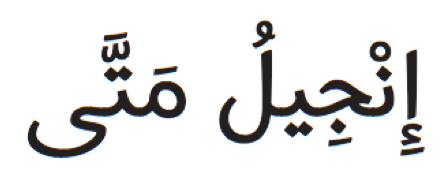 Designer in 2011-2012 of the Arabic typeface Fouta developed for the Guinean community. This was at the basis of the free font Harmattan (2015, SIL International; Google Font link). SIL explains: Harmattan, named after the trade winds that blow during the winter in West Africa, is designed in a Warsh style to suit the needs of languages using the Arabic script in West Africa. The font does not cover the full Unicode Arabic repertoire. It only supports characters known to be used by languages in West Africa. This font provides a simplified rendering of Arabic script, using basic connecting glyphs but not including a wide variety of additional ligatures or contextual alternates (only the required lam-alef ligatures.) This simplified style is often preferred for clarity, especially in non-Arabic languages, but may be considered unattractive in more traditional and literate communities. [Google]
[More] ⦿
Designer in 2011-2012 of the Arabic typeface Fouta developed for the Guinean community. This was at the basis of the free font Harmattan (2015, SIL International; Google Font link). SIL explains: Harmattan, named after the trade winds that blow during the winter in West Africa, is designed in a Warsh style to suit the needs of languages using the Arabic script in West Africa. The font does not cover the full Unicode Arabic repertoire. It only supports characters known to be used by languages in West Africa. This font provides a simplified rendering of Arabic script, using basic connecting glyphs but not including a wide variety of additional ligatures or contextual alternates (only the required lam-alef ligatures.) This simplified style is often preferred for clarity, especially in non-Arabic languages, but may be considered unattractive in more traditional and literate communities. [Google]
[More] ⦿
|
Gikuyu
|
Gikuyu is a commercial font package prepared by Match Fonts with appropriate diacritics fir the Gikuyu language. [Google]
[More] ⦿
|
Glavy Fonts
[Jason Glavy]
|
Jason Glavy, who lives in Yokohama, runs Glavy Fonts. He has created some free fonts: JG Lepcha (2001, a South asian language font), JG Chantabouli and JG Sasettha (cleaned up and extended unicode vesions of Sasettha and Chantabouli fonts created by John Durdin), JGAksaraBali, JGBasicLao, JGChamVer2, JGChamCambodia, JGChamVN, JGChantabouliLao, JGHurufJawaSanskrit, JGLaoOldArial, JGLaoOldface, JGLaoTimes, JGSoyombo (Tibetan), WL-LatinIPATimes. He used to have a bunch of Japanese fonts on his web site, including his Jindaimoji series. He also created three fonts for Makassarese/Buginese. At some point, he was associated with Saronix Japan. His Hmong page had JGCwjmemFinalVersion, JGCwjmemSecondVersion, JGCwjmemThirdVersion, JGNaadaasFinalVersion, JGNaadaasSecondVersion, JGNaadaasThirdVersion, JGPahawhFinalVersion, JGPahawhSecondVersion, JGPahawhSourceVersion, JGPahawhThirdVersion, JGPuajTxwm, all made in 2002: of these, the Pahawh series is original, while Cwjmem and Naadaas are improvements of other fonts. West African fonts designed by him: JGBassaVahHandwriting, JGBassaVahPrint, JGBete, JGKpelleA, JGKpelleB, JGNKo, JGVaiA, JGVaiB, JGVaiC. These fonts are well researched, and are based on drawings and findings by Dalby, Dr. Welmer, and Jensen. Some of Glavy's fonts for other languages: JGBasicLao, JGChamCambodia (1998), JGChamVN (1998), JGChantabouliLao, JGHurufJawaSanskrit (2001), JGLaoOldArial, JGLaoOldface, JGLaoTimes, JG Lepcha (2001), JGSoyomb (2001). See also SIL's Mingzat (2019) for the Lepcha language of South asia, wich is based on JG Lepcha. [Google]
[More] ⦿
|
GNU Freefont (or: Free UCS Outline Fonts)
[Steve White]
|
 The GNU Freefont is continuously being updated to become a large useful Unicode monster. GNU FreeFont is a free family of scalable outline fonts, suitable for general use on computers and for desktop publishing. It is Unicode-encoded for compatability with all modern operating systems. There are serif, Sans and Mono subfamilies. Also called the "Free UCS Outline Fonts", this project is part of the larger Free Software Foundation. The original head honcho was Primoz Peterlin, the coordinator at the Institute of Biophysics of the University of Ljubljana, Slovenia. In 2008, Steve White (aka Stevan White) took over. URW++ Design&Development GmbH. URW++ donated a set of 35 core PostScript Type 1 fonts to the Ghostscript project.
 - Basic Latin (U+0041-U+007A)
- Latin-1 Supplement (U+00C0-U+00FF)
- Latin Extended-A (U+0100-U+017F)
- Spacing Modifier Letters (U+02B0-U+02FF)
- Mathematical Operators (U+2200-U+22FF)
- Block Elements (U+2580-U+259F)
- Dingbats (U+2700-U+27BF)
Yannis Haralambous and John Plaice. Yannis Haralambous and John Plaice are the authors of Omega typesetting system, which is an extension of TeX. Its first release, aims primarily at improving TeX's multilingual abilities. In Omega all characters and pointers into data-structures are 16-bit wide, instead of 8-bit, thereby eliminating many of the trivial limitations of TeX. Omega also allows multiple input and output character sets, and uses programmable filters to translate from one encoding to another, to perform contextual analysis, etc. Internally, Omega uses the universal 16-bit Unicode standard character set, based on ISO-10646. These improvements not only make it a lot easier for TeX users to cope with multiple or complex languages, like Arabic, Indic, Khmer, Chinese, Japanese or Korean, in one document, but will also form the basis for future developments in other areas, such as native color support and hypertext features. ... Fonts for UT1 (omlgc family) and UT2 (omah family) are under development: these fonts are in PostScript format and visually close to Times and Helvetica font families. - Latin Extended-B (U+0180-U+024F)
- IPA Extensions (U+0250-U+02AF)
- Greek (U+0370-U+03FF)
- Armenian (U+0530-U+058F)
- Hebrew (U+0590-U+05FF)
- Arabic (U+0600-U+06FF)
- Currency Symbols (U+20A0-U+20CF)
- Arabic Presentation Forms-A (U+FB50-U+FDFF)
- Arabic Presentation Forms-B (U+FE70-U+FEFF)
Yannis Haralambous and Wellcome Institute. In 1994, The Wellcome Library The Wellcome Institute for the History of Medicine 183 Euston Road, London NW1 2BE, England, commissioned Mr. Haralambous to produce a Sinhalese font for them. We have received 03/09 official notice from Robert Kiley, Head of e-Strategy for the Wellcome Library, that Yannis' font could be included in GNU FreeFont under its GNU license: Sinhala (U+0D80-U+0DFF). Young U. Ryu at the University of Texas at Dallas is the author of Txfonts, a set of mathematical symbols designed to accompany text typeset in Times or its variants. In the documentation, Young adresses the design of mathematical symbols: "The Adobe Times fonts are thicker than the CM fonts. Designing math fonts for Times based on the rule thickness of Times =,, +, /, <, etc. would result in too thick math symbols, in my opinion. In the TX fonts, these glyphs are thinner than those of original Times fonts. That is, the rule thickness of these glyphs is around 85% of that of the Times fonts, but still thicker than that of the CM fonts." Ranges: Arrows (U+2190-U+21FF), Mathematical Symbols (U+2200-U+22FF). Valek Filippov added Cyrillic glyphs and composite Latin Extended A to the whole set of the abovementioned URW set of 35 PostScript core fonts, Ranges: Latin Extended-A (U+0100-U+017F), Cyrillic (U+0400-U+04FF). Wadalab Kanji Comittee. Between April 1990 and March 1992, Wadalab Kanji Comittee put together a series of scalable font files with Japanese scripts, in four forms: Sai Micho, Chu Mincho, Cho Kaku and Saimaru. The font files were written in custom file format, while tools for conversion into Metafont and PostScript Type 1 were also supplied. The Wadalab Kanji Comittee has later been dismissed, and the resulting files can be now found on the FTP server of the Depertment of Mathematical Engineering and Information Physics, Faculty of Engineering, University of Tokyo: Hiragana (U+3040-U+309F), Katakana (U+30A0-U+30FF). Note that some time around 2009, the hiragana and katakana ranges were deleted. Angelo Haritsis has compiled a set of Greek type 1 fonts. The glyphs from this source has been used to compose Greek glyphs in FreeSans and FreeMono. Greek (U+0370-U+03FF). Yannis Haralambous and Virach Sornlertlamvanich. In 1999, Yannis Haralambous and Virach Sornlertlamvanich made a set of glyphs covering the Thai national standard Nf3, in both upright and slanted shape. Range: Thai (U+0E00-U+0E7F). Shaheed Haque has developed a basic set of basic Bengali glyphs (without ligatures), using ISO10646 encoding. Range: Bengali (U+0980-U+09FF). Sam Stepanyan created a set of Armenian sans serif glyphs visually compatible with Helvetica or Arial. Range: Armenian (U+0530-U+058F). Mohamed Ishan has started a Thaana Unicode Project. Range: Thaana (U+0780-U+07BF). Sushant Kumar Dash has created a font in his mother tongue, Oriya: Oriya (U+0B00-U+0B7F). But Freefont has dropped Oriya because of the absence of font features neccessary for display of text in Oriya. Harsh Kumar has started BharatBhasha for these ranges: - Devanagari (U+0900-U+097F)
- Bengali (U+0980-U+09FF)
- Gurmukhi (U+0A00-U+0A7F)
- Gujarati (U+0A80-U+0AFF)
Prasad A. Chodavarapu created Tikkana, a Telugu font family: Telugu (U+0C00-U+0C7F). It was originally included in GNU Freefont, but supoort for Telugu was later dropped altogether from the GNU Freefont project. Frans Velthuis and Anshuman Pandey. In 1991, Frans Velthuis from the Groningen University, The Netherlands, released a Devanagari font as Metafont source, available under the terms of GNU GPL. Later, Anshuman Pandey from Washington University in Seattle, took over the maintenance of font. Fonts can be found on CTAN. This font was converted the font to Type 1 format using Peter Szabo's TeXtrace and removed some redundant control points with PfaEdit. Range: Devanagari (U+0900-U+097F). Hardip Singh Pannu. In 1991, Hardip Singh Pannu has created a free Gurmukhi TrueType font, available as regular, bold, oblique and bold oblique form. Range: Gurmukhi (U+0A00-U+0A7F). Jeroen Hellingman (The Netherlands) created a set of Malayalam metafonts in 1994, and a set of Oriya metafonts in 1996. Malayalam fonts were created as uniform stroke only, while Oriya metafonts exist in both uniform and modulated stroke. From private communication: "It is my intention to release the fonts under GPL, but not all copies around have this notice on them." Metafonts can be found here and here. Ranges: Oriya (U+0B00-U+0B7F), Malayalam (U+0D00-U+0D7F). Oriya was subsequently dropped from the Freefont project. Thomas Ridgeway, then at the Humanities And Arts Computing Center, Washington University, Seattle, USA, (now defunct), created a Tamil metafont in 1990. Anshuman Pandey from the same university took over the maintenance of font. Fonts can be found at CTAN and cover Tamil (U+0B80-U+0BFF). Berhanu Beyene, Prof. Dr. Manfred Kudlek, Olaf Kummer, and Jochen Metzinger from the Theoretical Foundations of Computer Science, University of Hamburg, prepared a set of Ethiopic metafonts. They also maintain the home page on the Ethiopic font project. Someone converted the fonts to Type 1 format using TeXtrace, and removed some redundant control points with PfaEdit. Range: Ethiopic (U+1200-U+137F). Maxim Iorsh. In 2002, Maxim Iorsh started the Culmus project, aiming at providing Hebrew-speaking Linux and Unix community with a basic collection of Hebrew fonts for X Windows. The fonts are visually compatible with URW++ Century Schoolbook L, URW++ Nimbus Sans L and URW++ Nimbus Mono L families, respectively. Range: Hebrew (U+0590-U+05FF). Vyacheslav Dikonov made a Braille unicode font that could be merged with the UCS fonts to fill the 2800-28FF range completely (uniform scaling is possible to adapt it to any cell size). He also contributed a free Syriac font, whose glyphs (about half of them) are borrowed from the free Carlo Ator font. Vyacheslav also filled in a few missing spots in the U+2000-U+27FF area, e.g., the box drawing section, sets of subscript and superscript digits and capital Roman numbers. Ranges: Syriac (U+0700-U+074A), Box Drawing (U+2500-U+257F), Braille (U+2800-U+28FF). Panayotis Katsaloulis helped fixing Greek accents in the Greek Extended area: (U+1F00-U+1FFF). M.S. Sridhar. M/S Cyberscape Multimedia Limited, Mumbai, developers of Akruti Software for Indian Languages (http://www.akruti.com/), have released a set of TTF fonts for nine Indian scripts (Devanagari, Gujarati, Telugu, Tamil, Malayalam, Kannada, Bengali, Oriya, and Gurumukhi) under the GNU General Public License (GPL). You can download the fonts from the Free Software Foundation of India WWW site. Their original contributions to Freefont were - Devanagari (U+0900-U+097F)
- Bengali (U+0980-U+09FF)
- Gurmukhi (U+0A00-U+0A7F)
- Gujarati (U+0A80-U+0AFF)
- Oriya (U+0B00-U+0B7F)
- Tamil (U+0B80-U+0BFF)
- Telugu (U+0C00-U+0C7F)
- Kannada (U+0C80-U+0CFF)
- Malayalam (U+0D00-U+0D7F)
Oriya, Kannada and Telugu were dropped from the GNU Freefont project. DMS Electronics, The Sri Lanka Tipitaka Project, and Noah Levitt. Noah Levitt found out that the Sinhalese fonts available on the site metta.lk are released under GNU GPL. These glyphs were later replaced by those from the LKLUG font. Finally the range was completely replaced by glyphs from the sinh TeX font, with much help and advice from Harshula Jayasuriya. Range: Sinhala (U+0D80-U+0DFF). Daniel Shurovich Chirkov. Dan Chirkov updated the FreeSerif font with the missing Cyrillic glyphs needed for conformance to Unicode 3.2. The effort is part of the Slavjanskij package for Mac OS X. range: Cyrillic (U+0400-U+04FF). Abbas Izad. Responsible for Arabic (U+0600-U+06FF), Arabic Presentation Forms-A, (U+FB50-U+FDFF), Arabic Presentation Forms-B (U+FE70-U+FEFF). Denis Jacquerye added new glyphs and corrected existing ones in the Latin Extended-B (U+0180-U+024F) and IPA Extensions (U+0250-U+02AF) ranges. K.H. Hussain and R. Chitrajan. Rachana in Malayalam means to write, to create. Rachana Akshara Vedi, a team of socially committed information technology professionals and philologists, has applied developments in computer technology and desktop publishing to resurrect the Malayalam language from the disorder, fragmentation and degeneration it had suffered since the attempt to adapt the Malayalam script for using with a regular mechanical typewriter, which took place in 1967-69. K.H. Hussein at the Kerala Forest Research Institute has released "Rachana Normal" fonts with approximately 900 glyphs required to typeset traditional Malayalam. R. Chitrajan apparently encoded the glyphs in the OpenType table. In 2008, the Malayalam ranges in FreeSerif were updated under the advise and supervision of Hiran Venugopalan of Swathanthra Malayalam Computing, to reflect the revised edition Rachana_04. Range: Malayalam (U+0D00-U+0D7F). Solaiman Karim filled in Bengali (U+0980-U+09FF). Solaiman Karim has developed several OpenType Bangla fonts and released them under GNU GPL. Sonali Sonania and Monika Shah covered Devanagari (U+0900-U+097F) and Gujarati (U+0A80-U+0AFF). Glyphs were drawn by Cyberscape Multimedia Ltd., #101, Mahalakshmi Mansion 21st Main 22nd "A" Cross Banashankari 2nd stage Banglore 560070, India. Converted to OTF by IndicTrans Team, Powai, Mumbai, lead by Prof. Jitendra Shah. Maintained by Monika Shah and Sonali Sonania of janabhaaratii Team, C-DAC, Mumbai. This font is released under GPL by Dr. Alka Irani and Prof Jitendra Shah, janabhaaratii Team, C-DAC, Mumabi. janabhaaratii is localisation project at C-DAC Mumbai (formerly National Centre for Software Technology); funded by TDIL, Govt. of India. Pravin Satpute, Bageshri Salvi, Rahul Bhalerao and Sandeep Shedmake added these Indic language cranges: - Devanagari (U+0900-U+097F)
- Gujarati (U+0A80-U+0AFF)
- Oriya (U+0B00-U+0B7F)
- Malayalam (U+0D00-U+0D7F)
- Tamil (U+0B80-U+0BFF)
In December 2005 the team at www.gnowledge.org released a set of two Unicode pan-Indic fonts: "Samyak" and "Samyak Sans". "Samyak" font belongs to serif style and is an original work of the team; "Samyak Sans" font belongs to sans serif style and is actually a compilation of already released Indic fonts (Gargi, Padma, Mukti, Utkal, Akruti and ThendralUni). Both fonts are based on Unicode standard. You can download the font files separately. Note that Oriya was dropped from the Freefont project. Kulbir Singh Thind added Gurmukhi (U+0A00-U+0A7F). Dr. Kulbir Singh Thind designed a set of Gurmukhi Unicode fonts, AnmolUni and AnmolUni-Bold, which are available under the terms of GNU license from the Punjabu Computing Resource Center. Gia Shervashidze added Georgian (U+10A0-U+10FF). Starting in mid-1990s, Gia Shervashidze designed many Unicode-compliant Georgian fonts: Times New Roman Georgian, Arial Georgian, Courier New Georgian. Daniel Johnson. Created by hand a Cherokee range specially for FreeFont to be "in line with the classic Cherokee typefaces used in 19th century printing", but also to fit well with ranges previously in FreeFont. Then he made Unified Canadian Syllabics in Sans, and a Cherokee and Kayah Li in Mono! And never to be outdone by himself, then did UCAS Extended and Osmanya.... What next? - Armenian (serif) (U+0530-U+058F)
- Cherokee (U+13A0-U+13FF)
- Unified Canadian Aboriginal Syllabics (U+1400-U+167F)
- UCAS Extended (U+18B0-U+18F5)
- Kayah Li (U+A900-U+A92F)
- Tifinagh (U+2D30-U+2D7F)
- Vai (U+A500-U+A62B)
- Latin Extended-D (Mayanist letters) (U+A720-U+A7FF)
- Osmanya (U+10480-U+104a7)
George Douros, the creator of several fonts focusing on ancient scripts and symbols. Many of the glyphs are created by making outlines from scanned images of ancient sources. - Aegean: Phoenecian (U+10900-U+1091F).
- Analecta: Gothic (U+10330-U+1034F)
- Musical: Byzantine (U+1D000-U+1D0FF)&Western (U+1D100-U+1D1DF)
- Unicode: many miscellaneous symbols, miscellaneous technical, supplemental symbols, and mathematical alphanumeric symbols (U+1D400-U+1D7FF), Mah Jong (U+1F000-U+1F02B), and the outline of the domino (U+1F030-U+1F093).
Steve White filled in a lot of missing characters, got some font features working, left fingerprints almost everywhere, and is responsible for these blocks: Glagolitic (U+2C00-U+2C5F), Coptic (U+2C80-U+2CFF). Pavel Skrylev is responsible for Cyrillic Extended-A (U+2DEO-U+2DFF) as well as many of the additions to Cyrillic Extended-B (U+A640-U+A65F). Mark Williamson made the MPH 2 Damase font, from which these ranges were taken: - Hanunóo (U+1720-U+173F)
- Buginese (U+1A00-U+1A1F)
- Tai Le (U+1950-U+197F)
- Ugaritic (U+10380-U+1039F)
- Old Persian (U+103A0-U+103DF)
Primoz Peterlin filled in missing glyphs here and there (e.g., Latin Extended-B and IPA Extensions ranges in the FreeMono family), and created the following UCS blocks: - Latin Extended-B (U+0180-U+024F)
- IPA Extensions (U+0250-U+02AF)
- Arrows (U+2190-U+21FF)
- Box Drawing (U+2500-U+257F)
- Block Elements (U+2580-U+259F)
- Geometrical Shapes (U+25A0-U+25FF)
Jacob Poon submitted a very thorough survey of glyph problems and other suggestions. Alexey Kryukov made the TemporaLCGUni fonts, based on the URW++ fonts, from which at one point FreeSerif Cyrillic, and some of the Greek, was drawn. He also provided valuable direction about Cyrillic and Greek typesetting. The Sinhala font project has taken the glyphs from Yannis Haralambous' Sinhala font, to produce a Unicode TrueType font, LKLUG. These glyphs were for a while included in FreeFont: Sinhala (U+0D80-U+0DFF). Fontspace link. Crosswire link for Free Monospaced, Free Serif and Free Sans. Download link. [Google]
[More] ⦿
|
GohaTibebZemen
|
A free Ethiopic font. [Google]
[More] ⦿
|
Gonjetso C
[Twenty Two Creative Co.]
|
[More] ⦿
|
Graphite Fonts
|
This site has a number of free truetype fonts, such as SILDoulos PigLatinDemo (2000, Summer Institute of Linguistics), NeoAssyrianRAI (2001, a Sumero-Akkadian Cuneiform font by Karljuergen G. Feuerherm), DoulosSIL (2002, a big Unicode-compliant font), PadaukSuper (2003, Burmese font), Code2000 (2003, James Kass's huge unicode font; the version here is called Code2000 Tamil Graphite) Koli Nko Manden (1999, by the Fakoli Corporation for the West African language N'Ko). [Google]
[More] ⦿
|
HacenType
[Muhammad Hacen]
|
Run by Mohamed Hacen Mottaly (b. 1978, Mauritania), a graphics and type specialist. Unless otherwise indicated, all fonts were made in 2006 by Mohamed Hacen. Free Latin fonts: HacenCAPSpice33, HacenCAPSpice65, HacenPixer (by Jen Aimon). Free Arabic fonts: HacenBeirutHeading, HacenBeirutLight, HacenBeirut, HacenCAPSpice33, HacenCAPSpice65, HacenCasablancaHeavy, HacenCasablancaLight, HacenCasablanca, HacenDalalSt, HacenDalalText, HacenDalal, HacenEgypt, HacenFreehand, HacenLebanon, HacenLinerPrint-outLight, HacenLinerPrint-out, HacenLinerScreenBd, HacenLinerScreen, HacenLinerXL, HacenLinerXXL, HacenNewspaper, HacenPixer, HacenPromoterLt, HacenPromoterMd, HacenPromoter, HacenSahafa, HacenSamraLt, HacenSamra, HacenTypographerBold, HacenTypographerBook, HacenTypographerHeavy, HacenTypographer. Hacen Tehran (2006) is here. Hacen Liner and Hacen Tunisia (2005-2014) are free fonts that are available at Open Font Library. Another Open Font Library link. [Google]
[More] ⦿
|
Happyloverstown
[Jonathan Calugi]
|
 Very talented Pistoia, Italy-based designer (b. 1982). His typefaces:
 A follower of Calugi writes: Jonathan is a young illustrator hailing from Pistoia, Italy. It's nearly impossible to not recognize his signature style: what at first appears to be a child-like doodling, a closer look will reveal a world of intricate, carefully crafted patterns and eccentric geometric forms. Hellofont link. Behance link. Dafont link. [Google]
[More] ⦿
|
Hayley Rogers
|
Student at ZIVA, a typography and graphic design school in Harare, Zimbabwe, led by Saki Mafundikwa. In 2001, she designed an alphabet inspired by rock paintings, with letters in the forms of humans. Her alphabet is featured in "Language Culture Type" (John D. Berry ed., Graphis, 2002). [Google]
[More] ⦿
|
House of Lime
[Merethe Liljedahl]
|
 Defunct type foundry that had free original dingbats, alphadings and fonts, mostly from scanned art by Merethe Liljedahl (House of Lime) in Landskrona, Sweden.
 The font list: Abstract, Africa, African Design, African Eggs, AfricanPattern, AlphaRemember, AlphaSausage, AlphaThin, AmishQuilts, AngelsFairies, Angelsaroundtheworld, AngloText, Animal, AnimalDesign, AntiqueStuff, AntiqueStuffII, AroundSports, Aroundthehouse, ArtDecoMotif, ArtNouveauBild, ArtNouveauBlume, ArtNouveauFlowers, ArtNouveauFramesandBorders, ArtNouveauInitials (2001), ArtNouveauInitialsA, ArtNouveauInitialsB, ArtNouveauInitialsC, AsianArt, AsianArtII, BOO, BabyTime, BackToSchool (2000, pencil-themed face), Bagsandstuff, BagsandstuffII, Balloons, Baseball, Big Lou (2003, art deco), BirdStencilDesign, BirdStencilDesignII, Birdies, Bzzy (2004, alphadings), Books, Butterflies, Buttons (2006), Calender, CamelotCaps (2000), CarstensOwls, Cats, CelticElements, CelticElementsII, CelticMotif, Celtics, Cherub, CheshireInitials (2001), Chiseled (2006), ChristmasTime, ChristmasWreath, ChubbyDotty, ChubbyTrail, Cornerflair (2002), CrayolaKiddyFont, Curly Fleur Caps, DBLCeltic, DBLCorners, DBLFacesfromthepast, DBLFlowerDelight, DBLMedievalDesign, DancerInTheDark, DancerInTheDarkII, DancerInTheDarkIII, DecorativeOrnamental, Decorette, Decorina (2001), DesignMotif, DesignerCorners, DesignerCorners, DesignerDing, DesignerDividers, DesignerFrames, DesignerFramesTwo, DesignerMix, DesignerMixII, DesignerMixed, DesignerMotifs, DesignerMotifsThree, DesignerMotifsTwo, DesignerPlus, DesignerStuff, Dividers, DividersTwo, DoggyBag, DogsandCats, Dolphins, Dot Trail (2002), DoverChineseMotifDesign, DoverFloral, DoverFloralandDesignII, DoverJapaneseDesign, Dragons, Durbin Initials (2009), EasterBunny, EasterHoppy, EasterTime, EatingOut, Egypt, ElectionTime (2000), Elegance, EvelynsHeart, EvsDragons, ExtraOrnamentalNo2, FaceofaLady, Faces2Faces, FacesOfTheCentury, Faith, Fans, Fashion, FashionLadies, FleurCornerCaps (2000), FloralDesign, FloralStencilDesign, FloridVictorianOrnament, FlowerandFairyAlphabet, Folklore, FolkloreII, Fontanesi, Framed, Frames, FramesAndBorders, FramesAndBordersII, FramesAndBordersIII, FramesandBackgrounds, FramesandHeaders, Fromthegarden, Fruityandveggie, Furballs, GailsUnicorn, GardenTime, Geisha, Genzsch Initials, GermanCaps, GothicCornerCaps, GothicFlourish, GrafikText, GuinevereCaps, HalloweenKiddyFont, Hats, HatsII, HatsIII, HatsIV, HatsV, HeartsofLime, Heraldics, Horses, Houses, HousesII, Howling, Iconettes, Inmygarden, Inyourgarden, Itsserved, Jars, JustFrames, KarensKitties, KeyasTurtles, KiddyDing, KiddyFlakey (2002), KiddyFrames, KiddyHalloween, KiddyToys, KidsAlphabet, KittytheCat, Ladiesofthe20s, Leaves, LimeBlossomCaps (1999), LimeGloryCaps (2000), LisasDragons, LittleHeroes, LizsGibsonGirls, LovePoision, Maskes, MedievalAlphabet (2000), MedievalMotif, MedievalMotifTwo, MexicanMotif, MirrorImage, MosaicCaps (2000), Motif, Mousie (2000, alphadings), MoyrasParrots, Music For Your Ears (2006), MutansII, Mutants, Mythical, NavyBlues (2000, white on black buttons), OldFashionedIllus, OldFloralIllustration, OldFolksShuffle (2000), Onthefarm, OrientalDesign, OrientalIcons, OrientalIconsII, OrientalIconsIII, OrientalIconsIV, OrientalView, OrnamentalCorners, OrnamentalDecoration, OrnamentalDecorationII, OrnamentalElements, OrnamentalElementsII, OrnamentalFramesI, OrnamentalInitialsA, OrnamentalInitialsB, OrnamentalInitialsC, OrnamentalInitialsD, OrnamentalInitialsE, OrnamentalInitialsF, OrnamentalInitialsG, OrnamentalInitialsH, OrnamentalInitialsI, OrnamentalInitialsJ, OrnamentalInitialsK, OrnamentalInitialsL, OrnamentalInitialsM, OrnamentalInitialsN, OrnamentalInitialsO, OrnamentalInitialsP, OrnamentalInitialsQ, OrnamentalInitialsR, OrnamentalInitialsS, OrnamentalInitialsT, OrnamentalInitialsU, OrnamentalInitialsV, OrnamentalInitialsW, OrnamentalInitialsX, OrnamentalInitialsY, OrnamentalInitialsZ, OutOfAfrica (2000), Paisley, Paisley Caps, PaisleyII, Party (2004, Mexican simulation face), Pentagon (2003, Western face), PhilliBoo, PokemonKiddyDing, Retro Elite (2003, art deco), RibbonCaps, Rose, Rosegarden, Scary, Scary House, Scrapper's Arrows, ScrappersCorner, ScrappersElements, ScrappersElementsII, ScrappersElementsIII, ScrappersElementsIV, ScrappersElementsV, ScrappersKeys, ScrappersStencil, ScrappingDoodles, Scream, Sealife, September11, Shaking Salsa, Ships, SimplyFriends, Skeleton, Smelly, SomeoneSpecial, Spiders (2001), SplatterCaps, Spooky, Sporty (2004), Spring (2003, Victorian ornamental typeface), Square Frame (2006), Stamped Flowers, Starlite, Stars, Stencil, StripesCaps (2000), SugarFootStrut, Sun and Moon, Sunflowers, Sunny Days (2004), SunshineKiddyFont, Tattoo, TheGoddess, ThePerfectMan, ThemeCorners, TiffanyCorners, TiffanyCornersII, TiffanyCornersIII, Tiles, Tools, TraditionalFloralDesign, TraditionalFloralDesignII, TraditionalFloralDesignIII, Trapeze (2004), TreasuryofDesign, Treesandleaves, Tulips, TylersPokemon (2000), UncasWomen, Valentine, VictorianWindow, Wedding, Wildflower, WildflowerII, WildflowerIII, WildflowerIV, YesterdaysBeauty, YourSign, Yummi, Zodiac. Designer Menues (commercial dings, 2001). In 2006, these commercial dings: Scrapping Corners, Scrappers Fills. Direct access to the dingbats. Direct access to fonts. Fontspace link. Dafont link. Abstract Fonts link. [Google]
[More] ⦿
|
imagex
|
 Frenchman (b. 1957) who started making fonts in 2010, after a career in illustration, comics, and video games. In 2010, he created the free fonts BabyJo (pixel face), Bayday, Chrom (beveled face), LaPresse (grunge), Muffaroo, Poppy, Poppydot, Spacecard, Strokewith, Strokeless, ToonLand (comic book lettering), ToonLandBlack, ToonLandShad, TrashToys (grunge), WorldColors (3d face).
 In 2011, he published Francobelge (comic book face), Freepress (grunge), Gamix (Western titling face), Inmyroom (dingbats), Majestrick (calligraphic), Onomatopaf (comic book dings), Outerzone, OuterzoneB, Starz (dingbats), Stenstreet (grunge), Tram, Tramix (texture face), TrashToys02, War-Lettersn, Mixagex, Massive Dynamite (grunge), Not Well (grunge), Actu, Blck, Gling (texture face), HeRioz (silhouettes), Brightoon (cartoonish brush face), Muzo (ink spill face), Sharpy, Space Shop (dingbats), Pulp Dance (hand-printed), Essef (art deco), Retro Sign (grunge), Labo (grunge), Exhausted, Komikoz, Puzzled, Toonimals (dings), Penstriped (sketch face), Cashier (grungy), Dan Hand, Hardwell (grungy caps), Colleged (athletic lettering), Goodjean (jeans texture face), Seaside Things (dingbats), Real Tek (techno), Zou (3d hand-printed caps), Painter, Border Line (grunge), Handout (grunge), Tract (grunge), Pulpatone (grunge), Logos I Love, Pal Antic (chancery hand), Twent (fat rounded display face), DoodFlow (dingbats), Afro Add (texture face), Crump (grunge), Big White, Dark Room (grunge), Manifesto (grunge), Tacketil (a FontStruct font), Otto Land (sketch face), Over (outline face), Under (brush dings), Baskertown (grunge), Nursery Tale, Panic (texture face), BlackNDot (ink spill face), Beyond (striped display face), Advert, Car Crash (grunge), Heartz, Starsteel, Smart Faces, Blackflag (a brushed blackletter), Dock 51 (grungy stencil), Lead (3d face). In November 2011, he created a number of texture typefaces: Hotöcop, Pal Mod, Speedy (sketch face), Thirties Gold, Sunset GP. Further 2011 typefaces: Poptivi, Shadow Mole, Super Modern Black. Faces from 2012: Remanence, Winter Days (dingbats), Nowharehouse (grunge), Snuff (grunge), Cup of Tea (3d shadow face), Talk of the wall. Typefaces from 2012: Egirlz (dingbats), Art Post (white on black poster lettering), Volutes (copperplate calligraphic script), From me 2 you (curly script), PS I Love You, Kolossal (caps only), Kraash, Alexandre (3d engraved headline face), Monstres de poche (dingbats), Alternate (grunge), Warning, Dreams (brush face), Headline Crack, Bump Pad (textured typeface), Carton (grungy white-on-black stencil face), Maybe maybe Not, Frames n Riboons (sic), Blackboard (sketched face), Logotronik (a 3d techno face), Big Bad Dogs (dingbats), Libre Expression (engraved copperplate typeface), Mecagothix (textured blackletter face), Destroy, Destroy Helpers, Buy More, Things we said (curly face), Lost Saloon (Tuscan), Salon de Coiffure (beveled), Brighton Pier (grunge), Motel Vacancy (grunge), Bates Shower (dripping blood typeface), Venus Furs (texture typeface), Showmen, True Men Tattoos (dingbats), Quicker (sketch font), Romanum Est (grungy Trajan face), Also (scratchy letters), Lazy Day (3d font), Pusher, Hard Dumb, The Idiot, Overflowing (grunge), Fast Foont (sketched), Melange (grunge), Jumbo Parade (circus font), Happy Monsters, Zozox (experimental), Magic Sound (packaging typeface), Arena Mascaras (dingbats), Top View (3d face), Flagadoum, Last King Quest, Rhythm n Blacks (textured face), Troll Sketched, Superpoz (a 3d painted typeface of exceptional beauty), HalloCuties (Halloween font), Gothik Steel (circus font), Silvestre Relief (3d titling face), Just Like That (comic book face), Numero 10 (athletic lettering), Tet de Mor (skulls), Facelook, Xmas Dad, Instant Marker, Ragtimer, Punk Dots (textured face), Onomato Vlam (comic book balloons), 8th Cargo (textured mechanical octagonal face), Zu Kabarett (creepy curly German expressionist face), Unusual Day One, Happy New One (party font), Xmas Doods, Xmas Doods 2, Higher, Usual Day One, Team 401 (athletic lettering), Doonga (comic strip letters), Killer's Move. Typefaces from 2013: Them (fat brush), Ghost Code, Tiny Heroes (figurines), Over There (sci-fi), Higher than High, Abandon (sketched face), Broken Hearts, True Stories, A wolf at the door (wood style poster face), Elo Hand, Bots n Droids (dingbats), Toonimals 2 (dingbats), Halftoned Backup (textured face), Novlang (textured poster face), Come With Us, Ptits Pirates (pirate figurines), Board Dudes (skateboard dingbats), Big Bro's Watch (grungy), Doonga Slash (comic book face), Round About, Signz, Lethal League (grungy athletic lettering), Dark Times, Dandy Hat Trick, tardots (textured typeface), Dinoz (dinosaur dingbats), Big Surprise (fat script), Comix Loud, Arlequin, Fanzine Title, Scotch Taped, Phoenix (dingbats), Rock's Death (grunge), Tuamotu (textured), Trees Friends (dingbats), King Arthur Legend (blackletter), Fairy Strange, Flame On, Mystery, Money Go Round (ransom note font), Seven of One, Captain's Talk, Peaches en Regalia (sketch font), Wrong Board (textured or crayon typeface), Subito (comic book face), Extra Sales (signage face), Gimme Danger (grunge stencil), Alphabet City (graffiti font), Raleigh Rock, Rysky Lines, Splash, Good Vibers (comic book figurines), Tequilla Sunrise (3d shadow face), Graphers Blog, Star Waves, Splash, Action Comics, Wild Trails (wood plank typeface), Tiki Club (dingbats), Bad Striped (sketched face), Come With Me (paint drip face), Famous Oldies (textured face), Girly Toons (dingbats), Eshop Advert, Full Pack 2025, Dickson's Tale (a great grungy caps face), Hand Typewriter, Campus Relief (athletic lettering), ZalienZ (dingbats), Manga Style (oriental brush), Journal du Soir (letterpress emulation), Royal Delight (3d sketched face), Gothix Fate, Lettrisme (a letterpress ransom note font), NYC Zone 123 (graffiti face), Tedz (teddy bear dingbats), Merry Xmas, Last Day On Earth (textured typeface). Typefaces from 2014: Dite Alla Giovine (flared cursive script), Heavy Gothik (textured blackletter), Comix Bubbles, King of Scotland (textured), Lazy Sketch, Arabica Export (coffee bag texture), Scream Again, Season of the Witch, Soul Festival, Back Ride 342, Cheap-Potatoes, Nine-Feet-Under (grunge), Remingtoned-Type, Search'n-Destroy, Starz-2, Vanished, On The Roof (or: On The Tops), Mad Groove Blast, Another Brick (textured face), Destination Future, Perversionist, Dex's Jobs (Treefrog-style typeface), Ptit Coeur d'Amour, Mickey's School (athletic lettering), One Way or Another (a hand-drawn poster typeface), Californian Cars (license plates), Building State Empire, Back on Lime (shadow face), Next Ups (graffiti face), PatchFun (textured face), Railway to Hells, Shut'em Down, Misunderstanding, Another Brick (textureface), Perversionist (grunge), Destination Future, Linographer, Polish Posterisation, For Girls Only, Half Price 4 You (sketched typeface), Secret Agency (bad ink grunge), Player One (a grungy baseball Script), Raw Notice, Home Mad Popsters, No Silly Walk There, Bad Coma (lovely grunge), Dark Net Warrior (grunge), Cowboy Movie (Western font), Palm Beach (textured typeface), Search n Destroy (textured), Carnaval de mai, Variations (textured), Black Jeans (weathered font), City of Light, Santa's Air Mail (snow-capped letters), Cheap-Potatoes, Nine-Feet-Under, Remingtoned-Type, Search'n-Destroy, Starz-2, Vanished. Typefaces from 2015: Snake Jacket, Big Campus (athletic lettering), Penball Wizard, When The Eagles Dare, Urban Brush Zone (graffiti font), Wild West Pixel, World Black Shadow, Next Custom, Irresponsible Direction (grunge), Doodle Gum (textured), Posthuman (textured), Red Zone (glaz krak face), Smasher 312 (graffiti font), Columbine (dripping blood font), Tarentula's Web, Just Like This (retro funk), Eastern Brush (oriental brush typeface), Pulp Headlines (grungy typeface), War is Over (letterpress emulation), Thirties Relief, Flowers Power (sic) (floral caps), Direct du Gauche (inky brush), Jackpot (3d, sketched), Numero 10 Clean (athletic lettering), Lace Dreams (textured), Right Chalk (chalky crayon font), Lazy Sketch Black, Golden Age (shaded pixel font), Swamp Death (textured), Astounding News, Heavy Metal Rocking, Fifties Movies, Grunge Strokes 01, Cosmik Orchestra, Paysley Sports (sandy athletic lettering), No Safety Zone (grungy stencil), Quicksands (textured), Break It Down (glaz krak font), Naughty Cartoons, Mad Groove Clean (athletic lettering), Outlaw Stars (grungy Western face), Space Comics, Dirty Bowl 86 (athletic lettering), Cheap Potatoes Black (imitating pototo printing?), ExtraBlur (textured), Backside Air, Megalopolis, Curse of the Zombie, After the Goldrush, Avantgardiste 1934, Easy Fashion (textured), Free Thinking's Murder (textured), Phantom Zone (zombie texture), Snake In The Boot, Checkpoint Charlie (grungy stencil), For Girls Only Bold, Playing In The Mood (piano key face), Intergalactik Airlines, Les Mystères de Paris, Season of the Witch Black (blackletter), Resistance Is Futile (a great textured mechanical typeface), On The Tops Lights (matinee signage), Strawberry Fields, Serif of Nottingham, OnomatoBom (cartoon smaks). Typefaces from 2016: Dynamix (a shaded comic book typeface), Black Santa (snowy letters), Astral Delight, Mr. Headlines (titling sans), Sister Spray, Shaka Pow (cartoon font), Jack in the Box, Glitter Campus (athletic lettering), Ghost Crazy (heavy brush), Prezident, Flowers Kingdom (psychedelic), Galaxy Corps (octagonal stencil), Stitchn School, Brown Shoes, Armagedon (dry brush), Smasher 312 (graffiti style), Bad Stories, Master Droid, Heavy Metal Box (grungy letterpress), Outerspace Shoping (sic), Extros Backstage (squarish), Jelly Crazies (jellybean font), Black and White Banners, Ballad of Dwight Frye (grungy), Crazy Sixties, SciFi Movies, Maximum Strength (athletic lettering), Evanescente (sketched typeface), Urban Ghost, Vif Argent (watercolor brush script), Demolition Crack (textured), How to Disappear, Public Market, Pyjama Party, Magician Rings (modular sans), Pale Blue Eyes (brush script), All The Mad men (sketched), Dixociative (white-on-black), White Flame (octagonal typeface), Asian Delight (oriental brush emulation), Candy Shop, Barb Wire Club, Super Weird, My Socks Line. Typefaces from 2017: Scoubidou Rap, Good Morning (cartoon font), Graphik Arts (textured), Danger Zone Warning, Love The One You're With, Are You Hung Up (textured), Keys of Paradise, Mr Headlines Fancy, Game of Brush, Powerful, Ghost Shadow, Quick Menu Boards, Urban Fresh Air, Cheer Lace Leader (textured), Cracked Code (grunge), Very Simple Chalk, Fluo Gums, Very Popular, Personal Service, Blind Signature (crayon font), Blood n Guts, Quarterback Fight (octagonal athletic lettering), Supersonic Rocketship, Reboot Crush, Strange Path (dry brush font), Heroes Legend, Cache-Tampon, Championship (a great horizontally striped typeface), Silver Age Queens, Strange Tales. Typefaces from 2018: Play With Fire, Scrunched, Megalomaniac Headliners, Craps of Paper (white on black), All Things Must Pass (textured), Presque Normal, Interfearence, Pop of the Tops, Universal Knowledge, Digital College, Cold Turkey (a handcrafted horror font), Strange Magic, Grandissimo, Best Prices (sketched), Magician's Daughter, Children's Theater (textured), Magnifico, Lethal Slime, Pop of the Pops, Slow Death, Folk Festival, Strange Marvel, Strong Impact (octagonal), Heavy Metal Blight, Mango Slice, Are You Jimmy Carl Black, Strange Clowns, Mechanical Animals, Fast Forward, Spanish Castles, Vintage Warehouse, Swamp Black, Pixelmania, Enigma key, Vlump (wooden plank font), Guns n Flash Comix, Black Streamer, East Border (military stencil), Bot Craftshop, Super Quick, Don't You Know?, Return of the Flash, Only The Strong (weathered athletics font), Hands Up, Strange Shadow, White on Black, Ed Wood Movies. Typefaces from 2019: Inner Mounting Flame, Playtimes, Game Commands (white on black), Magic Spots (with a spotted texture), Vanishing (with a halftone effect), State Secret (squarish), All My Stitches (a hospital font), Lightyear Design, Ancient Ad, African Style (textured with African patterns), Secret Planet (sci-fi), Universal Ignorance, Give Peace a Chance, Hard Punk Gothic, Vraoum (speed emulation font), Galaxy Travels, Megapoliscape, Red Signal, Perfect Mystery (dry brush), Many Years Ago (mechanical, octagonal), Vintage Display (textured caps), Space Sport (textured, octagonal), Dancing Days, Steam Punk, Splatch (comic book font), Rear Defender (octagonal, stencil), Ghost Factory, Kids Magazine. Typefaces from 2020: Bright Star (sci-fi), Fiesta Rumba (a matinee font), Sergeant Rock (a stencil typeface), Tricky Hearts (a vampire font), Organic Brand, Campus Riot (grungy), Crazy Love Song, Shiny Signature, Evil Highway, Slightly Eroded, Lightyear Shadow, City Player (graffiti), Night of the Deads (a horror font), Ka Blam (an all caps cartoon font), Unforgettable, Corrupted File (grungy, pixelish), Urban Heroes (a dripping paint font), Victorian Art Magic Remains, Kid Games, Restricted Area (a dripping paint stencil), Dark Poestry, Platinum Sign, Tacos de Tijuana (a Mexican party font), Retro Shine, Lower East Side (a graffiti font), Holidays Homework (a chalk font), Deep Shadow, Finger Printed, Crushed (a glaz krak typeface), Bing Bam Boum, Stars Fighters (a Star Trek font). Typefaces from 2021: Baby Party, Shadow Of The Deads, Big Bad Bugs, Boldfinger (bold caps), Paperback Writer (sketched), Comics Tricks, Charming Sixties, Squarely, Mad King Games, Back to School (a varsity font), Youtube Star (an oily typeface), Silver Medal (beveled), Cosmic Blaster. [Google]
[More] ⦿
|
Ini Archibong
|
Ini Archibong is the founder of an independent design studio called Design by Ini. He writes that his work is characterised by a deep interest in craftsmanship and integrity to his chosen material. His work draws from architecture, environmental and product design, as well as lifelong passions for mathematics, philosophy and world religions. A son of Nigerian immigrants to the United States, and a resident of the USA, Singapore and Switzerland, Archibong's multi-cultural work has been exhibited globally at design events and in galleries including the Victoria and Albert Museum in London, Alyce de Roulet Williamson Gallery in Pasadena, and Triode in Paris among others. Archibong graduated from the Art Center College of Design and ECAL. Archibong currently lives and works in Switzerland. He designed the Galop d' Hermes watch in 2019. The stylized numerals on those watches, shaped like an inverted stirrup, are designed by him. The numerals are slightly smaller and narrower on the top half of the dial where the watch is thinner in diameter, and they fan out to a larger bottom half. [Google]
[More] ⦿
|
Irina Kildiushova
|
Moscow, Russia-based designer of Tribal Alphabet (2017). [Google]
[More] ⦿
|
Isay Solomonovich Slutsker
|
 Russian type designer (b. Orel, Russia, 1924, d. 2002). He lost both legs in World War II, but persevered and graduated in 1949 from the Moscow Printing Institute. He started working at the Type Design Department of VNIIPoligraphmash (National Printing Research Institute). From 1991 he worked for ParaType, Moscow. Isay Slutsker worked for major Soviet publishers, Khudozhestvennaya Literatura and Prosveshcheniye, designing and illustrating general fiction literature and textbooks. Slutsker designed many typefaces for a number of scripts and writing systems. Among his Cyrillic and Latin designs are Baltica (1951-2, a spin-off of Candida-Antiqua by Jakob Erbar; in co-operation with Vera Chiminova; Paratype did a revival in 1998); Bruskovaya Gazetnaya ('Slab-serif newstype', 1949; in co-operation with Alexandra Korobkova); Mysl (1986, a makeover of the typeface originally created by Vera Chiminova in 1966); PT Caslon (1962 and 1992, a version of the ATF Caslon; assisted by Tatiana Lyskova and Manvel Shmavonyan; also called Caslon 540); ITC Franklin Gothic Cyrillic (1993; assisted by Tatiana Lyskova); PT BT Humanist 531 Cyrillic (1988, based on the Bitstream version of Syntax, by Hans Eduard Meier; assisted by Manvel Shmavonyan); PT BT Geometric Slabserif 712 (1999, based on the Bitstream version of Monotype Rockwell; assisted by Manvel Shmavonyan); MyslNarrowC (1992-1996, at Intermicro, together with Svetlana Ermolaeva and Emma Zfcharova). Slutsker's Greek typefaces are Obyknovennaya Novaya ('New Standard', 1950s); Rublenaya Slutskera ('Slutsker Sans'; 1960s); Chronos (1980s). Isay Slutsker created several typefaces for Hindi, Bengali, Gujarati and Kannada. He designed two Amharic and one Hangul typeface, Inmin. Slutsker's Humanist 531 Cyrillic was among the winners of Kyrillitsa'99 and won an award at Bukvaraz 2001.
 Russian bio. FontShop link. Klingspor link. View some of Isay Slutsker's digital typefaces. [Google]
[MyFonts]
[More] ⦿
|
Ivan Mendez
|
 Illustrator / designer in Bogota, Colombia. Creator of the art deco / African tribal sans typeface Rafael Pombo (2017), which is based on the work of artist Sergio Trujillo Magnenat. Behance link. [Google]
[More] ⦿
Illustrator / designer in Bogota, Colombia. Creator of the art deco / African tribal sans typeface Rafael Pombo (2017), which is based on the work of artist Sergio Trujillo Magnenat. Behance link. [Google]
[More] ⦿
|
Ivona Stankova
|
 What a way to start a beautiful day---ogling the African-themed Cyrillic font Afrikita (2012) made by Sofia, Bulgaria-based Ivona Stankova. [Google]
[More] ⦿
What a way to start a beautiful day---ogling the African-themed Cyrillic font Afrikita (2012) made by Sofia, Bulgaria-based Ivona Stankova. [Google]
[More] ⦿
|
James Albuquerque
|
Illustrator and web designer in Parede, Portugal, who made Afrika (2010)---the ornamental caps alphabet, not the continent. Behance link. [Google]
[More] ⦿
|
Jan Bunk
[Bureau Bunk]
|
[MyFonts]
[More] ⦿
|
Jason Castle
[Castle Type]
|
 [MyFonts]
[More] ⦿
[MyFonts]
[More] ⦿
|
Jason Glavy
[Glavy Fonts]
|
[More] ⦿
|
Jason Muriithi Kiama
|
Jason was born in Loresho Grove, Kenya, in 1997. He created the free constructivist typeface Booyakasha in 2013. This squarish typeface is based on the Nickelodeon Teenage Mutant Ninja Turtles title. Finger Maniac (2013) was made with FontStruct. Fontspace link. [Google]
[More] ⦿
|
Jayan Ratna
|
Graphic Designer from New Zealand, who was born in Nairobi, Kenya. He created the commercial typeface Techno Type (2010). [Google]
[More] ⦿
|
Jérémie Hornus
|
 Frenchman Jérémie Hornus studied typography at Le Scriptorium de Toulouse, France and the University of Reading, where he graduated in 2006. He worked at Dalton Maag, where he designed Tornac (which became a retail typeface in 2013 at Dalton Maag), a connected script face, and was involved in brand identity for clients such as Burberry, Toyota, HP, Nokia, Danish Industries, Dubai Metro, Manchester Metrolink, and the city of Southampton.
 Currently located in Paris, he set up his own commercial foundry in 2013. He also started publishing some of his typefaces at the French type coop Fontyou in 2013. His typefaces: - Kefa (2006), a Latin/Ethiopic family with slab serif origins and a futuristic twist. Kefa is an Apple system font. In 2013, he published Kefa II Pro and in 2020 Kefa III (at Black Foundry).
- Schoiffer Sans. A soft slightly flared sans inspired by Enschedé's Roman No6, also known as the Scheffers or Quentell types.
- Together, Jérémie Hornus and Franck Montfermé designed the feminine italic typeface Maryleen FY (2013, Fontyou).
- The connected script typeface Tornac (retail typeface from 2013 at Dalton Maag).
- Beaurencourt FY (2013). A vintage 19th century connected secretary's hand script codfesigned with Gia Tran.
- Booster FY (2013, with Alisa Nowak and Luis Gomes). Luis Gomes, Jérémie Hornus and Alisa Nowak co-designed the rounded sans typeface family Booster Next FY in 2014.
- Gauthier FY (2013, with Alisa Nowak). A transitional typeface family. In 2014, Jeremie Hornus and Julien Priez co-designed the hairline typeface Gauthier Display FY.
- Lean-O FY (2013, with Alisa Nowak and Benjamin Lieb). A slab serif with leaning asymmetrical brackets. Has a hairline weight. See also LeanO Sans in 2014.
- Marianina FY (2013, with Alisa Nowak). A contemporary condensed 24-style headline sans family with simple strokes. Characterized by kinks in the ascenders.
- The slender display typeface Sérafine FY (2013) was co-designed by Jason Vandenberg, Jérémie Hornus and Alisa Nowak.
- Gregori Vincens, Gia Tran, J&eacxute;rémie Hornus and Alisa Nowak co-designed the humanist sans typeface Klaus FY (2013).
- At the end of 2013, Jason Vandenberg and Jérémie Hornus co-designed the groovy poster typeface Jack FY.
- In 2013, he collaborated with Alisa Nowak and Fabien Gailleul at FontYou on the design of the astrological simulation typeface Astral FY. The same group of three collaborated in 2014 on Naive Gothic FY.
- In 2014, Adrien Midzic, Jason Vandenberg, Jérémie Hornus, Julien Priez and Alisa Nowak co-designed the creamy script Vanilla FY. With Midzic and Nowak, Hornus co-designed the very humanist sans typeface family Saya FY (2013) and Saya Semisans FY.
- Joao Costa co-designed the thin lachrymal typeface Zitrone FY in 2014 at FontYou with Jérémie Hornus and Alisa Nowak.
- In 2014, Monica Munguia, Alisa Nowak and Jérémie Hornus co-designed the blackletter typeface Blackmoon FY.
- In 2014, Matthieu Meyer, Alisa Nowak and Jérémie Hornus co-designed the wedge serif typeface Ennio FY at FontYou.
- The punchy poster typeface Kraaken FY (2014) was designed by the FontYou team of Bertrand Reguron, Alice Resseguier, Valentine Proust, Julien Priez, Gia Tran, Jérémie Hornus, and Alisa Nowak.
- In 2014, Joachim Vu, Jérémie Hornus and Alisa Nowak co-designed the classical copperplate script typeface Vicomte FY.
- Wes FY (2014). A sans family modeled after Futura.
- Hansom FY (2014) and Hansom Slab FY (2014, Gia Tran, Jeremie Hornus and Alisa Nowak). An organic sans and slab with very large bowls.
- In 2014, Julien Priez, Hugo Dumont, Jérémie Hornus and Alisa Nowak co-designed Rowton Sans FY, a sans family patterned after Gill Sans in six weights, from Hairline to Bold---named after Arthur Eric Rowton Gill, it has the Gillian lower case g but italic lowercase is a bit too far afield for my own taste, especially the squeezed g.
- In 2015, Jérémie Hornus, Clara Jullien and Alisa Nowak co-designed the spurless / organic slightly inflated sans typeface family Diodrum at Indian Type Foundry.
- In 2015, Jérémie Hornus and Clara Jullien co-designed Eurosoft (Indian Type Foundry). Eurosoft is an elliptical monoline techno sans typeface family that is especially attractive in the heavier weights.
- Volkart (2015, Indian Type Foundry). An 18-style neo-grotesk.
- At Indian Type Foundry, Jérémie Hornus and Julie Soudanne co-designed the Spencerian calligraphic copperplate style script typeface Spencerio (2016).
- Tabular (2016): a monospaced programming font by Jérémie Hornus and Julie Soudanne for Indian Type Foundry.
- Intercom (2016). A bare bones sans with tapered terminals and very short ascenders and descenders.
- In 2016, as Black Foundry, Jeremie Hornus, Gregori Vincens, Yoann Minet, and Roxane Gataud (and possibly Riccardo Olocco) designed the free Google web font Atma for Latin (in comic book style) and Bengali.
- Switzer (2015-2021, Fontshare). A free 18-style neo-grotesk, named Switzer for its Swiss style roots. The terminals are slightly rounded and the appearance is timeless. This seems to Hornus's take on Helvetica.
- In 2016, Google Fonts published the free Latin / Bengali signage font Galada (2015). It is based on Pablo Impallari's Lobster (for Latin). The Bengali was developed as a studio collaboration by Jeremie Hornus, Yoann Minet, and Juan Bruce at Black Foundry in France.
- In 2016, he designed the connected calligraphic script typeface Rosaline (free version at Fontshare) and the heavy slab serif poster typefaces Thug and Thug Rough for Indian Type Foundry. Github link.
- In 2016, Julie Soudanne and Jérémie Hornus designed the condensed movie title and credit typeface Title.
- Alpinist (2016) is a humanist sans with a small x-height optimized for magazine design and other editorial applications. The edges are slightly rounded for easy reading. Designed by Jeremie Hornus and Alisa Nowak. Somehow, it evolved into Alpino at Fontshare.
- In 2016, Gaetan Baehr and Jeremie Hornus co-designed Hate at Indian Type Foundry. This is the best Halloween and horror movie font ever made, period. The font has 510 glyphs, and each letter has three variants. Letters have spooky-looking hairs or roots sprouting from their zombie outlines.
- Supreme (2016-2021, by Jérémie Hornus and Ilya Naumoff at Fontshare). A 14-style engineering sans with straight-sided almost monolinear letters.
- In 2017, Jérémie Hornus, Théo Guillard, Morgane Pambrun, Alisa Nowak and Joachim Vu co-designed Bespoke Sans, Bespoke Serif and Bespoke Slab at Fontstore / Fontshare. In 2020, Bespoke Stencil was added.
- In 2017, Jérémie Hornus, Julie Soudanne and Alisa Nowak designed the attractive titling didone typeface Zesta.
- Associate Sans (2019, Jérémie Hornus and Alisa Nowak). A sans family with an American gothic look. Matching font families include Associate Slab, Associate Sans Stencil, Associate Slab Stencil, and Associate Sans Mono.
- Diodrum Rounded (2020, by Manushi Parikh, Jérémie Hornus, Clara Jullien and Alisa Nowak). A spurless organic sans family.
- Zodiak (2021, Jérémie Hornus, Gaetan Baehr, Jean-Baptiste Morizot, Alisa Nowak, and Théo Guillard at Fontshare). A free 24-style text family with Century-like newspaper roots and sturdy bracketed slab serifs that was originally named Claire (2020).
Klingspor link. Old URL. Behance link. [Google]
[MyFonts]
[More] ⦿
|
Jeff Levine
[Jeff Levine: Alf R. Becker fonts]
|
[MyFonts]
[More] ⦿
|
Jeff Levine
[Jeff Levine: Additional typefaces]
|
 [MyFonts]
[More] ⦿
[MyFonts]
[More] ⦿
|
Jeff Levine: Additional typefaces
[Jeff Levine]
|
 This is a list of fonts by Jeff Levine not categorized anywhere else on my pages.
 - A: Adelanto JNL (2009), Adhesive Letters JNL (2011), Adhesive Serif Letters JNL (2015), Adventure Film JNL (2021: a casual sans based on the titles and credits for Texas Across the River, 1966), Afternoon Edition JNL (2015), Air Circus JNL, Aisle Seats JNL (2006, based on letters cut by the Redikut Letter Company of Hawthorne, CA), Album Cover JNL (2008), Alleway JNL (2012, a condensed sans), Allograph JNL (2007), Alphacal JNL (2008, outlined, and like Juneway JNL, based on water-applied decals once made by the Duro Decal Company (now Duro Art Industries) of Chicago), Alton JNL (2010: a bold display sans), Amateur Printer JNL (2007, grunge), Ampersorts JNL (2011: ampersands), And So Forth JNL (2011), Anecdote JNL (2009), Announcement Board JNL (2018: white-on-black), Antique Packaging JNL (2019: Victorian), Antique Price Tags JNL (2019), Arcaro JNL (2013, a calligraphic typeface based on the movie credits of the ABC TV series Naked City, 1958-1963, starring detective Frank Arcaro), Antique Show Card JNL (2018: based on an alphabet from the first Speedball Lettering Book in 1915), Arch Creek JNL (2010, an all caps revival of Beton), Ardball (2006), Arrevederci JNL (2018), Arrow Callouts JNL (2021: an arrow-themed alphading font), Art Deco Monograms JNL (2015), Arte Critique JNL (2009), Artist Colony JNL (2009), Arts District JNL (2014), Art Student JNL (2010), Art Techno JNL (2017), Astrospy JNL (2008: techno), Awkward Gothic JNL (2008), Axelby JNL (2013).
- B: Backpage Article JNL (2010), Bal Harbour JNL (2008), Balcony Seats JNL (2007, narrow retro sans), Ball Game JNL (2018), Bandmaster JNL (2021: based on the opening movie titles from the 1940 musical comedy Strike up the Band starring Judy Garland and Mickey Rooney), Barricade (2011, a great shadowed caps face), Bayview JNL (2008, based on Inland Type Foundry's Studley), Best Bet JNL (2014, a slab serif redesign of Beton), Bike Decals JNL (2008), Billing and Shipping JNL (2010), Bingo Player JNL (2010), Birch Beer JNL (2008), Bitmap Typewriter JNL (2017), Bit Part JNL (2017: extra condensed), Bit Player JNL (extra-condensed tall poster font) (2015), Bloktor Mosaik JNL (2007), Blue Parrot (2006), Bluesman JNL (2014: based on the lettering of the blues album "I'm Jimmy Reed" released on the legendary Vee-Jay label out of Chicago), Bold Display Sans JNL (2016: based on an imge in a Speedball book), Bonehead JNL (2013, bones), Bookkeeper JNL (2019: based on R. Hunter Middleton's slab serif, Karnak), Bookkeeping JNL (2019, like an extra bold version of R. Hunter Middleton's slab serif Karnak (1936)), Boss Jock JNL (2021: an informal font based on the title and credits from the 1965 film Strange Bedfellows), Box Lunch JNL, Brass Rail JNL (2015), Brazil Nut JNL (2015), British Cinema JNL (2021, based on the hand lettered titles and credits from the 1945 British film The Way to the Stars), British Vehicle JNL (2020; based on the UK license plate font created by Charles Wright in 1935; with Ahmed Eraqi), Broadcast JNL (2015), Broadletter JNL (2009), Brochure Sans JNL (2022: based on Sans Serif No.7 from the 1921 Miller & Richard type specimen book), Brogado (2006), Brookside JNL (2016), Brushmark JNL (2011), Brush Off JNL (2017), Bulk Weight JNL (2017), Bum Steer JNL (2015), Burger Joint (2006), Burger Royale JNL (2007), Burlesk Queen JNL (2020: blocked letters), Business Helpers JNL (2014), Business Letter JNL (2021: based on the squarish typeface Geometric in the 1894 catalog of the John Ryan Foundry in Baltimore, MD).
- C: Calendar Blocks JNL (2009), Calling Card JNL (2010), Callouts JNL (2011, in Circle and Square styles; white letters on black background), Canby (2006, a squarish caps face), Candle Wax JNL (2014, based on the movie poster for Bell, Book and Candle starring James Stewart), Cast And Crew JNL (2015, condensed monoline), Cast Shadow JNL (2010), Casual Lunch JNL (2009), Casual Friday JNL (2008, roman lettering), Casual Tune JNL (2015), Catalog Serif JNL (2015), Catalog Sheet JNL (2022: based on an extra condensed serif typeface from the 1892 MacKellar, Smiths & Jordan type foundry specimen book), Catch Words JNL (2009), Channel Tuning JNL (1999), Channel Surfing JNL (2010), Charlies Bar BQ JNL (2008, heavy slab serif), Charmer JNL (2014), Chive Turkey JNL (2007), Chunky Nouveau JNL (2020), Circuletter JNL (2016), Ciribiribin JNL (2014), Classification JNL (2015), Classroom JNL (2009), Cling Vinyl JNL (2009), Coal Train (2004), Cocktail Hour JNL (2016, a beatnik typeface based on the opening title for the 1962 Blake Edwards film Days of Wine and Roses starring Jack Lemmon and Lee Remick), Coffee Bar JNL (2021: a squarish typeface), Coldfield JNL (2008), College Nouveau JNL (2018), Colmar JNL (2018), Columnist JNL (2020, after Morris Fuller Benton's News Gothic, 1908, ATF), Commentary JNL (2010, almost typewriter type---easy on the eye), Composer JNL (2017), Concierge JNL (2014), Conscription JNL (2017), Corkboard JNL (2010: a rounded all caps family), Cornfield JNL (2008), Crepe Paper JNL (2018), Criminal Intent JNL (2018: based on the trailer of the 1942 movie Mr. and Mrs. North), Crown Heights JNL (2007, slab serif caps), Cruise Director JNL (2021: an inline typeface based on a hand-lettered title on the poster for the 1933 musical comedy film Melody Cruise), Courtship JNL (2018), Cover Letter JNL (2019), Curtain Up JNL (2018), Cyberglass (2010, techno), Cybrox JNL (2012, grunge).
- D: Dance Hall JNL (2011), Dance Lesson JNL (2015, a wedge serif in the style of Latin Wide), Rotisserie Menu JNL (2021: based on a 1928 menu for the restaurant Rotisserie Du Cardinal), Dangits JNL (2009), Danish Script Initials JNL (2019, based on letters designed by Copenhagen-born industrial artist and letterer Gustav Boerge Jensen (1898-1954), Date Book JNL (2021; based on the credits of the movie The Awful Truth, 1937), Decal (2006), Decalcomania JNL (2017), Deco Of Tomorrow JNL (2014), Deconstructed JNL (2012), Decorative Panels JNL (2009), Deco Template JNL (2018: squarish), Deerfield JNL (2006, Bank Gothic style), Department Store JNL (2019), Desk Jockey JNL (2008), Deskplate JNL (2011: an all caps copperplate font), Desk Job JNL (2018), Detective Client JNL (2021: based on the cast credits of the 1941 film, The Maltese Falcon), Detention JNL (2007, hand-printed), Diamond Callouts JNL (2019, letters in triangles), Diamond Jim (2010), Diamondwood JNL (2015, rhombic), Dip Pen JNL (2017, rounded, handcrafted), Disclaimer JNL (2010, condensed thin headline face), Display Board JNL (2020: based on Paul Renner's Futura Display from 1932), Display Inline JNL (2009), Displayced (2006, LED font), Display Roman JNL (2014), Doggone It JNL (2019: based on the movie posters for the 1962 film, Mono Cane), Do It Yourself JNL (2008), Doo Wop Initials JNL (2007), Doowop (2006), Dormitory Decals JNL (2009), Double Take JNL (2008), Drafting Class JNL (2021: based on an all caps alphabet in The Essentials of Lettering by Thomas E. French and Robert Meiklejohn (circa 1912)), Dreamy JNL (2017), Dual Line Roman JNL (2021: an inline titling typeface), Duonor JNL (2010), Durable JNL (2016, based on a 1940s cover of a catalog for the Duro Decal Company of Chicago).
- E: Eastport JNL (2019: an interpretation of Morris Fuller Benton's 1931 classic, Stymie Extra Bold), Eat More Fruit JNL (2016), Eccentric Sans JNL (2018), Edessa JNL (2009: chiseled stone look, faux Greek), Editorial Comment JNL (2009, grotesk caps-only headline face), Edits and Credits JNL (2008), Egg Farm JNL (2021: based on the opening titles and credits of the 1947 film comedy The Egg and I), Electric Newspaper JNL (2021: a dot matrix font based on the moving message board electric newspaper from 1931 installed by the Los Angeles Times---in partnership with the Richfield Oil Company---on its building), Electrostatic JNL (2017, textured), Elite Resort JNL (2017, slab serif), Elsinor (2006), Endless Journey JNL (2009), Ensemble Inline JNL (2014), Entitled JNL (2007, squarish as in Bank Gothic), Evening Edition JNL (2009), Evening Event JNL (2021; based on hand lettering from the title credits for the 1950 film All about Eve), Evening Paper JNL (2015), Evening Walk JNL (2018), Expressions (smilies).
- F: Factual JNL (2010,headline face), Fairgrounds (2006), Fancy Free JNL (2016: decorative caps), Fancy Show Card JNL (2021), Farragut JNL (2008, hairline geometric), Fastenating JNL (2012, paper clip font), Federal Agent JNL (2021: a condensed typeface based on the opening title of the 1959 premiere season of The Untouchables), Feltboard JNL (2008), Fence Post JNL (2012), Festival Nights (fancy letters), File Clerk JNL (2020, Jeff Levine: based on Cushing (1897)), File Folder JNL (2010, Bank Gothic style family), Film Crew JNL (2009), Fincastle JNL (2011, all caps sans titling face), First Responder JNL (2017: a left-slanted version of Catalog JNL), Flagstaff JNL (2010), Flatbush Beanery (2006), Flipboard JNL (2011), Flivver (2006, a slab-serif display font), Floor Tiles JNL (2009), Florida (2006, retro), Food Vendor JNL (2011), Fordham JNL (2011, all caps slab serif), Formal Invite JNL (2021: thin, condensed serif lettering found in a 1937 magazine ad for Chris Craft boats), Formal Notice JNL (2020: a revival of an alphabet by Samuel Welo in Studio Handbook for Artists and Advertisers), Frankly Plain JNL and Franky Ornate JNL (2010, all caps typefaces after Franklin Gothic), Frantic Pace JNL (2016, a bouncy retro party font), Free Form Retro JNL (2021: an all caps sans based on the titles and credits from the 1960 French film Le Passage Du Rhin), French Calligraphic JNL (2019), French Cinema JNL, French Serif Moderne JNL (2009), French Slab Serif JNL (2018: based on the 1934 French lettering instruction book L'Art du Tracé Rationnel de la Lettre), French Song JNL (2021: a whimsical typeface based on the titles and credits of the 1952 British comedy Song of Paris), Freunlaven JNL (2006, psychedelic), Front Row JNL (2017: a tall condensed typeface that reinterprets Morris Fuller Benton's Empire from 1937), Fruit Juice JNL (2020), Fun and Games (2011, a casual retro typeface redrawn from the lettering found on the cover of a 1935 Speedball Lettering Pen book).
- G: Gene Condensed JNL (2014), Generic Sans JNL (2022: modeled after Condensed Blair from the 1907 specimen book of the Inland Type Foundry), Generic Gothic JNL (2013: an interpretation of Franklin Gothic Condensed), Genesee JNL (2010), Gift List JNL (2016), Gift Wrap JNL (2014), Gilbert JNL (2011, after Eric Gill's sans), Go Home JNL (2017), Good Sport JNL (2019), Goose Creek JNL (2021: based on hand lettered credits from the 1942 British film comedy The Goose Steps Out), Go To Town JNL (casual inline type style) (2015), Gothic Grotesk JNL (2020; a revival of Royal Gothic (1930s, Stevens, Shanks & Sons), which in turn was based on Charter Oak (1899, Keystone Foundry)), Greenwich Village JNL (2014), Groovy 3D Caps JNL, Groovy Happening JNL (2005, psychedelic, in the style of Action Is), Groovy Summer (2006, a casual sans), Guadalajara JNL (2014, a Mexican party font), GummedAlphabet JNL (2011), Gummed Letters JNL (2010).
- H: Halavah Twist JNL (2007; see also its extension Zydeco JNL in 2009), Hallandale (2006), Halliday JNL (2013: an outlined typeface based on Beton Open Condensed), Handbills And Posters JNL (2015), Handmade Caslon JNL (2015), Handmade Dropshadow JNL (2010), Handmade Gothic JNL (2011, inspired by lettering samples in a 1941 Speedball Lettering Pen instructional booklet), Handmade Headline JNL (2018: a 1940s style typeface), Handmade Roman JNL (2011), Hand Stamped JNL (2006, rubber stamp look), Hanford (2010, a sans headline family), Hash and Beans JNL (2007), Headstone Roman JNL (2015), Hectonoid JL (2008), Heller Sans JNL (2019: after an experimental alphabet by Steven Heller), Highbrow Cafetorium JNL (2009), Hippie Comics JNL (2021: based on poster lettering in the 1920 edition of How to Paint Signs and Sho Cards by E. C. Matthews), Home Address JNL (2019), Home Economics JNL (2018), Home Room JNL (2009), Horse Puckey JNL (2008), Hotel Suite JNL (2017), Hoxie JNL (2008).
- I-J: Impecunious JNL (2017), Impressionable JNL (2012, based on a rubber stamp set), Incarceration JNL (2020), Industriality JNL (2015), Informational Gothic (2013: The Wood-Regan Instruments Company (Wrico) of New Jersey manufactured for decades a line of lettering kits called the Wrico Sign Maker. With only special ink pens, plastic templates and a template guide anyone could letter clean, clear signs, posters and notices. This typeface is based on one of those kits), Informational Sans JNL (2021: squarish, caps only), Initial Seals JNL (2012), Inkpad Letters JNL (2011), Inline Lettering JNL (2011, inspired by the opening title of a classic 1940s horror film, The Invisible Man's Revenge), Inlet JNL (2017), Inline Square JNL (2017), Innerspring JNL (2015), Intermediate JNL (2019: based on a home movie titling kit from circa the 1950s or 1960s called the Magna Tech Titler Number 312, modeled after Futura Bold), Interoffice Memo (2011), Intrigue JNL (2014, based on the hand-lettered movie titles from one of the William Powell / Myrna Loy Thin Man series of films), Island Time JNL (2015), Jalopy (2014), Jive Jump (2006), Jobseeker JNL (2011: hand-printed), Juneway (2006, modeled after a set of water-applied decals made by the Duro Decal Company of Chicago), Jungle Drums JNL (2017, African theme), Junior Printer JNL (2015), Just Great JNL (2016: angular display typeface).
- K-L: Katydid JNL (2015, a connect-the-dots typeface), Katz Pajamas JNL (2017), Keyden Drop Caps JNL (2021: a set of slab serif framed capitals based on John Alden Initials, shown in the 1906 edition of the Keystone Type Foundry specimen book), Key Largo JNL (2011, all caps slab serif), Lakeland JNL (2013), Kiddie Blokz JNL (2010), Kids Activities JNL (2017, handcrafted), Lamp Post JNL (2012, an interpretation of Post Old Style, ca. 1901), Last Date JNL (2018), Lasting Impression JNL (2008), Late Breaking News JNL (2016, headline sans), Late Hours JNL (2021: inspired by the hand lettered titles for the 1961 film The Children's Hour), Lecture Hall JNL (2012), Lefferts (2006, squarish display face), Legal Brief JNL (2021), Legal Eagle JNL (2017, with engraved lines), Les Folies JNL (2009, Victorian), Lettering Lesson JNL (2021: a bold serif typeface based on the 1922 instructional booklet from the St. Louis Show Card School), Lettering Pen JNL (2015, handcrafted), Library Book Initials JNL (2018: Library Book Initials JNL was modeled from examples of Sidney Gaunt's Publicity Initials; originally sold in metal type by Barnhart Brothers and Spindler as a companion to the Publicity Gothic typeface), Liebestraum JNL (2014, a decorative caps font), Limited Appeal JNL (2016), Linem Up (2010), Lobby Card JNL (2010), Local News JNL (2021: a condensed sans based on the hand lettered title for the 1954 film Power of the Press), Location JNL (2017), Longbranch Initials (2006, for decorative monograms), Longacre JNL (2013, fat rounded sans), Long And Thin Initials JNL (2015), Loose Leaf JNL (2010), Love Notes JNL (2011: alphadings), Luminum JNL (2007).
- M: Made in Japan (2014), Mailbox Letters JNL (2008), Main Feature JNL (2017, a marquee sans), Mainline JNL (2014), Manual Typewriter JNL (2017: allegedly after a 1933 example by Morris Fuller Benton), Manufactory JNL (2019, a wedge serif not unlike the ones used in advertizing in the late 19th century), Manufacturer JNL (2020: a reinterpretation of the Extra Bold Extended weight of Bauersche's Venus Grotesk (ca. 1907)), Marble Cutter JNL (2015, based on dies used for stamping text into marble headstones or other monuments manufactured by The Vermont Marble Company (Vermarco), which operated from the 1880s until 1976), Marching Band JNL (2019), Margate JNL (2013, based on water-applied decals manufactured in 1962 by the American Decalcomania Company for Goodyear), Marketing Strategy JNL (2017), Marking Device JNL (2014), Maryland JNL (2014), Matchbook JNL (2014: based on lettering on a matchbook from the Carrousel Restaurant in Miami Beach), Mayville JNL (2009), McCadden JNL (2013, inspired by the hand-lettered credits for the George Burns and Gracie Allen Show [1950-1958]), Meal Ticket JNL (2008, squarish), Merchandiser JNL (2010), Merchandising JNL (2014, brush signage script), Merchant Trade JNL (2020, after the Matthews Series by Inland Type Foundry, 1901), Merrymakers JNL (2020), Midnite Movie JNL (2017, inspired by the hand lettered title credits from the 1961 Hammer Pictures film Curse of the Werewolf), Millport (2006, squarish display face), Mimeograph Template JNL (2019: based on a plastic lettering guide manufactured by the Albert Blake Dick Company of Chicago), Misdirection JNL (2009), Mixed Messages JNL (2007, ransom note), Mocombo JNL (2010, an African look typeface that is a slightly modified version of one of the numerous alphabets created by the late Alf R. Becker for Signs of the Times Magazine during the period of the 1930s through the 1950s), Model Railroad JNL (2015), Moderator JNL (2013), Modern Appliances JNL (2014), Monoline Rounded JNL (2014), Monster Movies JNL (2018: a Halloween font), Monthly Meeting JNL (2013), Monthly Newsletter JNL (2011), Monthly Statement JNL (2018: based on the 1934 French lettering instruction book L'Art du Tracé Rationnel de la Lettre), Morning Edition JNL (2021), Morning Paper JNL (2015), Morningside Heights JNL (2015), Morningstar JNL (2012, named after Jeff's friend, Estella Dawn Roberts of Stella Roberts Fonts), Movieland JNL (2008), Movie Night JNL (2011), Movie Set JNL (2021: an all caps wedge serif based on a 1911 movie poster for the film How Bella Was Won), Movie Show JNL (2021: an all caps wedge serif based on a 1911 movie poster for the film How Bella Was Won), Moving Message JNL (2015, dot matrix typeface), Musical Arrangements JNL (2014), Musical Comedy JNL (2021: hand-printed), Musical Score JNL (2015), Music Course (2019), Mystery Show JNL (2018: modeled after the hand lettered titles found on various early episodes of the 1950s TV suspense program Alfred Hitchcock Presents).
- N: Naroid Initials JNL (2010, one of the most ultra-compressed sets of initials available in digital type), Narrow Minded JNL (2014), National Spirit JNL (2009), Newark JNL (2014: a strong slab serif), New Car Tag JNL (2020: based on the new license plates in Florida, which were introduced in 2018), Newsbreak JNL (2008), Newsbreaker JNL (2016; a vintage newspaper titling typeface), News Crew JNL (2017), Newshawk JNL (2007, a condensed sans), Newspaper Publisher JNL (2021: based on a headline in the 1917 edition of Logansport, Indiana Pharos-Observer), Newsprint JNL (2011), Newsreel Caps JNL (2014), Newsreel Text JNL (2021), News Ticker JNL (2021: based on the New York Times Square ticker operational in the 1930s), Newsworthy JNL (2011: a condensed headline sans), New Thin Roman JNL (2019, based on an alphabet called Compressed Roman in Essentials of Lettering, 1912), Nightcap JNL (2011), Nighthawk JNL (2009, a retro headline sans), No Entry JNL (2021: a bold blocky slab serif based on the hand lettered titles and credits from the 1958 war film The Young Lions), Nondescript JNL (2012), Nouveau Date JNL (2021: arts and crafts style), Nouveau Fashion JNL (2018), Nouveau Spur JNL (2019: neither art nouveau nor spurred), Nouveau Standard JNL (2018), Nouveau Handlettered JNL (2017), Nouveau Lettering JNL (2019, based on a 1916 slab serif alphabet by Thomas Wood Stevens), Nouveau Romance JNL (2017), Nouveau Roundcorner JNL (2015), Nouveau Square JNL (2017, squarish), Nouveau Standard JNL (2018), Nouveau Work JNL (2018), Nouveau Years JNL (2019), Nouveau Yorke JNL (2015), Novelty Nouveau JNL (2021), Now Playing JNL (2010).
- O: Oblogram JNL (2008, techno), Occidental Tourist JNL (2009), Odditype JNL (2006, computer simulation), Off Duty JNL (2021: based on the hand lettering from the titles and credits of the 1964 French film comedy Le Gendarme de Saint-Tropez), Office Staff JNL (2021: a version [with serifs added] of Popularity JNL---a condensed art deco design based on a popular typeface known as Radiant), Office Space JNL (2021: based on Condensed Edina from the 1921 Miller & Richard type specimen book), Office Work JNL (2021: a squarish typeface based on the title and credits of the 1965 film Mirage), Off The Wall JNL (2008). Old Bodoni Wide JNL (2016), Old Songs JNL (2018), Old Tijuana JNL (2018: in the serape style of pseudo-Mexican lettering found on ad designs of the 1930s and 1940s), Order Form JNL (2021: after MacKellar, Smiths & Jordan's Lining Gothic Extended from their 1892 catalog), Ordinary Gothic JNL (2017: gaspipe style), Outline Sans JNL (2018), Overnight JNL (2017), Oversimplified JNL (2019), Overton JNL (2017, based on early letter designs of Rudolf Wolf).
- P-Q: Pacific Atoll JNL (2021: a stylized slab serif type design based on the movie title lettering for the 1942 wartime film Pacific Rendezvous), Pacific Island JNL (2017: a tiki font based on the sheet music cover for the title song from the 1957 Marlon Brando movie Sayonara), Packaged Cookies JNL (2021; based on the first Oreo Sandwich package from 1923), Packaged Goods JNL (2016), Park Slope JNL (2014), Parfum de Paris JNL (2014), Paint Store JNL (2006), Parking Lot Sale JNL (2021: a flag font), Parkitechture (2006), Part and Parcel JNL (2009), Partial Eclipse JNL (2012), Patriotica JNL (2011, American flag face), Pavement JNL (2010, based on the extra-condensed lettering used on roadway information signs as revised by the U.S. Government in 2000), Pendraw Roman (2006), Pen Elegant JNL (2018, after an alphabet from a 1918 lettering instruction book by William Hugh Gordon), Pen Gothic JNL (2017: a rounded sans), Penmanshift JNL (2006, ronde style), Pen Nib Square JNL (2019), Penny Wise JNL (2017), Pen Sans Rounded (2019: based on a Speedball book from 1940), People Talk JNL (2021; a squarish all caps typeface based on a title card with cast credits for the 1935 movie The Whole Town Talking starring Edward G. Robinson and Jean Arthur), Performer JNL (2014, re-drawn from condensed hand lettering found on a piece of vintage sheet music), Personal Invitation JNL, Personalization (2019: a squarish typeface), Personal Note JNL (2011), Photo Developer JNL (2021), Picz JNL (2009), Pillow Puff JNL (2008, fluffy and cloud-like lettering), Pistol Twelve JNL (2008), Pitkin JNL (2006, a hand-lettered sans), Plastic Display JNL (2010, sketched from photo examples in an old sales promotion sheet for the Movitex Do-It-Yourself Plastic Sign Kit by Pryor Marking Products of Chicago), Plastic Template JNL (2011), Pleasantville JNL (2012, a condensed slab serif), Pocket Initials JNL (2008), Podunk JNL (2007), Political Poster JNL (2021: a condensed casual sans inspired by the hand lettering on a 1940 campaign poster for Franklin Delano Roosevelt), Pool Deck JNL (2015), Popstix JNL (2013), Pop Tune JNL (2014), Popularity JNL (2014, after Radiant), Port Of Call JNL (2015), Postal JNL (2009, white on black, as on stamps), Poster Contoured JNL (2018), Poster Pen JNL (2017), Poster Inline JNL (2014), Poster Plain JNL (2012), Poster Project JNL (2020), Post Production JNL (2021: a slab serif modeled after title card of the 1950 Humphrey Bogart and Gloria Grahame drama In a Lonely Place), Prehysteric JNL (2010), Presentation JNL (2011, a slabby family), Press Run JNL (2015, a reinterpretation of the classic typeface Cheltenham Condensed), Pricing Labels JNL (2010), Printed Letters (2006, made from stamped impressions made by a 1940s childrens sign making set), Printing Set JNL (2006, based on a rubber stamp alphabet), Printing Sorts JNL (2009), Prismatiq JNL (2009, shadow face), Privilege Sign JNL (2021: based on above-the-store signage for many newspaper stands, soda shops, candy stores, luncheonettes and pharmacies of the 1950s and early 1960s), Privilege Sign Two JNL (2021: based on decorative signage for many drive-ins, motels, food stores and other businesses of the 1940s), Promotional Copy JNL (2012), Proofreader JNL (2011, a rounded slab serif face), Prospect Heights JNL (2015), Public Notice JNL (2009), Public Transportation JNL (2008), Public Utility JNL (2012), Public Works JNL (2007: emulates the hand-cut lettering silk screened onto metal), Publication JNL (2010, a revival of DeVinne, 1890), Punch Tape JNL (2016, dot matrix font), Quick Meal (2019: a hand lettered interpretation of Morris Fuller Benton's 1905 design Miehle Extra Condensed Title), Quick Poster JNL (2019), Quick Response JNL (2015, based on QR codes), Quick Titling JNL (2019), Quorfid JNL (2010).
- R: Raccoon Coat JNL (2014), Radio Interference (2019: grungy), Radio Show JNL (2019: based on a logo from the TV show Car 54 Where Are You?), Rail Bum JNL (2016, basically Morris Fuller Benton's Hobo with slab serifs added), Railway Station (2019: a spurred wedge serif), Recording Artist JNL (2019), Record Jacket JNL, Recreation JNL (2013, outlined shadow face), Red Border Labels JNL (2015), Rendering (2011, architectural draftman's lettering), Reprint JNL (2013), Restaurant And Lounge JNL (2015, handcrafted), Retail Merchant (2006), Retail Monoline JNL (2021: a stylish thin headline typeface), Retail Packaging JNL (2019), Recruitment JNL, Retail Price JNL (2021, +Inline; for catchy price cards), Retail Shop JNL (2018: based on vintage New York City neon signage), Retirement JNL (2021: a flared headline typeface based on the hand lettered film credits for the 1937 movie Make Way for Tomorrow), Retro Packaging JNL (2018), Retro Resort JNL (2011), Reveler JNL (2019), Reverberation JNL (2011, horizontally striped face), Reverse Calendar Blocks JNL (2011), Rhineland Roman JNL (2017), Ritz Slab Serif JNL (2018), Road Picture JNL (2021: modeled after the hand lettered title and credits for the 1940 Bob Hope-Bing Crosby semi-musical comedy Road to Singapore), Roadside Diner JNL (2021: a signpainting font in the style of pre-war Miami), Rockaway JNL (2006, titling sans), Rock Concert JNL (2021; an all caps curly Victorian typeface inspired by the opening title and credits for the 1964 motion picture comedy Send Me No Flowers starring Rock Hudson, Doris Day, and Tony Randall), Roma Initial Caps JNL (2009), Rotisserie Menu JNL (2021: based on a 1928 menu for the restaurant Rotisserie Du Cardinal), Rough Print JNL (2012, rubber stamp lettering), Roundpoint Pen JNL (2011, based on instructional lettering found in an old Speedball Pen textbook), Roughshod (2006), Running Board JNL (2017, monoline, pen-lettered), Rural Route JNL (2010), Rustic Inn JNL (2014).
- S: Salad Bar JNL (2013), Sales Convention JNL (2021: a squarish typeface based on a menu printed in 1937 for the Starlight Room of the Waldorf-Astoria in New York City), Sales Pitch JNL (2014), Sales Slip JNL (2013), Sandcastle JNL (2011), Sans Poster Bold + 3D, Savings And Loan JNL (2014), Scandals JNL (2017), School Project JNL (2015, based on self-adhesive poster board letters once made by the E-Z Letter Stencil Company and sold under the name Quik Stik), Schoolroom JNL (2020: a school font based on the type style used for the Superior Sign and Chart Printer No. 929), School Age (2019: based on Trixy Toy Educator, a 1930s-era set of letters and numbers for teaching children, manufactured by the Durrel Company of Gardner, MA), Schoolyard Blues JNL (2018), Sea Cruise JNL (2015), Scoreboard JNL (2014: dot matrix typeface), Screentext JNL (2010, pixel), Screenwriter JNL (2021; based on the all caps hand lettered credits from the 1950 Humphrey Bogart film In a Lonely Place), Second Guess JNL (2017), Second Impression JNL (2008), Sennetarium JNL (2008, after lettering in a Charlie Chaplin movie), Semi Calligraphic JNL (2018), Sentzoff Coupon (2006, stitched), Series A Signage JNL (2018: this is based on Highway Gothic, also known as FHWA, by the United States Federal Highway Administration; the widths varied from A (condensed) to F (wide), but A was discontinued, hence the motivation to create Series A Signage), Serif Callouts JNL (2017), Sew What JNL (2010, stitching face), Shareholder JNL (2015), Shelf Numbers JNL (2008), Shelf Tags JNL (2017), Shicken Zoop JNL (2008, Hebrew), Shipping Carton JNL (2012), Sign and Poster JNL (2009, die-cut letters), Sign and Display JNL (2019: a companion of Sign and Poster), Shopkeeper JNL (2010, after a a vintage rubber stamp sign and chart printing set), Shopping Guide (2019), Short Subject JNL (2016, based on some hand-lettered title cards from various vintage Columbia Pictures two-reel comedies), Show Card Freehand JNL 2021; based on the title and credits for the 1951 Dick Powell and Rhonda Fleming film Cry Danger), Show Card Pen JNL (2021: based on an alphabet in the 1920 edition of How to Paint Signs and Sho Cards by E. C. Matthews), Show Card Sans JNL (2021: based on an alphabet in the 1922 book Modern Show Card Writing), Showmanship JNL (2017), Show Poster JNL (2021: A vernacular typeface based on a design from the 1960 edition of Samuel Welo's Studio Handbook for Artists and Advertisers), Shutterbug JNL (2021: a blocky typeface based on the signage of Jerry Lewis's Camera Exchange on Vine Street in Hollywood in 1950), Sightseeing Boat JNL (2021: based on the titles and credits for the 1966 romantic comedy The Glass Bottom Boat), Sign Expert JNL (2021: based on an alphabet in The Expert Sign Painter, 1922), Sign Studio JNL (2019: a multiline typeface modeled after an alphabet found in Martin Meijer's Album de Lettres Arti (1949)), Sign Template JNL (2015, based on one of the many plastic lettering guides manufactured by the now-defunct Wright-Regan Instrument Company also known as Wrico), Silent Film JNL (2021: a display slab serif used by the Uptown Theater in Wichita, Kansas, in 1928), Silent Movies JNL (2021; a rounded monolinear sans of the interbellum period), Silly Behavior (2019: a shaded bouncy letter font that revives a 1930 alphabet from 100 Alphabets Publicitaires dessinés par M. Moullet), Simplicity JNL (2014), Simply Grotesk JNL (2012, Peignotian), Simply Nouveau JNL (2017), Slab Compact JNL (2019), Sleuth JNL (2013, after the trailer for the 1936 movie After The Thin Man), Slim Chance JNL (2015, an ultra-narrow font based on an image of vintage packaging for Aquapruf Ear Drum Protectors), Slim Nouveau JNL (2017), Snack Shop JNL (2007, the retro diner look in a bold outline face), Snorkel JNL (2014), Snow Job JNL (2017, inspired by the hand-lettered titles for the 1964 Rankin-Bass animated holiday classic Rudolph the Red Nosed Reindeer), Socialite JNL (2009), Soda Fountain JNL (2015, bilined), Solid Serif JNL (2014), Songbook JNL (2014), Song Composer JNL (2017), Song Merchant JNL (2017), Song Plugger JNL (2014), Song Publisher JNL (2015), Song Stylist JNL (2016), Song Vendor JNL (2017), So Unusual JNL (2021: based on the hand lettered credits for the 1942 film comedy I Married a Witch), Southwest Serenade JNL (2015), Special Edition JNL (2021: based on a newspaper headline font used in 1924), Specimen Book JNL (2020: based on Lining Antique (1889. Illinois Type Foundry) and Central Lining Antique (1892, Central Type Foundry)), SplintersJL (2004), Sporting Event JNL (2021: a slab serif based on the title and credits of a British boxing film from 1953 called The Square Ring), Sportsboard JNL (2020: a flipboard font), Sport Shaded JNL (2009), Spring Fashion JNL (2010), Spring Season JNL (2020: textured caps), Spur Handlettered JNL (2008), Squarity JNL (2008), Stage Production JNL (2020), Stage Show JNL (2021: based on the movie credits for 9 Garcons...Un Coeur starring Edith Piaf), Stamp of Approval JNL (2007), Stamped Metal JNL (2012, beveled), Starlight Sans, Stationer JNL (2018), Stellator JNL (2006, a high-tech modular font), Stenographer JNL (2021: close to Bank Gothic Condensed), Stickball JNL (2017), Stonecut JNL (2014), Store Clerk JNL (2020: outlined), Store Tags JNL (2011), Streetcar JNL (2019: a vintage railroad wagon lettering font), Streeter JNL (2013, based on Beton Bold Condensed), Stylish Title JNL (2021: based on the cover title of the July 1935 issue of Harper's Bazaar), Subscription JNL (2018), Summer Holiday JNL (2021; based on the hand lettered production credits for the 1930 film Holiday), Summertime Breeze JNL (2021: based on the opening title sequence for the 1958 film The Long, Hot Summer), Sunlight JNL, Sunny South JNL (2015), Sunshine Susie JNL (2018), Supporting Cast JNL (2011), Surf Bum (2019), Swing Band JNL (2013: inspired by the title lettering from "Hi-De-Ho", a 1930s all-black cast film starring legendary bandleader Cab Calloway), Swing Vote JNL (2020: a beatnik font).
- T: Tabloid Edition JNL (2021: based on a headline newspaper font from UK's Daily Mail in 1918), Tabloid News (2019: an all caps condensed slab serif), Tabloid Press JNL (2015), Take Charge JNL (2016, based on the opening title card for the 1936 film The Charge of the Light Brigade starring Errol Flynn, Olivia de Havilland, Donald Crisp and David Niven), Tallahassee Chassis JNL (2007, modeled from a toy rubber stamp set imported from Japan), Tall And Narrow JNL (2015), Tamiami JNL (2009, Victorian, known as "Cuba"), Tea Bag JNL (2013), Tea Time JNL (2014), Technerd JNL (2011, a thin technical/mechanical face), Technopen JNL (2013: a rounded techno sans from a 1929 instructional booklet for the Esterbrook Drawlet Pens), Teenagers JNL (2021: a beatnik font that was inspired by the hand lettered opening credits for The Many Loves of Dobie Gillis, a teen-oriented television comedy that ran from 1959 to 1963 on CBS), Teen Years JNL (2021: a blocky sans inspired by the hand lettered name for the Joyce Records label (circa 1956)), Template Basic JNL (2021: a simple sans), Template Sans (2019: based on a lettering template by the Wright-Regan Instrument Company (Wrico)), Template Shadow (2019), Tenement JNL (2020: based on a Cooper Black style alphabet by Harry Lawrence Gage that was shown in Thomas Woods Stevens's book Lettering (1916)), Terrace JNL (2015), Terror JNL, That Stuff JNL (2009), Theater Lights JNL (2014), Theater Tickets JNL (2021: Based on the marquee signage for Detroit's Majestic Theater built in 1934), Theatrics JNL (2009, 3d face), Thin Mint JNL (2011), Thinly Disguised JNL (2016), Three Day Pass JNL (2009), Tiler JNL (2012, a gridded face), Title Block Sans JNL (2011, an avant-garde titling face), Too Much Information JNL (2007), Top Billing JNL (2008, dot matrix), Top Forty (2019: handcrafted), Topographic Sans JNL (2018: a mapmaking sans featured in a U.S. Army Corps of Engineers topographic drafting manual), Toucan Tango JNL (2007, multiline face), Tough Guy (2006, shaded titling face), Tough Stuff JNL (2008), Toy Decals JNL (2018), Toy Letters JNL (2018: based on die-cut letters and number by Village Toys (circa 1930s or 1940s)), Toyprint JNL (2009, grunge), Trade Journal JNL (2010), Trade Printer JNL (2007, Victorian-era sans emulation), Train Car JNL (2021: based on the hand-lettered opening credits of Alfred Hitchcock's Strangers on a Train (1951)), Transactive JNL (2007, dot matrix), Transcendental JNL (2017), Tribal Council JNL (2011, jungle lettering with a linocut look), Trilium JNL (2010, triline face), Tropicano JNL (2013, a wavy typeface), Tunesmith JNL (2014, Victorian), Twelve Oaks (2006), Two Cents Plain JNL (2012), Two Reeler JNL (2006; see also its follow-up typeface Positive Vibe JNL, 2007, both modeled after title cards of an early Charlie Chaplin movie), Two Step Nouveau JNL (2018), Type Catalog (2011, bilined all caps face), Typemonger JNL (2022: based on Two Line Sans Serif from the British type specimen book of Vincent Figgins (circa 1860)), Typesetter JNL (2011), Type Vendor JNL (2012), Typewriter Sans JNL (2015), Type Wronger JNL (2013, old typewriter typeface).
- U-V: Unpretentious JNL (2014), Urmeba JNL (2012, named after amoebas and co-designed with Ray Larabie; a barf font), Used Cars (2012), Utica JNL (2010, squarish all caps face), Vacation Resort JNL (2021: based on the hand lettered cast and production credits for the 1942 musicl comedy Holiday Inn starring Bing Crosby and Fred Astaire), Vaudevillian JNL (2017), Utility Signage JNL (2017), Vehicle JNL (2010, a condensed block font as for car plates), Vendor JNL (2010, Victorian era ribbon face), Vertical Roundpoint JNL (2011, found in a 1941 edition of the Speedball Lettering Pen instruction book and re-drawn digitally by Jeff Levine), Victorian Typewriter JNL (2020), Vintage Designs JNL (2009, dingbat which has some fists), Vintage Price Tags JNL (2015), Vododeo JNL (2014).
- W: Washington Heights JNL (2016), Wavely (2010), Weekend Date JNL (2020), Weeneez JNL (2011, wiener-shaped glyhs), Welcome Home JNL (2009), Werble JNL (2010), What A Night JNL (2018), Whoosh JNL (2007), Wild About Myself JNL (2015), Willoughby JNL (2006, based on 1950s toothpaste lettering), Window Sign JNL (2013), Wine Cellar JNL (2014), Winery JNL (2012: a soft-serifed caps face), Winkle Picker JNL (2021: a cut paper font based on the 1963 movie poster for an Italian documentary called Sexy Nudo), Winter Garden JNL (2017), Wireline JNL (2021: a paperclip font), Wire Mesh JNL (2009), Work Force JNL (2011), Wynwood JNL (2009).
- X-Y: Yankee Doodle Boy JNL (2017), Yard Sale JNL (2013), Yargo JNL (2009, hand-printed), Yayazout JNL (2008, fun titling face), Yorso Square JNL (2007).
- Z: Zera JNL (2007, intersecting rings), Zodor JNL (2010), Zoning Department JNL (2012), Zydeco JNL (2009).
[Google]
[MyFonts]
[More] ⦿
|
Jeff Levine: Alf R. Becker fonts
[Jeff Levine]
|
Jeff Levine created a number of typefaces that were based on alphabets created by the late Alf R. Becker for Signs of the Times Magazine during the period of the 1930s through the 1950s. These incude Casual Signage JNL (2018), Film Noir JNL (2010, counterless geometric art deco style), Hexide JNL (2011, a fat hexagonal design), Kanona JNL (2010), Karaoke JNL (2010), Mocombo JNL (2010, African look), Modern English JNL (2018), Nightspot JNL (2011, an art deco headline face), Patriotica JNL (2011, a stars and stripes face), Police JNL (2010, caps only 3d shadow typeface after a design by Alf R. Becker), Roadblock JNL (2011), Show Card Casual JNL (2018: based on a single stroke brush alphabet by Alf Becker), Tradewinds JNL (2010, African look), Udsed Cars (2010, comic book style caps). [Google]
[MyFonts]
[More] ⦿
|
Jennifer Kinon
[OCD: Original Champions of Design]
|
[More] ⦿
|
Jerry Okolo
|
Nigerian designer of the counterless typeface Sanchez (2020). [Google]
[More] ⦿
|
Jesse Andrew Tilley
|
Aussie designer (b. Melbourne) of the weird typeface Extreme Leet (2007). Why? He also made Scratchnessism (2007), Sound Board (2008), Lions Den and Starring (2008, kid's hands), Casual Script (2008, another child's handwriting font), and Guava Juice (2008). Alternate URL. In 2008, he went commercial and started selling his types at MyFonts. See also here. The typefaces there include the African theme/chiseled look font Rockband (2008), the 3d hand-printed typeface Tusk (2008), the 3-d outline family Alabaster (2009), the fat counterless typeface Overdrive (2010), the pixel typeface Milko (2011), and the hand-printed outline typeface Blubber (2008). Klingspor link. [Google]
[MyFonts]
[More] ⦿
|
Jesse M. Ragan
|
 Originally from North Carolina (b. 1979), Jesse Ragan studied type design at Rhode Island School of Design. After college, Jesse designed typefaces at Hoefler&Frere-Jones, where he had a hand in Gotham, Archer, and several other families. Since 2005, he has worked independently in Brooklyn, developing typefaces and lettering for a variety of clients. His work can be found at Font Bureau, House Industries, and Darden Studio. He also teaches typeface design at Pratt Institute and Cooper Union. He won an award at Bukvaraz 2001 for Gotham, co-designed with Jonathan Hoefler and Tobias Frere-Jones. In 2017, he set up XYZ Type with Ben Kiel, who is based in Saint Louis, MO. XYZ Type is part of Type Network since 2018.
 His typefaces: - Afri Sans (2011). A custom typeface for the Museum for African Art in Manhattan.
- Athenian Extended (2011). By Matteo Bologna and Jesse Ragan. This "playfully peculiar face" (their words) was custom designed for Typography 32, the annual of the Type Directors Club. A revival of the 19th century classic Athenian.
- Cedar. An angular typeface designed during his studies at RISD. It was later published at XYZ Type.
- Epiphany (2001). A hookish face.
- Export (2012). A vernacular typeface based on signage seen in New York's Chinatown. This all caps typeface features square counters and comes with a stencil version.
- Hoefler & Frere-Jones, 2001-2005. Assistance with the production of several typefaces at HFJ: As a full-time typeface designer for Hoefler & Frere-Jones from 2001 to 2005, I designed a full type family for Smirnoff Vodka (art directed by J. Walter Thompson and H&FJ). Working closely with Tobias Frere-Jones and Jonathan Hoefler on a number of other typefaces, I designed bits and pieces such as hairline weights, Italics, and news grades. These include Mercury, Chronicle, Hoefler Titling, Sentinel, Surveyor (2014)), Gotham, and Archer (a type family done for Martha Stewart Living and designed with Hoefler and Frere-Jones).
- Omnes (2006). A monowidth rounded sans designed by Joshua Darden. Ragan assisted in the production and design process.
- Ruzicka Collection (2012). Digital versions of the alphabets shown in Rudolf Ruzicka's 1968 portfolio Studies in Type Design. This collection led in 2018 to the robust 12-style typeface family Study at XYZ and in 2020 at MyFonts.
- Showcard Stunt (2008). Lower case of a comic book/signage typeface originally drawn by Ken Barber, House Industries. Inspiration from Dom Casual (1950s, Peter Dombrezian).
- Smirnoff (2003). A custom typeface commissioned by J. Walter Thompson for Smirnoff.
- The Bruins (2006). An athletic lettering typeface commissioned by Reebok for The Boston Bruins in 2007-2008.
- USA Today Condensed (2012). He writes: I designed this headline typeface for the dramatic relaunch of USA TODAY, which was overseen by Wolff Olins. The condensed style complements the paper's proprietary version of Futura, but without resorting to the familiar elliptical shapes of Futura Condensed.
- V Magazine (2011). A condensed high-contrast fashion mag headline typeface done for V Magazine.
- Carlstedt Script (2013, with Ben Kiel: a custom signage typeface for Aldo Shoes based on the handwriting of Swedish illustrator Cecilia Carlstedt). Cortado Script (2014) was designed by Jesse Ragan and Ben Kiel. It too was inspired by Cecilia Carlstedt's hand-painted lettering and is quite close to Carlstedt Script.
- In 2017, Jesse Ragan published Aglet Slab and Export at XYZ Type. In 2019, he added Aglet Sans, and in 2020 Aglet Mono. The three Aglet families explore roundness. Aglet Mono, in particular is quite striking, and could be useful for programmers.
- Escalator and Elevator (2021). Two multipurpose geometric sans families following in the footsteps of Block and Futura. Ragan writes: Escalator & Elevator grew from a client commission to replicate existing signage for the renovation of a landmark New York City skyscraper. They take inspiration from prefabricated letterforms of the 1950s, which manufacturers offered in so-called Block and Futura styles, by swapping in a few different shapes. Our interpretation increases the distinction between the two styles, pulling from surplus glyphs created for customizations of the design for other clients. No one really needs another geometric sans, but Escalator & Elevator claim their own aesthetic territories in an abundant genre. Both families are delivered as variable fonts, providing full access to a wide weight range. The optical size axis addresses the specific needs of different type sizes with adjustments to the structure, tapering, and spacing. From small text to the appropriately-named Huge, these typefaces evoke architectural lettering and the era of phototypesetting.
- Polymode Sans (2021, by Jesse Ragan and Ben Kiel). A variable font with a realness axis.
Interview. Behance link. Interview by Lovers Magazine. [Google]
[MyFonts]
[More] ⦿
|
Jimmy Yap
|
Singapore-based creator of Afrikano (2013), an African tribal art typeface. [Google]
[More] ⦿
|
Joachim Frank
[Waldorf Fonts]
|
[MyFonts]
[More] ⦿
|
Joanne Taylor
|
 Aka Jos Joy, as Joanne Ford Taylor, and as joiaco. South African illustrator from Knysna, b. 1953. She also paints as Qabbojo Art, and is presently located in Vancouver, Canada.
 Designer in 2009 of Qarmic Sans, Qirkus Qaps (almost Tuscan), Qranklestein, Qlippitek, Qixstix, QutnTorn Caps, and the hand-printed fonts Qirlycues and Qokijo. In 2011, she created Qokipops, Qik Edges (2011, dingbats and borders), Qut+Torn (papercut face), Qrypton (2011, sci-fi), Qumbazonki (2011, African look face), Qwagga (2011, another African face), Qixbox (2011, hand-printed 3d face), Qongasushi (2011, poster face), Qarkitech, and Qlinickle. Typefaces from 2012 include Qarolina, Qreepy, Qrackerjax, Qubism, Qoncrete, Qrubby, Questoz, Quinky (brush face), Qumberland Slab, Qinkgo, Qrayola, Qudos, Qubism (inspired by Picasso), Qimiko, Qhorah, Qratchee (scratchy typeface). In 2013, she designed Qrankenstein, Qaxton, Quota (a heavy titling face), Qlub Jozi (art deco), Qlarendon (a 7-style Clarendon family), Qarmic Sans Pro, Qanoodle (handwriting), Qorker (art deco, after The New Yorker?), Qlaire (clean sans), Qwinkwell, Quota (fat poster face), Qarross, Qontreaux, Qut+Paste (paper cut font), Qwacko, Qizulu (African-themed font), Qokeynote. Typefaces from 2014: Qlunky Brush, Qarrotface, QikiconsRealEstate, QrackStreet, Quiglet (a very rounded sans), Quota-Bold, Qutntorn, Qwinkwell, Quikhand (chalk / blackboard typeface), Qirlycues. Typefaces from 2015: African Elegance, Embroidery Running Stitch, Embroidery Chainstitch, Embroidery Backstitch, Leaderbord. Typefaces from 2016: Scrabblish (scrabble font). Typefaces from 2017: Qanterberry, Geeky Periodic Table Font. Devian Tart link. Behance link. Graphic River link. Fontspace link. Dafont link. Creative Market link. [Google]
[More] ⦿
|
Jochen Schuss
[Typic Schuss]
|
[MyFonts]
[More] ⦿
|
Joe Njenga
|
Nairobi, Kenya-based designer of the display typeface Agartha (2017). [Google]
[More] ⦿
|
Joey Green
|
Graphic designer in London who created the alchemic typeface Afromosia in 2013. It was inspired by West African wooden masks. [Google]
[More] ⦿
|
John Hudson
[Tiro TypeWorks]
|
 [More] ⦿
|
John Vargas Beltrán
|
 Colombian type and graphic designer (b. 1974, Bogota), who graduated from Universidad Nacional de Colombia (1997). Co-founder of ADG Colombia (Colombian Association of Graphic Designers). He was studying for a Postgraduate degree in Type Design at UBA (Universidad de Buenos Aries) in Argentina. He currently lives in BuenosAires.
 Designer of the minimalist rounded display typeface Conectiva (1998), the informal signage script Salsa (2011, inspired by the old LP album covers from the 1970s), the retro comic book typeface Boogaloo (2010, free at Google Web Fonts), and the early 20th century-look face Cambalache (2008-2011). Creator with Nicolás Silva Schwarzenberg of the free upright italic sans typeface Convergence (2011, Google Web Fonts). In 2012, Macondo---which was started in 1997---was published at Google Web Fonts, together with Macondo Swash Caps. John writes about this art nouveau pair: The forms are inspired by some illustrations created for a tarot card game, itself inspired by the work of Colombian literature Nobel prize winning author, Gabriel García Márquez, Cien Años de Soledad. Macondo won an award in the display type category at Tipos Latinos 2012. Still in 2012, he published Germania One at Google Web Fonts---an angular typeface that is a hybrid between blackletter and sans serif, and looks like the signage on many German pubs. Cygnus (2012) is a futuristic typeface. Dulcinea Serif (2012) is an uncial typeface. Cabriolet (2012) is the standard Detroit car emblem type used on cars in the 1950s and 1960s. In 2013, John Vargas Beltran created the fifties automobile or diner script Cabriolet V8. In 2014, he returned to African themes, perhaps jarred by the death of Nelson Mandela. His first typeface of the year is Kalimba (named after an African percussion instrument), which comes in several textured styles called Masai, Kingombo and Nenyanga. Guadalupana (2014) is based on bronze ecclesiastical letters found in the Virgin Guadalupe basilica in Mexico, designed in 1976 by Pedro Ramirez Vazquez. Tequendama is a squarish inline typeface that is rooted in pre-Columbian pre-hispanic Muisca tribal art. Typefaces from 2015: Muisca (a typeface family influenced by pre-Columbian pre-hispanic Muisca tribal art), Caminito (a layered steamboat family of typefaces based on the Fileteado Porteño art style in Argentina, as practiced today, e.g., by Alfredo Genovese). Typefaces from 2016: Lucky Lady (retro signage script going back to the WWII era), Cumbanchera (based on retro cover art on Latin albums), Biscayne (a Miami art deco typeface family), Lucky Lady Script (a signage script family inspired by the old, classic art and craft of brush script lettering usually applied in ads of the WWII era and 1940s), Expreso (a layered typeface family based on squarish retro urban lettering). Typefaces from 2017: Clair de Lune (script, for the exclusive use of Clara Dahler Design). Typfaces from 2018: Amaretto. Typefaces from 2020: Baggy (Cooper Black-inspired; he writes that if your uncle's moustache from 1974 was a font, this would be it). MyFonts link. MyFonts foundry link. Behance link. Klingspor link. Creative Market link. Google Plus link. [Google]
[MyFonts]
[More] ⦿
|
Joi Joi
|
Joi Joi used iFontMaker to create Fontlajoy (2011), Font La Roy (2011), a leopard-skin hand-printed face. Glorious (2011) is a flowery face. Other typefaces: Fantasy Font (2011), Fancy Free (2011), Pep Rally (2011). Creations from 2012: Headline3, Headline2, Fontisize. [Google]
[More] ⦿
|
Jonathan Calugi
[Happyloverstown]
|
 [More] ⦿
|
Jordan Fitzgerald
|
Murfreesboro, TN-based designer of an African-themed display typeface in 2019.esigner of the heavy script typeface Vacansa (2019). [Google]
[More] ⦿
|
Jörg Knappen
[fc fonts for African languages]
|
[More] ⦿
|
Juan Guillermo Navarro Barrios
[Zilap (or: Mr. Zilap, or Zilap Estudio)]
|
 [More] ⦿
|
Kafesha Thomas
|
 Student-designer in Wilton, CT, of the African-themed font Afronative (2015). [Google]
[More] ⦿
Student-designer in Wilton, CT, of the African-themed font Afronative (2015). [Google]
[More] ⦿
|
Kanjamadi
|
Free Nko fonts here. Downloads not functional. [Google]
[More] ⦿
|
Karo Akpokiere
|
Graphic designer from Lagos, Nigeria. He created the vector format alphabet BitSyringe (2012): BitSyringe is a collection of letters inspired by drill bits, medical syringes and geometry. Behance link. Hellofont link. [Google]
[More] ⦿
|
Kelly Fletcher
|
During her studies at Durban University of Technology in Durban, South Africa, Kelly Fletcher created Typografika (2015), an ornamental caps typeface based on tribal African patterns and the shapes of African city buildings. [Google]
[More] ⦿
|
Kelly Mehok
|
Pittsburgh, PA-based designer of the display typeface African Dance (2014). Behance link. [Google]
[More] ⦿
|
Khaled Mokhtar
|
Sabha, Libya-based designer of some Arabic typefaces (2019). [Google]
[More] ⦿
|
Kigali Designs
[Diane Collier]
|
From the blurb at TypeCon 2009: Diane Collier has over 20 years experience in type design and development specializing in complex scripts, with technical expertise in font hinting and OpenType development. Collier started her professional career in 1988 as a type designer for Compugraphic Corp. in Massachusetts, where she worked with many of today's top designers and developers. Collier started Kigali Designs in 1998 and has established a reputation in the industry for providing high quality work, while developing long term relationships with companies like Microsoft, Ascender, Monotype Imaging and others. She has written several font development specifications and created training videos for Microsoft. In addition, Collier provides training in many of the industry's type development tools for companies and individuals. When not on the computer, Collier teaches pottery and drawing at a local art school. She made a font by Arthur Baker into an 8-set family in 1994, called Kigali, an African-look family in memory of the victims of the 1994 Ruanda genocide. Kigali Designs will also do custom font work from their office in Massachusetts. [Google]
[More] ⦿
|
Kisman Studio (was: Holland Fonts)
[Max Kisman]
|
 Max Kisman (b. 1953, Doetinchem) is a Dutch freelance graphic designer who graduated in 1977 in graphic design, typography, illustration and animation at the Gerrit Rietveld Academy in Amsterdam. In 1986, he co-founded TYP/Typografisch Papier, and taught graphic design and typography at various colleges in the Netherlands in the years following that. He is principal of MKDSGN, his studio in Mill Valley, California, and founded Holland Fonts, a foundry for his typeface designs in 2002. Max teaches graphic design, typography and typeface design in San Francisco. He currently lives in Mill Valley, CA.
 His early typefaces: ExtendedMaxMixOne (1991), Rosetta, Jacque (1991, FontFont), Fudoni (1991), the experimental font Linear Konstruct (FUSE 2). He wrote a coffeetable book on typography in the streets of Paris, but no book store in Paris seems to have it, and I have looked! He is editor of Tribe. In 2002, he started Holland Fonts. His fonts there: Bebedot Blonde (2002), Bebedot Black, Bfrika (2002, an interesting African lettering font), Cattlebrand (2002), Chip 96 (2002), Chip 02 (2002), Circuit Closed (2002), Circuit Open, Interlace Single (2002), Interlace Double, Mundenge Rock (2002), Nevermind (2003, a cut-out style reminiscent of Saul Bass's movie titling types), Pacific Sans (2003), Pacific Serif (2003), Pacific Standard L, Pacific Standard B, Pacific Classic L (2002, artsy, stylish), Pacific Classic B, Quickstep Regular (2002, an angular font), Quickstep Bold, Quickstep Sans R, Quickstep Sans B, Submarine (2003, an octagonal font family), Traveller Regular (2002), Traveller Bold, Tribe Mono (2003, a tech font), Zwartvet (2002, a Van Doesburg/ De Stijl type font). Four free ransom note fonts made in 2003: Dutch Doubles, Frisco Remix, We Love Your Font, MaxMix One. At Union Fonts, he (re-)published Bebedot, BFRIKA, Cattlebrand, Chip01, Chip02, Pacific, Quickstep, Submarine and Traveller in 2003, and Mata Hari (Indic simulation typeface in weights called Exotique, Hollandaise and Parisienne) and Xbats (2004, Christmas dingbats) in 2004. In 2017, Max Kisman was asked to design a naked font for the Dutch printing association, Drukwerk in de marge. It is called Genitaal XXX. Speaker at ATypI 2004 in Prague. FontShop link. Klingspor link. Illustration Daily link. His bestselling fonts at MyFonts. Pic. [Google]
[MyFonts]
[More] ⦿
|
Kokekoko
|
 Creator of the African-style hand-printed Kokekoko (2009). Dafont link. Kokekoko (Puño) is an illustrator based in Paris. [Google]
[More] ⦿
Creator of the African-style hand-printed Kokekoko (2009). Dafont link. Kokekoko (Puño) is an illustrator based in Paris. [Google]
[More] ⦿
|
Konstantine Studio
|
 Commercial typeface foundry in Jakarta, Indonesia, run by "Ian" and "Abdilah". Its first typeface is Muffler (2014), which is inspired by retro brush signage for car races. Lacydes (2014) is a spurred advertizing typeface. Upjohn (2014) is a horror movie poster typeface. Curely (2014) is a free hand-drawn curly typeface, expanded to Curely Pro in 2017. Hemera (2014) is based on vintage matchbox packages.
 Typefaces from 2015: Marthas, Risoless Script, Elska (a thick warm watercolor brush script), The Chalker (crayon font), The Bride, The Groom (brush script), Wanderlove (brush script), Rumbell (handcrafted poster typeface). Typefaces from 2016: Easy Lullabye (Swash, Sans), Wiggle (brush script). Typefaces from 2017: Fathers (a vintage packaging script), Ride Slow (a handcrafted set of motorcycle culture fonts), Delight, Kehlin (retro poster style), Butter Love (dry brush), Fathers Script (vintage), Fili & Kyla (thin script), Husky Giggle (casual hand stroked brush font), Ruffle (dashing brush script), Dollyn Script, Halloween Rock, Love Hurts (ballpoint pen font), Moneyroll, Trakster, Trakster Serif, Noswatt, Noswatt Serif (copperplate style), Notstar, Rodenda, Hammet, Hastagirl (watercolor brush), Arzeti Script (informal monoline wedding script), Sicero (vintage display typeface by Abdilah), Sign Panthers Brush Script, Magle Sans, Magle Script. Typefaces from 2018: Millerstone (connected calligraphic script), Bad Taste, Conserta (Victorian), Grestal Script, Beclave, Double Aunofa (Script and Serif), Summer Classico, Ahoy Amigo (font duo), Aunofa Serif, Aunofa Script, Delphin Spring, Delight Lettering Script, Tropical Asian, Vedacity (calligraphic), Rothe (vintage), Bigger Love (script), First Choice (calligraphic), Love Hurts, Hall Of Fun, Casual Font Bundle (which includes Easy Monoline Script, Subber Sans, Sintix, Rebel Four, and Grotes Sans), Hemera II (a vintage Victorian matchbox typeface), Asian Skyline, Queen Waffle, Rosse, Harvest Barn (script), Oh Samantha, Simple Monologue (calligraphic), Sweet Getaway (handwriting). Typefaces from 2019: Vango (a sci-fi or speed font), Aghony (script), Conserta Royal (Victorian), Roast Serif, Mister Quenos (a fast food store signage font), Calisatt (an SVG brush font), Redstock Script, Suspiria Vampira (a Halloween font set), Hoffers (a children's book font), Closer (a Swiss sans), Hoffers (a marker pen font), Mackle (Script, Serif), Blante (Sans + Script), Millerstone, Kimball, Henave (flared sans), Valsday (Sans, Script). Typefaces from 2020: Destrokes, Kremato (+Script, +Short, +Tall), Krasher (a painted brush SVG font), Rebelton (a 12-style all caps sans), Koutura (a fashion mag font), Kalleco (a free hand-printed typeface), Citypop (1990s Japanese retro pop style, with subfamilies Main Display, Neon, Screen, Digital and Automotive), Urban Shock (ultra-condensed), Renin (a Western super-heavy slab serif), Jaksel (a bold squarish sans typeface), Alkaria (a retro display typeface). Typefaces from 2021: Kingsad (a 5-style wide flared display family), Ahoy Amigo (a type duo), Harvest Barn (script), Simple Monologue (a calligraphic script), Magle (a script typeface), The Sign Painters, Makalo (an African tribal font), Discopia (neo-futurist), Daguin (a fashionable display typeface inspired by the Middle Ages), Tropical Asian (a painted font), Fosty Blue, Kofje (a daring decorative serif). Typefaces from 2022: Vogatron (sci-fi), Hwaiting Handwriting (emulating Korean), Hwaiting Serif, Hwaiting Sans (an experimental Korean vibe font), Walanor (a pop art font). Tumblr link. Graphicriver link. Fontspace link. [Google]
[MyFonts]
[More] ⦿
|
Korhina Galia
|
Manila, The Philippines-based designer of the modular African-themed typeface Waka Waka (2014, FontStruct). [Google]
[More] ⦿
|
Kwesi A. Amuti
[AKOFAType]
|
[MyFonts]
[More] ⦿
|
Kyle Hathcoat
|
 American designer of the free typeface family Adumu (2017), a display typeface inspired by the wildness of Africa. He also designed Bracheos (2017), an all-caps display typeface inspired by prehistoric times.
 In 2019, he released the polygonal stone cut font Marinui (writing that Marinui is a tropical display typeface inspired by the islands of Polynesia) and Hypoxia (a grungy display typeface inspired by the rock music of the 1990s and bandaids). [Google]
[More] ⦿
|
Laetitia Brun
|
Bordeaux, France-based designer of these display typefaces in 2018: Afro (based on the Mandombe alphabet from Congo), Version 2000 (monospaced and modular), Gentille, Diane (angular), Bråthult (wide sans). [Google]
[More] ⦿
|
Lars Harmsen
[Volcano Type (MAGMA)]
|
[MyFonts]
[More] ⦿
|
LaTeX Navigator
[Denis Roegel]
|
General links on typography and fonts, compiled by Denis Roegel (with earlier contributions by Karl Tombre who is no longer involved). Very, very useful. This page contains, among other things: - METAFONT for Beginners (Geoffrey Tobin)
- The METAFONT book (TeX source) (Donald E. Knuth)
- How to Create Your Own Symbols in METAFONT and for use in LaTeX Documents (Richard Lin)
- Milieu -- METAFONT and Linux: A Personal Computing Milieu (Thomas Dunbar)
- Simple drawings with METAFONT (Zdenek Wagner)
- Some METAFONT Techniques (article from TUGboat, 10 pages) (Yannis Haralambous)
- List of all available Metafont fonts
- Liam Quin's Metafont Guide (last version)
- MetaFog: Converting METAFONT Shapes to Contours (Richard J. Kinch)
- METAFONT source
- Design of a new font family (slides) (Gerd Neugebauer) (1996)
- PERL Module for reading .tfm files (Jan Pazdziora) (1997)
- fig2mf (UNIX manual) (Anthony Starks)
- bm2font (Friedhelm Sowa)
- Essay on math symbols by Paul Taylor
- drgen genealogical symbol font by Denis Roegel, 1996
- Chess fonts
- The Marvosym Font Package (Martin Vogels)
- Eurosymbol, another font for the euro symbol
- Lots of stuff on virtual fonts
- P. Damian Cugley's Malvern (Greek) font
- Yannis Haralambous's Omega project
- DC and EC fonts by Joerg Knappen
- Technical notes on Postscript fonts, and Postscript fonts in TEX
- Computer Modern type 1 fonts
- Articles on computer typography by Sebastian Rahtz, Aarno Hohti&Okko Kanerva, Richard J. Kinch, Basil K. Malyshev, Hirotsugu Kakugawa, Karl Berry, Victor Eijkhout, Vincent Zoonekynd, Tom Scavo, David Wright, Erik-Jan Vens, and Nelson H. F. Beebe.
- Articles on mathematical symbol fonts
- Links to essential pages for Cyrillic, Japanese, Berber, Khmer, Chinese, Korean, Greek, Indic, Syriac, Hebrew, Hieroglyphic, Tibetan, Mongolian, African fc
At FontStruct, he created Sixer (a pixel face) and Smallish (bold unicase). [Google]
[More] ⦿
|
Laval Chabon
|
Québec City-based creator (b. 1952) of the octagonal font Vegesignes (2009-2017, FontStruct). This font also appeared in 2010 at Open Font Library. It consists of almost 7,615 glyphs. Designed for: Afrikaans, Aghem, Akan, Albanian, German, Amharic, English, Western Apache, Arabic, Armenian, Asou, Assamese, Asturian, Azerbaijani, Bashkir, Bafia, Bambara, Low German, Lower Sorbian, Basque, Bassa, bemba, bena, Bengali, Belarusian, Burmese, Bodo, Bosnian, Breton, Bulgarian, Cape Verdean, Catalan, Cebuano, Chambala, Checha, Chicacha, Choctaw, Cisena, Cornish, Corsican, Mauritian Creole, Croatian, Danish, Diola-Fogny, Dogri, Douala, Dzongkha, Embou, Erzya, Spanish, Esperanto, Estonian, Ewe, Ewondo, Faroese, Filipino, Finnish, French, Friulian, West Frisian, Ga, Scottish Gaelic, Galician, Welsh, Ganda, Greek, Guarani, Gujarati, Gusii, Hausa, Upper Sorbian, Hawaiian, Hebrew, Hindi, Hungarian, Yakut, Ido, Igbo, Indonesian, Interlingua, Inuktitut, Irish, Icelandic, Italian, Javanese, jju, kabyle, kako, kalaallisut, kalendjin, kamba, kannada, kazakh, khmer, kiga, kikuyu, kinyarwanda, kyrgyz, kölsch, konkani, koyra chiini, koyraboro senni, kpellé, kurd, kurd sorani, kwasio, lakota, langi, Lao, Latvian, Lingala, Lithuanian, Lojban, Luba-katanga, Luo, Luxembourgish, Luyia, Maasai, Macedonian, Maïthili, makhuwa-meetto, makonde, malay, maldivian, malagasy, maltese, manipuri, manx, maori, mapuche, marathe, matchamé, mazanderani, meru, meta', mohawk, mongol, moundang, n'ko, nama, navajo, northern ndebele, Southern Ndebele, Dutch, Nepalese, Ngiemboon, Ngomba, Nkole, Norwegian Bokmål, Norwegian Nynorsk, Nuer, Occitan, Odia, Oromo, Ossetian, Uighur, Urdu, Uzbek, Pashto, Punjabi, Persian, Fulani, Nigerian Pidgin, Polish, Portuguese, Quechua, Romansh, Rombo, Romanian, Roundi, Russian, Rwa, Samburu, Northern Sami, Inari Sami, Samoan, Sango, Sangu, Sanskrit, Sardinian, Serbian, Shona, Sicilian, Sindhi, Slovak, Slovenian, Soga, Somali, Northern Sotho, Southern Sotho, Sundanese, Soureth, Swedish, Swiss German, Swahili, Swati, Tajik, Taita, Tamazight, Tamil, Taroko, Tasawaq, Tatar, Czech, Chechen, Chuvash, Telugu, Teso, Thai, Tibetan, Tigrigna, Tongan, Tsonga, Tswana, Turkish, Turkmen, Tyap, Ukrainian, Venda, Vietnamese, Vunjo, Walloon, Walser, Wolof, Xhosa, Yangben, Yiddish, Yoruba, Zarma, Zulu, Scripts: Arabic, Armenian, Bengali, Burmese, Korean, Cyrillic, Devanagari, Unknown script, Ethiopic, Gurmukhi, Greek, Gujarati, Hebrew, Japanese, Kannada, Khmer, Lao, Latin, N'ko, Nastaliq, Odia, Canadian Aboriginal syllabary unified, syriac, tamil, telugu, thai, thana, tibetan. Dafont link. Fontspace link. Vegesignes download. Home page. Aka Leaurend-Lavie-Hyppere (Laval) Chabon and as Joseph Rosaire Laval Frandey Leaurend Lavie Hyper Chabom. [Google]
[More] ⦿
|
Leandro Lisboa
|
Visual designer in Amsterdam. Designer of the elliptical typeface Yon (2010), a typeface designed during a course at Politecnico in Milan where he studied under Gio Fuga. Leandro is from Belo Horizonte, Brazil. Other typefaces: - Imigongo (2012). An African-look face.
- Nyanza (2012), for a brand for a refined collection of ethnic jewelry produced in Rwanda.
- Iolanda (2012). A signage script.
- Laguna and Laguna Italic (2012, a pair of sans typefaces in the final project for his graduation at IUAV University of Venice).
Behance link. [Google]
[More] ⦿
|
Learn Yoruba
|
The YorubaOK font (1998) by James Kass. [Google]
[More] ⦿
|
Lennart Hallström
[African Drum Rhythms]
|
[More] ⦿
|
Liron Lavi Turkenich
|
 Lavi Turkenich graduated at Ramat Gan's Shenkar College of Engineering and Design, Bezalel Academy of Arts and Design, Jerusalem, in 2012. She created Aravrit (Arabic-Hebrew) as her final project. She graduated from the MATD program at the University of Reading, class of 2013. Liron's graduation typeface there, Makeda, is the first typeface that covers Latin, Hebrew and Amharic (Ethiopic) in a purposeful sense, i.e., not as three parts of one of the well-known full Unicode fonts. Liron writes: The three scripts were designed simultaneously in order to allow mutual influences. The design efforts were put into harmonising the scripts into one coherent family, while preserving their basic traditional structure. Makeda is named after an Ethiopian Queen also known as the Queen of Sheba.
 Haaretz writes this about Aravrit: Lavi Turkenich does not speak Arabic, but she says she made substantial use of the comments she solicited from Arab passengers she approached at random during her daily train commute from her home in Haifa to her studies in Ramat Gan. Lavi Turkenich's Aravrit is somewhat less legible for speakers of both languages than each of the original typefaces from which it was crafted, and the Arabic letters are isolated rather than attached as they are usually written. Lefty (2014) is a Hebrew calligraphic typeface. In 2015, Nick Shinn and Liron Lavi Turkenic co-designed the Google Font Bellefair. Bellefair started life as a Latin typeface designed by Nick Shinn. Then a Hebrew typeface was designed as part of the project by Liron Lavi Turkenich, to be a good match in terms of style, weight and overall color. Github link. Speaker at ATypI 2014 in Barcelona, and essential pillar in the organization of ATypI 2017 in Montreal. [Google]
[More] ⦿
|
LiveGe'ez
[Daniel Yacob]
|
Daniel Yacob's fantastic page with a near-complete listing of all available Ethiopic fonts, and with explanations about Ethiopic in HTML pages. [Google]
[More] ⦿
|
LJ Design
[Luis Jaramillo]
|
 Luis Jaramillo (LJ Design Studios, Monteria, Colombia; b. 1993) created these free typefaces in 2014: AGreaterFoundation-Bold, Capella-Century, CapellaRockIII-Bold, Decasmini, Dolgan, LJStudiosGF, LuisSmartTX-Bold, Melinett1, Parallels, ThePowerlessRise, WallIT-Bold. In 2015, he made the decorative connect-the-dots caps typeface Night of Music, the great slab serif titling typeface Inicio and the extremely tall x-height logotype Lidea National Fontype, the alchemic occult typeface Zilap Geometrik, the sans typeface Fina, and the headline / poster sans family Silver (Regular, Forte, Grunge). The current list of fonts: AoceanbetweenUS, AGreaterFoundation-Bold, AJourney, AnewHeardDecorative, AsILayDyingLogoFont, Beforeandafther-Bold, Blade, CapellaRockIII-Bold, Capella-Century, CapellaRock-LJDesignStudios-Bold, CapellaRockIII-Bold, Condemnedtoyourlove, DZTypography-Zilap-Bold, DZTypography-Zilap, Darkpast, Decas-Bold, DecasII, Decasmini, Dolgan, EarthDry (2014, glaz krak font), Fina (thin sans logotype), Forsaken, Lacalle6, IS-BoldItalic, IS-Bold, IS-Italic, IS-Thin, IS, Logo, LJPromiseDarck, LJStudiosMB, LJStudiosMFJH, LJStudiosMNS, LJStudiosMNS2, LJStudiosMonitorIS-MAYUS, LJStudiosMonitorIS-MAYUSMinus, Leven, Leven, LordZeDD-LJStudios, LordZeDD3-Bold, LorenaGalarcio, LorenaGalarcio, LorettoGrafic-Bold, LorettoGrafic-Italic, LuisSmartTX-Bold, LuisSmatTXNormal-Bold, MarlenThePonderosa, MeliVargas, Melinett1, Melinett2, Melinett3, MyBrush, NeoLR, NovedosaStick-Italic, Overcome, Parallels, ParalyzedSkyandMoon-LJ-designStudios-Grunge, PenetrationOut-Deformed, PenetrationOut-Grunge, Pequeita, Pizcas, PowerDark-Bold, ShadowsofSecurity, SilverDust, SilverForteGrunge-Grunge, SilverForte, Sincedust, TRG-Zilap, The Dark (spooky), TheSoundofTruth-Grunge, TheSoundofTruth-smooth, ThePowerlessRise, ThroughStruggle, WallIT, WritingMemories, ZILAPGEOMETRIK, ZulmCool, redout, thedark, withindestruction.
 Typefaces from 2016: Zilap Urban (hipster style), First Christmas (snowy font), Shadows of Security, Hellion (textured), Blade, This Is Who We Are (grungy sans), GE Body (a sharp-edged sans), IS (unfortunately named, IS stands for Independent Style; it is a techno sans), Start With Today, The Sound of Truth, Zilap Geometrik, Silver Forte Grunge, Leal (monoline sans), The Frontman (free), The Frontman 2 (free), Primera (caps only sans), Zilap Oriental (oriental simulation typeface). Typefaces from 2017: Robusta (dry brush font), Dulkanyca, Factory LJDS, Murderess, Zilap Monograma, Zilap Black Storm, Red Out Reloaded, Zilap Sleep, Melibrush, Ligera Rouden. Typefaces from 2018: Geobin, Striker Eureka (stencil), The Darkest Night, Demon Killer. Typefaces from 2019: Daily Reading (a text typeface). Behance link. Fontspace link. Blogspot link. Dafont link. Newest Behance link. [Google]
[More] ⦿
|
Lomo Hiber
[Vladimir Tsagolov]
|
 Type designer in Volgograd and Saint Petersburg, Russia, who created these display typefaces in 2018: Speedy Space Goat Oddity (a painter's font), Afrik (a hand-painted font inspired by African tribal body art, and drawn with one finger using self-made paint from crushed charcoal), Hubber (a retro signage script font), Stormy Youth (a rebellious marker pen font), Coal Soul, Alza (script), Blobber, Crem (a free futuristic slab serif), and Loscut.
 Typefaces from 2019: Dancin Pixel, Blober, Crem Slab. Typefaces from 2020: Petale (an elegant 18-style display family), Fracaso (an abstract or cubist painter's font named after Picasso). [Google]
[MyFonts]
[More] ⦿
|
Lorna A. Priest
|
Manager of the Abyssinica font project at SIL. Under an Open Font License, Abyssinica SIL (2006) is for Ethiopic script (for the languages of Ethiopia and Eritrea). [Google]
[More] ⦿
|
Luis Jaramillo
[LJ Design]
|
 [More] ⦿
|
Maina Gakere
|
Nairobi, Kenya-based designer of the wonderful outlined display typeface Kikuyu or Agikuyu (2019). [Google]
[More] ⦿
|
Mandinka.org
|
Gambian site run by Jouni Jaakkola out of Banjul. It has three free truetype fonts for writing Mandinka, all made by the Summer Institute of Linguistics in 1994: GamBiaSILSophiaLBold, GamBiaSILSophiaL, GamBiaSILSophiaLItalic. [Google]
[More] ⦿
|
Manfred Klein
[Manfred Klein's Fonteria]
|
[MyFonts]
[More] ⦿
|
Manfred Klein
[Manfred Klein: African-themed fonts]
|
[MyFonts]
[More] ⦿
|
Manfred Klein: African-themed fonts
[Manfred Klein]
|
 African theme fonts include AfricArtes, AfricEggs, AfricaArt, AfricaArtTwo, Africaans, Africaans, Africain, AfricainBatsOSix, AfricanAngelsAndSpirits, AfricanArtifacts, AfricanGhosts, AfricanQueens, AfricanSymbols, Africanissima, AfricanissimaOSix, AfriquArtes, AfriqueDrawings, AfroDesigns, Afrobats, Afroparts, ArteAfrique, BlackLiving, BlackSplinters, MotherAfrica.
 Download page. Download all these fonts in onze zip file. [Google]
[MyFonts]
[More] ⦿
|
Manfred Klein: Font Hosting
|
 In July 2017, Typoasis / Moorstation shut down. Run by Petra Heidorn out of Hamburg, Germany, it hosted her own fonts, as well as those of the popular and talented type designer and artist Manfred Klein (Frankfurt, Germany). Manfred, who was an active type designer from the late 1990s until about 2007, created over 3600 fonts in that period. Those fonts are now hosted at my site, thanks to Petra Heidorn. Manfred's oeuvre is too large to consume and analyze in one sitting or even one month.
 This zip file contains all his fonts. For those interested in particular styles, please visit this web page for downloads of individual fonts, or fonts grouped by these themes: 3d, Africa, aliens, animals, architecture, arrows, astrology, birds, calligraphy, cave style, codex, Christmas, dada, decorative caps, didone style, dingbats, display style, Egypt, eyes, fists, Fraktur, handcrafted typefaces, Karla, kids, Laurens, masks, medieval styles, Mexico, monsters, native themes, ornaments, painters, peace, people, pixel fonts, runes, Sans, serif, slab, stencil, stone age, typewriter, uncial, wood and woodcuts. [Google]
[More] ⦿
|
Manfred Klein's Fonteria
[Manfred Klein]
|
 Frankfurt-based designer (b. 1932, d. 2018) whose creative output is so large that he deserves a separate web page. His URL at Moorstation from 2000-2007. New page on him by Florian Rochler. Font squirrel link. Dafont link. [Google]
[MyFonts]
[More] ⦿
Frankfurt-based designer (b. 1932, d. 2018) whose creative output is so large that he deserves a separate web page. His URL at Moorstation from 2000-2007. New page on him by Florian Rochler. Font squirrel link. Dafont link. [Google]
[MyFonts]
[More] ⦿
|
Marie Flaherty
[SymbolMinded]
|
[MyFonts]
[More] ⦿
|
Mark Jamra
[Type Culture]
|
[MyFonts]
[More] ⦿
|
Martin Katibi
[Valentino Vergan]
|
[MyFonts]
[More] ⦿
|
Martin Mirucah
|
Kenyan student of Saki Mafundikwa at ZIVA in Harare, who designed the primitive lettering font Mistari. [Google]
[More] ⦿
|
Martin Rotte
|
Graphic designer in Brisbane who created the purely geometric typeface Tritalics and the free dot matrix typeface Circursive in 2012. Born in Tanzania, Martin has lived in Laos, is half Dutch and has an Irish passport. Behance link. [Google]
[More] ⦿
|
Masha Barsukova
|
 During her studies in Moscow, Marsha Barsukova designed Monstro (2013, monster dingbats) and Makaka (2013, an African-themed typeface). [Google]
[More] ⦿
During her studies in Moscow, Marsha Barsukova designed Monstro (2013, monster dingbats) and Makaka (2013, an African-themed typeface). [Google]
[More] ⦿
|
Max Kisman
[Kisman Studio (was: Holland Fonts)]
|
 [MyFonts]
[More] ⦿
[MyFonts]
[More] ⦿
|
Mecanorma
|
 French graphics lettering company initially involved in instant lettering (made by Trip Productions), and some original typeface designs. From 1989 until 1994, Mecanorma worked with another Dutch company Visualogik to create digital versions of their typefaces, all having MN in their names. Monotype licensed and digitized some of Mecanorma's typefaces. In 1995, Mecanorma got out of graphics and stepped into home decoration. In 1999, Trip Productions, a Dutch Company located in Lisse, purchased the Mecanorma brand and what was left of the company. In 2004, International TypeFounders from Cedars, PA, licensed the typefaces from Trip Productions and released them as the Mecanorma Collection. Since 2021, there also is a Mecanorma Collection at The Type Founders.
 Their collection includes some great fonts: Access, Artdeco, Artworld, BalloonMN, Brio, BusoramaMN, Campus, CardCamio, Carplate, CaslonAntiqueVL, ChocMN, CircusMN, ComicStripMN, DynamoMN, Galba, Globe-Gothic-Outline, Glowworm, Jackson, LibraMN, MtPlacard, Ortem, Renault, RoslynMN, Sayer, SayerScriptMN, SquashMN, Sully-Jonquieres, Watch-Outline. You can also buy through Atomic Type. Projected new URL, which I am afraid will never be activated because in 1999, the company was bough by the Dutch company Trip Productions. MyFonts sells these typefaces: Access, American Uncial, Anatol, Arnold Bocklin (art nouveau), Artdeco, Artworld (an embossed font), Aster, Balloon (brush font), Blippo Black, Brio, British Inserat, Brush, Bulletin Typewriter, Caligra (blackletter), Campus (athletic lettering), Cardcamio, Carplate, Caslon Antique, Celtic (in the style of University Roman), Chicago (dot matrix / marquee typeface), Chinon, Choc (brush script), Circus (Western font), Classic Script (a copperplate calligraphic script), Comic Strip, Commercial Script, Contest, Cooper Black, Dubbeldik, Dynamo, Egyptienne, Estro (Western font), Eurostile, Forelle, Fumo Dropshadow MN, Galba (Trajan typeface), Globe Gothic, Glowworm (a bubblegum font), Gothique (blackletter), Hansson Stencil, Hillman, Hotel (multilined art deco), Isonorm, Jackson, Jubilee Lines (an engraved money font), Latina, Leopard, Libra (uncial), Michelina (anthroposophic), Milton, Mistral, Normalise Din, Old Style, Olive, Orator, Organda, Ortem, Polka (a brush typeface), Renault, Rondo (retro script), Roslyn, Sayer Interview (old typewriter font), Sayer Script, Sayer Spiritual, Squash, Stencil, Stop (stencil typeface), Studio, Swaak Centennial (pure art nouveau), Tzigane, Viant, Vivaldi, Voel Beat (beveled), Watch Outline (LED font), Windsor, Zambesi (African look font). Designers include Albert Boton, J.H. Crook, Jan van Dijk, J. Dresscher, Roger Excoffon, U. Fenocchio, L. Fumarolo, William Gillies, N. Glason, Lennart Hansson, B. Jaquet, K. Kochnowicz, J. Larcher, C. Mediavilla, José Mendoza y Almeida, L. Meuffels, Aldo Novarese, Georges Renevey, F. Robert, Manfred Sayer, M. Schmidt, J.P. Thaulez, J. Werner and Bogdan Zochowski. The Western slabby font Figaro MT (2004) is ascribed to Mecanorma. A list culled from the web: AccessMN-Bold, AccessMN-Medium, AmericanUncialMN, AnatolMN, ArnoldBocklinMN, ArtdecoMN, ArtworldMN, AsterMN-Demi, AsterMN-Roman, BalloonMN-Bold, BalloonMN-ExtraBold, BlippoBlackMN, BrioMN, BritishInseratMN, BritishInseratMNCondensed, BrushMN, Bulletin-Typewriter, BusoramaMN-Bold, CaligraMN, CampusMN, CardcamioMN, CarplateMN, CaslonAntiqueVL, CelticMN-Bold, CelticMN-Italic, CelticMN, CenturyMNCondensed-BoldItalic, CenturyMNCondensed-Bold, CheltenhamMN-Book, CheltenhamMN-BookItalic, CheltenhamMN-Ultra, ChicagoMN, ChinonMN, ChocMN, CircusMN, ClassicScriptMN, ComicStripMN-Italic, ComicStripMN, CommercialScriptMN, ContestMN, Cooper-Black-Italic, Cooper-Black-Outline, CooperBlackMN, CushingMN-Book, CushingMN-Heavy, CushingMN-HeavyItalic, CushingMN-Medium, DubbeldikMN, DynamoMN-Bold, DynamoMN-Medium, DynamoMN-Shadow, EgyptienneMNCondensed-Bold, ElanMN-Extended, ElanMN-Light, ElanMN-Medium, EnrouteVL, ErasMN-Book, ErasMN-Demibold, ErasMN-Ultra, ErasMN, EstroMN, EurostileMN-Extended, EurostileMN-ExtendedBold, EurostileMN-Medium, FidelioMN, FolioMN-Bold, FolioMN-Extrabold, ForelleMN, FranklinGothicMN-Book, FranklinGothicMN-BookItalic, FranklinGothicMN-Heavy, FrizQuadrataMN-Bold, FrizQuadrataMN, Fumo-DropshadowMN, FuturaBlackMN, GalbaMN, Gillies-Gothic-Bold, Gillies-Gothic-Light, Gillies-Gothic-Ultra-Shadow, Gillies-Gothic-Ultra, GlobeGothicMN-Bold, GlobeGothicMNCondensed-Bold, GlobeGothicMNOutline, GlowwormMN, GlowwormMNCompressed, GorillaVL-Bold, GothiqueMN, HanssonStencilMN-Bold, HanssonStencilMN, HillmanMN, HillmanMNCondensed, HotelMN, IrishUncialVL, IsonormMN, Italia-Bold, Italia-Book, Italia-Medium, JacksonMN, JubileeLinesMN, LatinaMN, LeopardMN, LibraMN, MRunic-Condensed, MSwingBold, MachineMN-Bold, MachineMN, MichelinaMN, MiltonMN-Demibold, MistralVL, MtPlacard-Condensed, NormaliseDinMN, OklahomaState, OliveCompactMN, OliveMNBold, OliveNordMN, OratorMN, OrgandaMN-Bold, OrgandaMN, OrtemMN, PascalMN, PolkaMN-Bold, PolkaMN, PopplExquisitMN, PopplExquisitMN-Alternative, RenaultMN, RenaultMNBold, RondoMN, RoslynMN-Bold, RoslynMN-Bold, RoslynMN-Outline, RoslynMNMedium, SaphireMN, SayerMN-Interview, SayerScriptMN-Black, SayerScriptMN-Bold, SayerScriptMN-Light, SayerSpiritualMN-Italic, SayerSpiritualMN, SloganMN, SquashMN-Outline, SquashMN, StencilAntiqueMN, StencilAntiqueVL, StencilMN, StencilMNOutline, StopMN, StudioMN, SullyJonquieresMN-Bold, SullyJonquieresMN, SwaakCentennialMN, Syntax-Bold, Syntax-Roman, ToucheVL, TziganeMN, ViantMN-Bold, VivaldiMN, VoelBeatMN, WashSymbolVL-Light, WatchMN-Outline, WindsorMN, WindsorMNElongated, ZambesiMN. MyFonts link. View Mecanorma's typefaces. [Google]
[MyFonts]
[More] ⦿
|
Mende
|
The Mende script from Sierra Leone was devised around 1920 by Kisimi Kamala and is purely phonetic and has 195 characters. The Mende people belong to the Mande group of languages which includes Bambara. [Google]
[More] ⦿
|
Mercè Sumarroca
[Mercè SV]
|
[More] ⦿
|
Mercè SV
[Mercè Sumarroca]
|
Catalan creator of the free textured caps typeface Diamonds Are Forever (2013) and the spotted typeface Happy Cow (2013). In 2014, she designed Safari Zebra, Bones Roses, and Snake (a textured typeface). Typefaces from 2016: Constellations Ostia, Welcome Home (house dingbats), Love Amy (hearts). [Google]
[More] ⦿
|
Merethe Liljedahl
[House of Lime]
|
 [More] ⦿
|
Michela Graziani
[Fontikon]
|
[More] ⦿
|
Michelle Dixon
[Dixie's Delights]
|
[More] ⦿
|
Mickey Rossi
[SUBFLUX experiment]
|
[More] ⦿
|
Mina Arko
|
Slovenian designer (Ljubljana, b. 1983) of the futuristic monoline sans family Nouvelle during the design workshop TipoBrda in 2008. It was perfected and started selling at MyFonts in 2011. In 2009, she created Afrikana, an alphabet with a decidedly African theme. During TipoBrda 2010 in Ljubljana, she designed the didone numbering typeface Kampula. In 2014, she cooperated with Gaja Meznaric Osole on the commercial casual hand-printed script Jadran, which was created as an homage to a cult children's magazine named Ciciban. [Google]
[MyFonts]
[More] ⦿
|
Monotype
|
Ethiopic fonts by Monotype: Monotype Ge'ez, Monotype Ge'ez Book. [Google]
[More] ⦿
|
Monotype: All languages
|
Monotype sells fonts for the following languages: Amharic, Aksara Kaganga, Arabic, Armenian, Balinese, Burmese, Cambodian, Chinese, Coptic, Devanagari (Hindi/Marathi/Nepali), Farsi, Georgian, Glagolitic, Gujerathi, Gurmukhi (Punjabi), Hebrew, Japanese, Javanese, Jawi, Kannada, Korean, Laotian, Lontarak, Malayalam, Old Bulgarian, Oriya, Pushto, Sindhi, Sinhalese, Surat Pustaha, Syriac, Tamil, Telugu, Thai, Urdu, Vietnamese. [Google]
[More] ⦿
|
Muhammad Hacen
[HacenType]
|
[More] ⦿
|
Mum Type
|
 Abala, Congo-based designer of Trouvé. [Google]
[More] ⦿
Abala, Congo-based designer of Trouvé. [Google]
[More] ⦿
|
Muthama
|
Nairoba, Kenya-based designer of the silhouette figurine font Simon Says (2017). [Google]
[More] ⦿
|
Mwape Ndilila
|
Graphic designer in Lusaka, Zambia. He used ruler and compass to design the geometric typeface Rota (2012). [Google]
[More] ⦿
|
MyFonts: African style typefaces
|
Find a list of typefaces with an African theme. [Google]
[More] ⦿
|
MyFonts: African typefaces
|
African-themed typefaces at MyFonts. [Google]
[More] ⦿
|
Namib Rubber Stamps
|
Namibian handwriting font service, based in Windhoek. It has a small archive of fonts. One free font: Address Symbols. [Google]
[More] ⦿
|
N'Ko
|
N'ko (or Nko) is a West-African alphabet created in 1949 by Souleyman Kante. Its alphabet and rules are shown on this page. It is mainly used by speakers of Malinke, Bambara, Dioula and their dialects, especially in Guinea, Mali and Ivory Coast. [Google]
[More] ⦿
|
Nko contacts
|
Main jump site for the West African language Nko. It has Nko fonts for download by these groups: - Fakoli.net: Koli Nko Manden.
- Kanjamadi (run by N'karamo Baba Mohamed Diané): Mamudu Bamba, A-Manding-BATEkA-GUINE-ms, Karifala-Berete, Mading, Solomana-Kante, MandenUnicode.
- Jason Glavy : JG Nko.
[Google]
[More] ⦿
|
Nolan Paparelli
|
 Nolan Paparelli is a Swiss graphic and type designer currently based in Munich, Germany. His practice focuses mainly in developing editorial design, visual identity, web and type design solutions for clients across the cultural and commercial fields. After graduating from ECAL/University of Art and Design of Lausanne in 2015 with a Bachelor in Graphic Design, he has worked on various commissions in collaboration with Editions Attinger, Herburg Weiland, Kairos Studio and Swiss Typefaces among others.
 His typefaces include the sans family Everett and Everett Mono (2014-2019), available at Weltkern. As a special derived type, he released Everett Lukumi in 2017 for the Lukumi language, which is used mainly by the Yoruba community in Cuba during Santeria ceremonies. Lukumi is a hybrid of Spanish and African Yoruba. He also created the poster typeface Suba (2017). [Google]
[More] ⦿
|
Noto
|
 A large free font family released under the Apache license at Google Web Fonts, and developed by Monotype's Steve Matteson and a team of type designers. Designed between 2012 and 2016, this typeface covers over 800 languages and 100 writing scripts. URL with details. Noto stands for no tofu, i.e., no white boxes that represent unknown characters. The fonts are property of Monotype, with the exception of Noto Khmer and Noto Lao, which belong to Danh Hong.
 Noto Sans and Noto Serif cover Afar, Abkhazian, Afrikaans, Asturian, Avaric, Aymara, Azerbaijani-AZERBAIJAN, Bashkir, Bambara, Belarusian, Bulgarian, Bislama, Bini, Breton, Bosnian, Buriat, Catalan, Chechen, Chamorro, Mari (Russia), Corsican, Czech, Church Slavic, Chuvash, Welsh, Danish, German, Modern Greek (1453-), English, Esperanto, Spanish, Estonian, Basque, Finnish, Fijian, Faroese, French, Fulah, Friulian, Western Frisian, Irish, Scottish Gaelic, Galician, Guarani, Manx, Hausa, Hawaiian, Hiri Motu, Croatian, Hungarian, Interlingua (International Auxiliary Language Association), Igbo, Indonesian, Interlingue, Inupiaq, Ido, Icelandic, Italian, Kara-Kalpak, Kikuyu, Kazakh, Kalaallisut, Kurdish-ARMENIA, Kumyk, Komi, Cornish, Kirghiz, Latin, Luxembourgish, Lezghian, Lingala, Lithuanian, Latvian, Malagasy, Marshallese, Maori, Macedonian, mo, Maltese, Norwegian Bokmål, Low German, Dutch, Norwegian Nynorsk, Norwegian, South Ndebele, Pedi, Nyanja, Occitan (post 1500), Oromo, Ossetian, Polish, Portuguese, Romansh, Romanian, Russian, Yakut, Scots, Northern Sami, Selkup, sh, Shuswap, Slovak, Slovenian, Samoan, Southern Sami, Lule Sami, Inari Sami, Skolt Sami, Somali, Albanian, Serbian, Swati, Southern Sotho, Swedish, Swahili (macrolanguage), Tajik, Turkmen, Tagalog, Tswana, Tonga (Tonga Islands), Turkish, Tsonga, Tatar, Twi, Tuvinian, Ukrainian, Uzbek, Venda, Vietnamese, Volapük, Votic, Walloon, wen, Wolof, Xhosa, Yapese, Yoruba, Zulu, Akan, Aragonese, ber-dz, Crimean Tatar, Kashubian, Ewe, Fanti, Filipino, Upper Sorbian, Haitian, Herero, Javanese, Kabyle, Kuanyama, Kanuri, Kurdish-TURKEY, Kwambi, Ganda, Limburgan, Mongolian-MONGOLIA, Malay (macrolanguage), Nauru, Ndonga, Navajo, pap-an, Papiamento-ARUBA, Quechua, Rundi, Kinyarwanda, Sardinian, Sango, Shona, Sundanese, Tahitian, Zhuang. Non-Latin scrips include Noto Armenian, Noto Georgian, Noto Carian, Noto Greek, Noto Devanagari, Noto Ethiopic, Noto Glagolitic, Noto Hebrew, Noto Sans Imperial Aramaic, Noto Sans Lisu, Noto Sans Lycian, Noto Sans Lydian, Noto Sans Old South Arabian, Noto Sans Osmanya, Noto Sans Phoenician, Noto Sans Shavian, Noto Sans Tamil, Noto Sans Thai, Noto Serif Thai, Noto Sans Kannada, Noto Sana Telugu, Noto Sans Malayalam, Noto Sans Cherokee, Noto Sans Orya (for Odia), Noto Sans Bengali. Other typefaces in the package include Arima, , and Tinos. At CTAN, one can find Noto with full TeX support. At Open Font Library, one can download Noto Nastaliq Urdu (2014), which covers Arabic, Farsi, Pashto and Urdu. The fonts, as of October 2016: Noto Sans, Noto Serif, Noto Color Emoji, Noto Emoji, Noto Kufi Arabic, Noto Mono, Noto Naskh Arabic, Noto Nastaliq Urdu, Noto Sans Armenian, Noto Sans Avestan, Noto Sans Balinese, Noto Sans Bamum, Noto Sans Batak, Noto Sans Bengali, Noto Sans Brahmi, Noto Sans Buginese, Noto Sans Buhid, Noto Sans CJK JP, Noto Sans CJK KR, Noto Sans CJK SC, Noto Sans CJK TC, Noto Sans Canadian Aboriginal, Noto Sans Carian, Noto Sans Cham, Noto Sans Cherokee, Noto Sans Coptic, Noto Sans Cuneiform, Noto Sans Cypriot, Noto Sans Deseret, Noto Sans Devanagari, Noto Sans Egyptian Hieroglyphs, Noto Sans Ethiopic, Noto Sans Georgian, Noto Sans Glagolitic, Noto Sans Gothic, Noto Sans Gujarati, Noto Sans Gurmukhi, Noto Sans Hanunoo, Noto Sans Hebrew, Noto Sans HK, Noto Sans Imperial Aramaic, Noto Sans Inscriptional Pahlavi, Noto Sans Inscriptional Parthian, Noto Sans Javanese, Noto Sans Kaithi, Noto Sans Kannada, Noto Sans Kayah Li, Noto Sans Kharoshthi, Noto Sans Khmer, Noto Sans Lao, Noto Sans Lepcha, Noto Sans Limbu, Noto Sans Linear B, Noto Sans Lisu, Noto Sans Lycian, Noto Sans Lydian, Noto Sans Malayalam, Noto Sans Mandaic, Noto Sans Meetei Mayek, Noto Sans Mongolian, Noto Sans Myanmar, Noto Sans NKo, Noto Sans New Tai Lue, Noto Sans Ogham, Noto Sans Ol Chiki, Noto Sans Old Italic, Noto Sans Old Persian, Noto Sans Old South Arabian, Noto Sans Old Turkic, Noto Sans Oriya, Noto Sans Osmanya, Noto Sans Phags Pa, Noto Sans Phoenician, Noto Sans Rejang, Noto Sans Runic, Noto Sans Samaritan, Noto Sans Saurashtra, Noto Sans Shavian, Noto Sans Sinhala, Noto Sans Sundanese, Noto Sans Syloti Nagri, Noto Sans Symbols, Noto Sans Syriac Eastern, Noto Sans Syriac Estrangela, Noto Sans Syriac Western, Noto Sans Tagalog, Noto Sans Tagbanwa, Noto Sans Tai Le, Noto Sans Tai Tham, Noto Sans Tai Viet, Noto Sans Tamil, Noto Sans Telugu, Noto Sans Thaana, Noto Sans Thai, Noto Sans Tibetan, Noto Sans Tifinagh, Noto Sans Ugaritic, Noto Sans Vai, Noto Sans Yi, Noto Serif Armenian, Noto Serif Bengali, Noto Serif Devanagari, Noto Serif Georgian, Noto Serif Gujarati, Noto Serif Kannada, Noto Serif Khmer, Noto Serif Lao, Noto Serif Malayalam, Noto Serif Tamil, Noto Serif Telugu, Noto Serif Thai. Late additions include Noto Sans and Serif for Chinese, Japanese and Korean, developed at Adobe. In 2015, Adam Twardoch placed the Noto fonts on Github under the name Toto Fonts. A question of licenses. Toto Han fonts, 123MB worth of them. P>In 2018, Monotype published a fork of Noto Sans Display, called Avrile Sans (free at Open Font Library). See also Avrile Sans Condensed (2015) and Avrile Serif (2018). Github repositories. Open Font Library link. CTAN link. [Google]
[More] ⦿
|
Nsibidi
|
From Nigeria and Cameroon: this script was invented by the Ejagham people of southeastern Nigeria and southwestern Cameroon. The ideographs represent life among the Ejagham. Today, nsibidi is still widely used by Cuban blacks and called anaforuana and used by such secret societies as the Abakua. [Google]
[More] ⦿
|
OCD: Original Champions of Design
[Jennifer Kinon]
|
 Branding and design agency in New York City. Subpage for the free labyrinthine typeface Free (2013) that won an award at TDC 2014. Free was co-designed by Matt Kay, Jennifer Kinon and Bobby C. Martin.
 Times Premier (for The New York Times) is a masthead blackletter done by Jennifer Kinon, Bobby C. Martin Jr, Matt Kay, Jonathan Lee and Michael McCaughley based on lettering by Matthew Carter. For the Museum of African Art, Jesse Ragan created the Afri Sans typeface family. In 2018, they created the custom branding and logo typeface Dartmouth Ruzicka for Dartmouth University, based on type on a bicentennial seal and plaque designed by Rudolph Ruzicka, a typeface designer who retired in Hanover, NH. [Google]
[More] ⦿
|
Okeowo Adeniyi
|
Nigerian designer of 3d (2011). [Google]
[More] ⦿
|
OmniTech
|
Outfit that is supposed to sell some Ethiopic fonts but I can't find them. Based in Addis Ababa. [Google]
[More] ⦿
|
Osmond Tshuma
|
Co-founder and creative director of Mamgobozi Design Factory. Johannesburg, South Africa-based designer (b. Zimbabwe) of The Accordeonist (2020, based on a Picasso painting from 1911 by the same name). In 2014, he designed Colonial Bastard Rhodes as a post-colonial critique of both Cecil John Rhodes and the impact of colonialism in South Africa. [Google]
[More] ⦿
|
Ozza Okuonghae
|
Ozza Okuonghae (b. Jos, Nigeria) grew up in Wales and studied graphic design in Leicester, UK. Invert (2014) is a typeface created by Ozza for a university project. [Google]
[More] ⦿
|
Pascoal Mbundi
|
A student of Saki Mafundikwa at ZIVA in Harare, who designed the beautiful human form alphading font Kukumbila Kunyata. Alternate URL. [Google]
[More] ⦿
|
Patrick Andries
|
Quebec-based computer scientist who has been involved in the multilingual and Unicode world. He was one of the authors of a proposal adding Tifinagh to Unicode. He is currently working with people in France and Niger on the development of OpenType fonts to support Tuareg. He is also involved in other African scripts such as Moroccan and Sahelian Arabic and a recent script from the Congo (Mandombe). [Google]
[More] ⦿
|
Paul Ndunguru
|
Student at ZIVA, a typography and graphic design school in Harare, Zimbabwe, led by Saki Mafundikwa. In 2001, he designed the experimental alphabet Amandungu. [Google]
[More] ⦿
|
PenUltimate Type Foundry
[Chris MacGregor]
|
Foundry in League City, TX, started in 1993 by its head designer, Chris MacGregor. Fonts available through [T-26], Prototype and Image Club. About 40 dollars per face. Interesting display typefaces include Citore, Zehrgut, LeslieSmith and Manitu. Also check the dingbats Afrobats and Nerybats. It is unclear if Chris designed all of these fonts. I wish they would indicate who made what. Anyway, the list of typefaces: Afrobats, Nerybats, Tagged, Citore, Emulate, Emulate Bold, Bridgework, Epaulet, Utile Inky, Utile Inky Italic, Utile, Utile Italic, Utile Coastic Italic, Utile Caustic, Leslie Smith, Zehrgut, Neohead, Itto Round, Empanel, Empanel Bold, Arrgoculture, Itto Block, Linkletter, Fleming Tall, Fleming Short, Delfinola, Attune, Fleming multiple master, Manitu, Monte Family, Pep Club, Stans. Here he says in 2009: I have over forty commercial typefaces available for sale through various type re-sellers around the world and my average yearly income off the typefaces is $115, even though I regularly see my typefaces in use on the web, on TV in print and in video games. I used to think that one day I'd have a nice supplemental income from my typefaces but the reality of the situation is that people like you don't value the effort that goes into making a typeface. I haven't designed a new typeface in eight years now and I have no desire to do so. Why should I when you're going to be a big bitching twat you greedy self-centered tantrum throwing teenager? Fuck the foundries? You and others who haven't paid for the typefaces you use have been fucking the foundries for years. Fuck the foundries? Fuck you. [Google]
[More] ⦿
|
Phenias Machila
|
Harare, Zimbabwe-based designer of the free font Tribes (2020). [Google]
[More] ⦿
|
Pipian
|
Designer of Nekogo Hand (2005), which looks either like an artificial language or an African tribal script. [Google]
[More] ⦿
|
Plagiarists of Ethiopic
|
Very interesting reading: Aberra Molla of Ethiopian Computers&Software graphically proves plagiarism cases against Ato Yitna Firdyiwek (Modified ModEth to GohaTibeb), and fights the style of Ethiopic practiced by Daniel Yacob, who is also known as Mr. Daniel Mulholland, Ato Fekade Mesfin - Feedel Software, Los Angeles, California, Ato Abass Alamnehe, and Ato Daniel Admasse. He states that the font AmharQ listed at LiveGeez is an illegal (renamed) copy of his GeèzEdit Amharic P font (they took that font and changed the name to AmharQ and passed it on to Dr. Berlin). [Google]
[More] ⦿
|
Playground Atelier
|
Lisbon-based studio. For an African project, it created the African symbol typeface Afroglyphics (2014). [Google]
[More] ⦿
|
Polythene Designs
|
 Studio in Los Angeles, CA, Palo Alto, CA, and/or Dar Es Salaam, Tanzania. In 2017, they published Blackmeans Script, the free Duvetica, the free Charlotte Script, the free Helmut Script, the free signature script typeface Diemme, the wide connected script typeface Comme (free), the free signature font Amelie Script, and the marker script Beluga (free).
 Commercial script typefaces from 2017: Rochambeau Script, Stutterheim Script. Typefaces from 2019: Fehren. [Google]
[More] ⦿
|
Power Ge'ez
|
Creators in 1998 of the Ethiopic fonts Ge'ez-1-Normal, Ge'ez-1-Numbers-Normal, Ge'ez-2-Normal, Ge'ez-3-Normal. Downloadable here. [Google]
[More] ⦿
|
Qondile Dlamini
|
Mbabane, Swaziland-based designer of Topotype (2013), an experimental typeface influenced by the shapes of coastlines. [Google]
[More] ⦿
|
Quartet Systems
[Eric Wannin]
|
Eric Wannin's French commercial foundry with PC and Mac fonts for all European languages, most Indic languages, Cyrillic, Vietnamese, Amharic, Inuit, Slavonic, Greek, Tibetan, Thai, Lao, Khmer, Burmese, Cri. Hieroglyphic fonts too. Free font family: EuroQuartet. These fonts have one glyph only, the Euro symbol. It has some bar code fonts too. Multilingual fonts. They cover Braille, East European languages, Turkish, Baltic, Cyrillic, Icelandic and Greek. According to the Google]
[More] ⦿
|
Rabisco (was: AfroBreak)
[Afronsu Afronsu]
|
Aka afronsu Afronsu. Crazy Sao Paulo-based Brazilian designer (b. 1986) of the grunge typeface Antropofagia (2010). Born in 1986. He also made Urbana (2020), Futurista (2019: an experimental font), Afronsu (2011), Estaktu (2012, influenced by Sao Paulo's graffiti or pixacao), and Abstract Rua (2012). [Google]
[More] ⦿
|
Rania Bouabdallah
|
Paris-based designer of the display typeface Combattant Africain (2012). [Google]
[More] ⦿
|
Ray Sawe
|
Nairobi Kenya-based designer of Epic Line (2016). [Google]
[More] ⦿
|
Retype
[Chris Houston]
|
Chris Houston (Retype) is the creator of Proletarian (1997, at Chank), Red Shirt (1997, futuristic) and MDMAbeta (1997). Old URL in South Africa. [Google]
[More] ⦿
|
Richard Mandona
[RichardDesignCo]
|
[MyFonts]
[More] ⦿
|
RichardDesignCo
[Richard Mandona]
|
Russian type designer based in Zambia. In 2021, he designed the 7-style Saprona, a muscular sans-serif with curved terminals, tall x-height, and narrow letter forms. [Google]
[MyFonts]
[More] ⦿
|
Rob Solis
|
Ensenada, Mexico-based designer, while studying at Cetys University, of the African tribal typeface The Lion King (2018). [Google]
[More] ⦿
|
Robbie de Villiers
[Wilton Foundry]
|
 [MyFonts]
[More] ⦿
[MyFonts]
[More] ⦿
|
Roger S. Nelsson
[CheapProfonts]
|
[MyFonts]
[More] ⦿
|
Ryan Rodrigues
|
Student at ZIVA, a typography and graphic design school in Harare, Zimbabwe, led by Saki Mafundikwa. In 2001, he designed a font in which letters are inspired by birds. [Google]
[More] ⦿
|
Sabaean
|
Sabaean Script font (free by EthioSys): Ethiopian script, PS and TTF. [Google]
[More] ⦿
|
Saki Mafundikwa
[Afrikan Alphabets]
|
[More] ⦿
|
Sam Omo
[Downsign]
|
[More] ⦿
|
Samah Khan
|
Bangalore, India-based designer of several great lettering pieces, such as the African texture poster Kalahari (2018). [Google]
[More] ⦿
|
Sandro Peres
|
During his studies in Pelotas, Brazil, Sandro Peres designed the hipster and Africa-themed typeface Dafrica (2016). [Google]
[More] ⦿
|
Sarah Schumacher
|
 American graduate from the type design program at the University of Reading in 2010. She created the typefaces Rhodora and Eskesta for her graduation project: Rhodora and Eskesta were designed together as a harmonious family. Rhodora was inspired by the work of Joseph Blumenthal in the 1930s and the poetry of Ralph Waldo Emerson (The Rhodora). Eskesta, named after a traditional shoulder dance, follows Rhodora's lead, with a slender calligraphic style from 17th-century Ethiopia. Rhodora and Eskesta are serious and sober, but sympathetic. Created for magazines and newspapers, with support for Amharic and European languages, Rhodora and Eskesta speak clearly in print. [Google]
[More] ⦿
American graduate from the type design program at the University of Reading in 2010. She created the typefaces Rhodora and Eskesta for her graduation project: Rhodora and Eskesta were designed together as a harmonious family. Rhodora was inspired by the work of Joseph Blumenthal in the 1930s and the poetry of Ralph Waldo Emerson (The Rhodora). Eskesta, named after a traditional shoulder dance, follows Rhodora's lead, with a slender calligraphic style from 17th-century Ethiopia. Rhodora and Eskesta are serious and sober, but sympathetic. Created for magazines and newspapers, with support for Amharic and European languages, Rhodora and Eskesta speak clearly in print. [Google]
[More] ⦿
|
Satwinder Sehmi
|
Kenyan-born England-based calligrapher and designer of these typefaces: - ITC Simran (1998). An Indic simulation face.
- With Colin Brignall, he co-designed the angular blackletter family ITC Werkstatt (1999).
- Independence Script (2018). A cursive script loosely based on the Declaration of Independence. Co-designed with Alan Meeks.
- FS Sammy (Satwinder Sehmi and Jason Smith). A script typeface.
The author of Calligraphy--The Rhythm of Writing, he often lectures on on-screen calligraphy, and calligraphy in general. FontShop link. [Google]
[MyFonts]
[More] ⦿
|
Sebgarry Design
[Tapiwanashe Sebastian Garikayi]
|
 Victoria Falls, Zimbabwe-based designer of the free pixelish typeface New Time Nerd (2017), and the free slab serif typefaces Mused (2017) and SebSlab (2017).
 In 2018, he designed Magz Slab, Debut Sans, the octagonal typeface family TSG Actie, the slab serif typeface Legacy17 (and Legacy Pro, which has two free weights), the display typeface Afrofusion, the free text typeface Beau, and the free chiseled roman typeface Romulus. Typefaces from 2019: Afronik (a great interlocking squarish typeface), Gamine (a free Peignotian sans), Seb Neue (sans), Paste (a sans in 8 styles), Famba, BigBro, Tuckshop Titling (a free font inspired by Tuckshop sign writing in Chinotimba, Victoria Falls). Typefaces from 2020: Mwangwego Script (a script invented in Malawi in 1979 by Nolence Mwangwego to replace the Latin alphabet), Mutapa (a tribal font), Orinique (a custom modulat sans family for Orinique Design Studio), Chico (a free wide sans). Fontspace link. Graphicriver link. Fontspace link. [Google]
[More] ⦿
|
Senamirmir
|
A free Unicode Ethiopic font called Jiret. More Ethiopic fonts, all by EthiO Systems Company (1994-1995). [Google]
[More] ⦿
|
Senamirmir Projects
[Abbas Alamnehe]
|
Thirteen free Unicode 3.0-compliant Ethiopian fonts by Abbas Alamnehe: EthiopiaJiret, EthiopiaJiretSlant, EthiopicFantuwua, EthiopicHiwua, EthiopicTint, EthiopicWashRaBold, EthiopicWashRaBoldSlant, EthiopicWashRaSemiBold, EthiopicWashRaSemiBoldSlant, EthiopicWookianos, EthiopicYebse, EthiopicYigezuBisratGoffer, Sabaean. There are subpages on Ethiopian typographic history. Fonts2U link. [Google]
[More] ⦿
|
Seonil Yun
|
Seonil Yun designed Zaghawa Beria (2007, SIL), a free font for Central african writingi, in cooperation with SIL International and the Mission Protestante Franco-Suisse au Tchad. It is built around a sampling of the markings on livestock (especially camels) within the Zaghawa Beria language region of western Sudan and eastern Chad. It is an idea that has its origins in the work of a Sudanese schoolteacher, who developed the first version of this over 25 years ago. The script has since been better adapted to the Zaghawa Beria language by Siddik Adam Issa, and he has found a great enthusiasm by the people for what he has put together. Seonil obtained a Masters degree in type design at KABK in Den Haag in 2008. [Google]
[More] ⦿
|
Shannah Adams
|
Student at ZIVA, a typography and graphic design school in Harare, Zimbabwe, led by Saki Mafundikwa. In 2001, she designed a font with letters made up of lizards. [Google]
[More] ⦿
|
Shayma Al Huwaiji
|
Dharbin, Saudi Arabia-based designer of the Arabic display typeface Leef (2018) and a tribally patterned typeface in 2017. [Google]
[More] ⦿
|
SIL Cameroon
|
Free fonts for Cameroonian languages by SIL: CamCamSILDoulosL, CamCamSILDoulosLBold, CamCamSILDoulosLItalic, Cam2Cam2SILManuscriptL, Cam2Cam2SILManuscriptLBold, CamCamSILSophiaL, CamCamSILSophiaLBold, CamCamSILSophiaLItalic, SassoonSansSILCAM. See also here. [Google]
[More] ⦿
|
SIL International (or: Summer Institute of Linguistics)
|
 Located in Dallas, TX, est. 1934. Founded over 70 years ago, SIL International is a faith-based organization that studies, documents, and assists in developing the world's lesser-known languages. SIL's staff shares a Christian commitment to service, academic excellence, and professional engagement through literacy, linguistics, translation, and other academic disciplines. SIL makes its services available to all without regard to religious belief, political ideology, gender, race, or ethnic background. Wikipedia writes: The organization's focus on language description, language development and Bible translation, and the missionary activities carried out by many of its field workers have been criticized by linguists and anthropologists who argue that SIL aims to change indigenous cultures, which exacerbates the problems that cause language endangerment and language death.
 Fonts in Cyberspace is an archive of many multilingual fonts. SIL Fonts, free to all, and professionally put together include the following: - Charis SIL Font: A serif, proportionally-spaced font optimized for readability in long printed documents. Charis SIL download.
- Doulos SIL Font: A Unicode font with a comprehensive set of characters needed for almost any Roman- or Cyrillic-based writing system (including IPA), whether for phonetic or orthographic needs.
- Gentium: Supports a wide range of Latin-based alphabets and includes glyphs that correspond to all the Latin ranges of Unicode. Gentium Plus supports a wide range of Latin, Greek and Cyrillic characters. It was developed between 2003 and 2014 by J. Victor Gaultney (main designer), Annie Olsen, Iska Routamaa, and Becca Hirsbrunner. CTAN download link. Microsite. Open Font Library link.
- Lateef: An extended Arabic script font for OpenType and AAT systems. See also here.
- Nastaliq Navees: Font package for Nastaliq style of calligraphy
- Scheherazade: An extended Arabic script font for OpenType and AAT systems. Contributors include Jonathan Kew and Bob Hallissy.
- SIL Apparatus Fonts: Symbols used for Biblical text apparatus
- SIL Dai Banna Fonts: Xishuangbanna Dai (New Tai Lue) fonts for Windows and Macintosh
- SIL Encore Fonts: Library of phonetic characters and linguistic symbols. This package includes SIL Doulos (similar to Times), SIL Sophia (similar to Univers), SIL Manuscript (monospace, like Prestige), and SIL Charis (enlarged x-height). Included is Sophia Nubian (2008), which is based on an old Nubian text.
- SIL Encore IPA Fonts: Phonetic fonts
- SIL Font Cache Extender: This Macintosh extension increases the MacOS font cache size. It is useful when working with large fonts, such as SIL Greek, SIL Hebrew, or any GX font.
- SIL Greek Font System (Galatia): Greek font package for Windows and Macintosh. See also here.
- SIL Greek Unicode Font (Galatia SIL): Greek Unicode OpenType fonts
- SIL Hebrew Font System (Ezra): Hebrew font package for Windows and Macintosh
- SIL Hebrew Unicode Font (Ezra SIL): Hebrew Unicode OpenType fonts for Windows
- SIL Tai Dam Fonts: Tai Dam fonts for Windows and Macintosh
- Tai Heritage Pro (1995-2017), designed to reflect the traditional hand-written style of the Tai Viet script. Developed by Faah Baccam, Walt Agee, Victor Gaultney, Annie Olsen and Eric Hays.
- SIL Unicode IPA Font beta: Released as Doulos SIL with a more extensive character inventory.
- SIL Vai Fonts: The SIL Vai Fonts are regular and bold versions of the African Vai script used in Liberia
. In 2009, Benjamin Yang (SIL) published the free Vai Slant Unicode. - SIL Xishuang Banna Fonts: Xishuangbanna Dai (New Tai Lue) fonts for Windows and Macintosh
- SIL Yi Font: Unicode-based Yi font for Windows
- Unicode BMP Fallback SIL font (2008). Intended for debugging, this font contains a glyph for every character in the Basic Multilingual plane (including Private Use Area) of Unicode 5.1, each glyph consisting of a box enclosing the four hex digits identifying the Unicode scalar value.
Fontspace link. Dafont link. Wikipedia page. [Google]
[More] ⦿
|
Simeon out West Foundry
[Brett T. Johnson]
|
Brett T. Johnson (b. Loveland, CO, 1972) runs Simeon out West Foundry in Englewood, CO. He sells fonts based on ideas from Byzantine, Ge'ez and old slavonic scripts, and Eastern Orthodox manuscripts. Brett Johnson was born in Loveland, CO, in 1972. The creations: Typewriter Olympia SM8 (2016, based on old Olympia SM and SF typewriters fromthe 50s and 60s), Radonezh (2016, old Slavonic simulation font family), Simeon's Handwritten Blackletter (2008), Pseudo-Hellenic (2008, a Greek and Latin didone pair), Tiblisi (2008, a Georgian simulation face), Pentopolis (2008, based on an ancient Coptic script), Svati Sava (2008, a Serb-look font), Muscovite Manuscript (2005), Pravoslavnie (2005), Alexandria (2005), Alaskaya (2006), Svati Nikolai (2005), Thebes (2005), Suzdal (2005), Kniga Molitva (2005), Vladimir (2005), Scetis (2005), Adis Ababa (2008). Colonial Press (+Italic) (2008) is based on work by William Caslon I (1692-1766). Klingspor link. [Google]
[MyFonts]
[More] ⦿
|
Simon Charwey
[African Design Matters]
|
[More] ⦿
|
Somali
|
East Afrikan script developed by Isman Yusuf son of the Somali Sultan Yusuf Ali around 1930. Today the script has been replaced by Arabic. [Google]
[More] ⦿
|
Sophia Oduol
|
Lesotho-based typographer. At Typography Day 2012 she speaks on Innovative applications of Typography - Ancient African Typographic Symbols in Contemporary Publication Design. [Google]
[More] ⦿
|
Spark-Ceresa
|
Type designer who created Mecanorma Zambesi, an ornate African-looking biline face. To be bought from URW. [Google]
[More] ⦿
|
Stepan Roh
[DejaVu Fonts]
|
[More] ⦿
|
Steve Cloutier
|
 Quebec-based designer (b. 1971) in 2010 of the outline face Elégante and of the grunge typefaces Apocalypse Regular, Arbre, Autodestruction, Papineau (hand-printed), de Lorimier, Gardien d'herbe, Elusion (organic), Cataclysme (grunge), Wolfred Nelson (rubber stamp caps), Chénier (grunge), Crack and Bold, Fleur de Lys (dingbats that are useful pour mon pays), Manuscrit, Ancien (grungy inline face), Confusion, Patriote 1837 Regular, Arbre (hand-printed) and Cloutier Script (hand-printed).
 Typefaces created in 2011: Sioux Caps (ornamental caps: a scanbat face), Flower Cap (floriated caps), Damned (a grungy horror movie typeface), Sketch Me (a sketched face). Typefaces from 2012: Dill Francis, I Hate Futur, Fabrics (stitch font), Stucco, Children, Hacking Trashed, Flower (floriated caps), Arbre, Patriotes 1837, Damned Deluxe, Trashed Light (grunge), Leather (ornamental caps), Punk Rock Show, Crack And Bold, Ana Eve (grunge), British Museum 1490 (ornamental caps), Nature Font (grungy caps), Chenier (grunge), Mosaique (a textured typeface), Motor Pieces (commercial), Mixtec Codice (Maya, Aztec or Inca dingbats), Parkinson (grungy outlines), Ludger Duvernay, Monster, Sponge, Napoleon (a nice fat poster face), Negative Film, Nelson Old Newspaper, Fuck Autority (sic), Rene Levesque (hand-printed), First Nation (an Indian scanbat face), Pustule, Emilie (hand-printed caps), Papineau (hand-printed), Sixties, Dali, Midnight (brush face), Fairy Tale (ornamental caps), Tiger Balloon (African-themed), Rafael (fat poster face), Sacred Place (heavy poster family), Pistache Regular (unicase Plakat font), Morning Stress, Hippie Gypsy (ornamental caps), FBI Old Report (old typewriter face), Mitsouskos, Ten O Clock (a multiline hand-printed face), Strawbwrry, Jewels, CF Night of the Damned, CF One Two Trees (tree-themed), Hagadou (bejeweled letters), CF Punk Forever (white on black grunge), CF Anabelle (curly script), CF Samurai Bob, CF Marie-Eve, CF Christmas Shit, CF Pinceau (fat brush face), CF Deco 1492, CF Cracked Stone, CF Metropolis Serif, CF Punky, CF Snowball (snow-capped glyphs), CF Tuques, CF Revolution, CF Fashion, CF Tissus, CF Christmas Letters, CF Diamond (diamond-studded letters), CF Stencil Orama, CF Dallas Stars (stars and stripes face), CF Old Photograph Credit Font, CF Christmas Letters. Typefaces from 2013: CF National Stitches, CF Spaceship, Historia (sans caps), CF WireFrame, CF NaVia, CF Sortilege, CF Spirality, CF Charlie, CF Fredo Style, CF Little Monsters (alphadings), CF Tissus, CF I Love Montreal (fat finger face), CF Jungle, CF Paris (art deco caps), CF Marie Eve Cartoons, CF Circuit Electrique, CF Jack Story, CF Punk Attitude, CF Billabong, CF I Want To Believe Comp (grunge), CF Zombie Party (crayon or lipstick font), CF Life Is Beautiful (paint font), CF Gothika (grungy blackletter), CF Manifesto (painted letters), CF Rise of Nations, CF The Lost Batallion, CF Armageddon, CF Electronic Board, CF Old Typography (letterpress font), CF Modern 165, CF Hockey Players (dingbats published on the day the Montreal Canadians were humiliated, 6-1, by the Ottawa Senators in the Stanley Cup playoffs), CF Nelson Old Caracters (sic), Peru Adventure, CF Montreal High School (athletic lettering), Urban Life (textured font), CF Same Old Story (grunge), CF Plants And Flowers, CF Cant Change The World (clean, hand-printed), CF Jeanne Mance, CF Jeans Collection (textured), CF Alien Abduction, CF Rebelle (brush font), CF Jungle Adventure, CF Never Trust A Hippy, CF Anarchy (ransom note font), CF Life Is A Dream (grunge), CF Farwest, CF Typocraft, CF Politicians Killers (blood drip face), CF Technomania, CF Technorama, CF I Love Ugly Fonts, CF Ribbon, CF Tree Of Life, CF Revenge, CF Back to School, CF Nut And Bolts, CF Final Conflict (brush script), CF Nostalgia (brush face), CF Industrial Fabrics (textured face), CF Font Shading, CF Rock Age, CF Nouvelle France (antiqued alphabet), CF My Bloody Valentine, CF Ceinture Flechee (multilined typeface), CF Disappointed, CF Atlantide, CF Bucherons (texture face), CF Simon Marchessault (hand-printed), CF Haunted House (brush face), Gray Texture, CF Space Cowboy (textured typeface), CF Louis Cyr. Typefaces from 2014: CF Goliath, CF Alone on Earth, Stencil of Rama, Bad News (textured face), CF Xerography, CF Milk, CF Springtime, CF Crayons, CF Dwarf, CF Asshole Politicians, CF Old Milwaukee (spurred typeface), CF Paris Old Style (grungy Peignotian typeface), Creature of Darkness (textured typeface), Quebec Stamp (grungy stencil), Schizophrenia (neurotic typeface), La Belle Helene, CF William Wallace, CF Dots 521, CF LCD 521, CF America, CF Left Behind, CF Jacques Cartier, CF My Best Friend, Flowers of Destiny. Typefaces from 2015: CF Rise of Nation (bold poster typeface), CF Punk (grungy capitals), Baron Rouge, General Tao (oriental simulation font), CF Mother Board (circuit font), CF John Doe (sketched), CF Crayons de Plomb, CF US Army (textured type), CF White Trash (Treefrog style), CF Punk Rock Show, CF Denim Jeans, CF School Handwriting, CF Nuclear War (very grungy caps face), CF Jack Story, CF Civilisation Maya (textured typeface), CF Punk Is Not Dead, CF Calligraphia, CF Life Is A Dream (grungy textured font), CF Blueprint, CF Far West Regular, CF Samuel de Champlain, CF Azteques (Mexican decorative font)., CF Fleurs de Lys (dingbats), CF Chevalier de Lorimier (connected script), CF Bonaparte, CF Expedition, CF Boston Regular (casual script), CF Jacques Parizeau (a grungy font named after a racist and pompous former political figure in Quebec), CF Trash Zone (grungy stencil), CF I Dont Want To Grow Up, CF Metro Parisien (art deco), CF Craig Robinson, CF Paradise City, CF Great Destiny, CF Robert Nelson, CF Grand Nord (a snow-capped design), CF Green Monster (slab serif). Typefaces from 2016: CF Showbizz, CF Halloween (dripping blood font), CF La Sorciere Noire (vampire script), CF Green Corn (white on black), CF Engraved, CF Ghost Stories, CF Legends of the Fall, CF Bad Cops, CF Cherokee (wood block printing emulation), CF School Zone (crayon font), CF Snowboard Project (grunge), CF Oak Island, CF Peterson. Typefaces from 2017: I Robot, Christmas Stitch, Nightmare (dripping blood font), Tangerine (inline typeface), CF Klondike (spurred Western font), CF Letterpress Type, CF Brothers in Arms, CF Etoffe du Pays (a dusty typeface), CF Second Son, CF The Rock (textured), CF Old School, CF Pretty Trees. Typefaces from 2018: CF Le Dernier Empereur (oriental emulation), CF Sacred Planet, CF Glitch City, CF Remington Typewriter, CF Cyborg, CF Punk vs Cyborg, CF The Ocean Song (monoline connected script), CF Wild West (Tuscan), CF Three Dimensions, CF Mexicana. Typefaces from 2019: CF Le Grand Cirque (a circus font), CF Saturn 21, CF World at War (an old typewriter font), CF Night of Terror (a dripping blood font), CF Blackboard (a chlak font), CF Punk Fashion, CF Punk Songwriter. Typefaces from 2020: CF Punk Posters (a ransom note font), CF University of Nowhere (a grungy varsity font), CF Letterpress Type Two, CF Band of Brothers. [Google]
[More] ⦿
|
Steve White
[GNU Freefont (or: Free UCS Outline Fonts)]
|
[More] ⦿
|
Struvictory Art
[Viktoryia Strukouskaya]
|
 Struvictory Art (Hrodna, Belarus) is run by Viktoryia Strukouskaya and Viktor Strukovski. Most of their typefaces are jointly designed. Their creations include the patterned typeface Endless Hygge in 2017. In 2018, they designed the decorative Mexican flavor typeface Mexico, the textured Nordic Tale, the tribal font Solaris, the color font Jazz, the floral typeface Gardenia, Insectarium, Folk Tile, the alchemic typeface Majolica (released in 2019 as Maiolica), Rustic Spring, Africa, and the tribal African font Tabu.
 Typefaces from 2019: Runista, Runista Symbols, Wigwams, Aronia, Norwolk (a Nordic folklore font, +Symbols), Solarica (a tribal font family), Agnostic Font (a hipster font), Modesto (arts and crafts style font), Wigwam and Wigwam Symbols (a tribal font), Sealife. Typefaces from 2020: Moonwild (a celestial font and symbol set), Moonwild Decorative, Okaeri (a Japanese emulation foint), Quizles (a stencil serif), Doubleganger (a Peignotian typeface for fashion magazines that plays on two different widths), Hedonist (a great modern poster sans). Typefaces from 2021: Hygge Adore (a hairline slab serif), Geonica (a great geometric deco typeface), Le Tarot (a spurred celestial font), Stonage (stone age letters and patterns), Foliart (floriated, blackboard bold; originally called Foliar), Mystyline Decorative, Ajoure (a folk art font that includes a set of symbols). Typefaces from 2022: Nomad Decorative (a decorative boho font). [Google]
[MyFonts]
[More] ⦿
|
Studio for Transcultural Design-Creative Solutions
|
Foundry in Vienna that makes gorgeous commercial fonts for African languages. These pictograms are so nice that I will list each of them. The complete font set retails for about 1000 USD. - Akelouke1: cave writing from the Sahara, 5000BC.
- Bete: symbols from Cote d'Ivoire, 1956.
- Mezzouliet: cave writing from the Sahara, 5000BC.
- Indalag: cave writing from the Sahara, 5000BC.
- Adinkra: modern symbols from Ghana.
- Meroitic: Egyptian hieroglyphs.
- Celto-Iberic: Spanish and North-African runes.
- Canary: runes from the Canary Islands.
- Bamum: pictograms from Liberia, 1890 and 1894.
- Loma: Liberian script, 1930.
- Vai: Liberian script, 1894. The Vai script was devised by Momulu Duwalu Bukele in about 1833 (Near Cape Mount, Liberia).
- Nsibidi: a complex Nigerian system of pictograms and ideograms, known as Nsibidi (or Nsiberi) has been used traditionally in the cross river area of Nigeria, especially among the Ekoi, Igbo and Ibibio.
- Nubian: Ethiopian script.
- Amharic: Another Ethiopian script.
- Ibo Geneva Style: Geneva with proper diacritics for Ibo.
- Nigerian Times.
- Pan African Arial Style.
- Orisha Arial Style.
- Djuka: A pictogram language from Suriname, 1910.
- Voodoo (Veve): A particularly elegant set of pictograms found in Haiti.
- Abakuá: Pictograms from Cuba, 1980.
- Cabbal: Pictograms from Tobago, 1990.
[Google]
[More] ⦿
|
SUBFLUX experiment
[Mickey Rossi]
|
 Mickey Rossi graduated in 1986 from the Philadelphia College of the Arts. He then worked in Maryland and Virginia, such as at AOL in Dulles, VA, and is a creative director in Atlanta, GA since2004.
 He offers these free typefaces under the Subflux label: Alpha Male Modern (1997), AthleticSupporter, BallparkWeiner (connected fifties script), BarBenderBold, BobbiTheHippie, BongoFraktur (in Koch's Neuland style), CargoCrate (stencil), CollegeBoy (athletic lettering), FlandersRideItalic, FlandersRide, Fleetwilly, FlyTrapExtended, Hair Brush, HighlightsCondensed, Helga Broad, Hilda Broad, JimThorpeHigh (octagonal / mechanical), LevelFourteenDruid (medieval), LifestyleCondensed (avant garde), NotANumber, On That Shark (angular), RetroSuperSkinny (Peignotian), SatansMinions, Scrawlly, Scritchy Eye, Zerengetti (African look), ZiggyStandard. Rossi calls himself also "Loveless". Dafont link. Klingspor link. Abstract Fonts link. [Google]
[More] ⦿
|
Svetlana Tsyganenko
|
 Siberian designer of the handcrafted typefaces Jungle (2016, African-themed font set), Elephant (2016), Elephant Lines (2016) and Tribal Elephant (2016). Aka Swet TS. [Google]
[More] ⦿
Siberian designer of the handcrafted typefaces Jungle (2016, African-themed font set), Elephant (2016), Elephant Lines (2016) and Tribal Elephant (2016). Aka Swet TS. [Google]
[More] ⦿
|
Svetlana Wittmann
|
Novosibirsk, Russia-based designer of the tribal African font Hello Africa (2018). [Google]
[More] ⦿
|
SymbolMinded
[Marie Flaherty]
|
SymbolMinded is Marie Flaherty's foundry in Scituate, MA. Her first typeface is Adinkra Symbols (2012), which is a set of 100 symbols from Ghana named after King Adinkra. Hobo Symbols Mod and Hobo Symbols Chalk (2012) are hobo symbol fonts. She writes: During the period of the Great American Depression hobos created a system of symbols to communicate and assist fellow travelers. These symbols would mark a home, farm, fence or other structure to indicate what to expect in the area. They would tip off travelers on how to find food, stay safe and what to avoid and more. In some areas of the USA, these symbols are still visible and have also become part of the American popular culture. [Google]
[MyFonts]
[More] ⦿
|
Takudzwa Shumba
|
Windhoek, Namibia-based designer of Block (2019). [Google]
[More] ⦿
|
Talison Nascimento
|
Curitiba, Brazil-based designer of Tal (2019), an Africa-inspired font. [Google]
[More] ⦿
|
Tapiwanashe Sebastian Garikayi
[Sebgarry Design]
|
 [More] ⦿
|
Terra Stitch
|
 Russian designer of some great illustrations and lettering for Cafe Bar Afrika in 2014. [Google]
[More] ⦿
Russian designer of some great illustrations and lettering for Cafe Bar Afrika in 2014. [Google]
[More] ⦿
|
Tesfaye Dessalegn
|
Ethiopian designer of the display typeface Angot (2015). [Google]
[More] ⦿
|
TeX and Africa
|
Article by Jörg Knappen (Universität Mainz) on fonts for African languages, published in Cahiers GUTenberg, 1991. [Google]
[More] ⦿
|
Thaddeus Ted Szumilas
[Thaddeus Typographic Center]
|
 [MyFonts]
[More] ⦿
[MyFonts]
[More] ⦿
|
Thaddeus Typographic Center
[Thaddeus Ted Szumilas]
|
 Thaddeus "Ted" Szumilas was born in Poland in 1951. In 1966 he emigrated to the United States where he attended Haaren H.S. and Parsons School of Design, majoring in Graphic Design. Practical experiences at Lubalin, Smith&Carnase Design Studio and with John Pistilli at Sudler&Hennessey ad agency prepared him for the real world of typographic design. He did book jackets, packaging, corporate identity, entertainment and TV. Here is one of his early typefaces. Thaddeus has been teaching the curriculum of basic and advanced typography at Pratt Institute in Brooklyn, New York, from 1998-2008. Designer of the swashbuckler / medieval script family Ovidius Script (2001, FontHaus; in Light, Demi and Bold weights; also known as TS Ovidius), Sans Original, On The Line (2008, great calligraphic grunge), Singles Bar (2008, display sans), Wind Factor (more calligraphic grunge), Agitas Gallery (2008, blackletter), Big New Sign (2008), Breslau City (2008), Daily Fix (2008), Deltona (2008), Nigerian King (2008, avant garde face), Stigmal (2008, African theme), Amerigraf (2009), Election (2009, medieval with a rough outline), Gillateg (2009, grungy outline), Wackoface (grungy like Treefrog), Taliography (2009, another script with a rough outline).
 Klingspor link. [Google]
[MyFonts]
[More] ⦿
|
The Ethiopian News Headline Tools
|
Ethiopian truetype and BDF fonts. [Google]
[More] ⦿
|
The Ethiopic Unicode Resource Page
|
Everything about Unicode-compliant fonts for Ethiopic scripts. The fonts listed and recommended are: [Google]
[More] ⦿
|
Tiro TypeWorks
[John Hudson]
|
 John Hudson and Wm. Ross Mills, the co-founders of Tiro Typeworks in 1994, design wonderful top-of-the-line fonts in Vancouver. Their commercial typefaces can be bought from I Love Typography since 2020. From the Tiro web page: Tiro Typeworks is an independent digital type foundry developing&marketing high quality typeface families for PC and Mac platforms. Our commitment is to continuing the independent tradition of typography, as it has existed for more than five hundred years, free from the influence of fashion and novelty. Tiro is increasingly involved in font technologies, and are avid advertisers for OpenType and work often with Microsoft and Linotype on projects. John has created or collaborated on typefaces for Arabic, Bengali, Burmese, Cyrillic, Devanagari, Ethiopic, Greek, Gurmukhi, Hebrew, IPA, Javanese, Kannada, Latin, Odia, Sinhalese, Soyombo, Telugu, Thai, and other writing systems. He is an expert contributor to Unicode, and a member of the W3C Web Fonts Working Group. Interview in 2008 by Hiba Studio. Tiro's typefaces:
 - Academia (1997, by Mills).
- The titling and display typeface Aeneas based on classical Roman capitals. This incomplete typeface was created by John Hudson based on glyphs drawn by an Austrian designer.
- 1530 Garamond (one of the most beautiful and faithful revivals of Claude's creations), by Mills.
- Manticore (John Hudson's own absolutely magnificent brainchild).
- Plantagenet (by Mills).
- Sylfaen was designed for Microsoft in 1998 by John Hudson and Wm. Ross Mills of Tiro Typeworks, and Geraldine Wade of Monotype Typography. Sylfaen is a Welsh word meaning "foundation"; an apt name since the font stemmed from research into the typographic requirements of many different scripts and languages. Sylfaen supports the WGL4.0 character set, for Pan-European language coverage. In addition to Latin, Greek and Cyrillic letterforms, the font contains the characters necessary for support of the Armenian and Georgian languages. [Download site, see also here].
- Hudson also does corporate identity work, such as HeidelbergGothicOsF (done for Heidelberger based on NewsGothic). Other clients included Microsoft, IBM and Apple.
- In 2001, Mills developed Pigiarniq (Download site), a multiscript typeface for native American languages. This project was commissioned by the government of Nunavut, a new Canadian territory. Note: please visit the page on James Evans' type cutting methods: it was this missionary who developed the Cree writing system which was later adapted for use with Inuktitut.
- Winner with Mamoun Sakkal and Paul Nelson at the TDC2 2003 competition for Arabictype.
- In 2003, he is publishing unicode-compliant fonts called SBL Greek, SBL Hebrew and SBL Latin, at the Society for Biblical Literature.
- In 2004, winner of an award at TDC2 2004 with Nyala, an Ethiopic text face, which has a nice Latin component as well.
- Hudson and Mills have, to date, designed and built fonts for the Arabic, Cherokee, Cyrillic, Ethiopic, Greek, Hebrew, Inuktitut (Canadian Aboriginal Syllabics), extended Latin, and Ogham scripts. These include, for example, Adobe Hebrew (2000-2008).
- Constantia (2004, a beautiful OpenType family made for Microsoft's ClearType project).
- Helvetica Linotype (2004), for which he received a TypeArt '05 award for the Cyrillic component.
- Vodafone Hindi (2007, with Tim Holloway and Fiona Ross) won an award at TDC2 2008.
- Gabriola (2008) is a script font by Hudson done for Microsoft---it is included in some Windows packages---see, e.g., here. It has many swashes and special ligatures, but it is not connected.
- Athena Ruby (2012), a winner at the TDC 2013 competition. Client: Dumbarton Oaks Research Library & Collection, Washington DC.
- Brill (2011, John Hudson, Alice Savoie, Paul Hanslow and Karsten Luecke) and Brill Greek (2021), Brill Cyrillic (2021) and Brill Latin (2021), all by the same foursome. This classic text typeface family was a winner at the TDC 2013 competition. Client: Koninklijke Brill NV, Leiden, The Netherlands.
- Slabo 27px and Slabo 13px (2013) are free Google Web Fonts. Optimized to be used at 27px and 13px, respectively, these fonts were created for use in online advertising.
- Codesigner with Eben Sorkin, Joshua Darden, Maxim Zhukov, and Viktoriya Grabowska, of Omnes Cyrillic.
- In 2018, Paul Hanslow, Ross Mills and John Hudson co-designed the free STIX Two family, which is based on Times Roman.
- Castoro (2020). Hudson writes: Castoro is a libre font family released under the SIL Open Font License. Castoro is a specific instance of an adaptive design developed for Tiro Typeworks' internal use as a base from which to generate tailored Latin companions for some of our non-European script types. The instance that has been expanded to create the Castoro fonts was initially made for the Indic fonts that we produced for Harvard University Press. In the Castoro version, we have retained the extensive diacritic set for transliteration of South Asian languages, and added additional characters for an increased number of European languages. The parent design here presented as the Castoro instance began as a synthesis of aspects of assorted Dutch types from the 16th through 18th Centuries. Castoro roman was designed by John Hudson, and the italic with his Tiro colleague Paul Hanslow, assisted by Kaja Slojewska. It is named Castoro after the busy beaver, a real workhorse in the Canadian forests. Google Fonts link. Followed in December 2020 by John Hudson's roman capitalis monumentalis typeface Castoro Titling.
- Clairvo (2021): Clairvo is a proof-of-concept font that uses OpenType Layout to implement the number system developed by Cistercian monks in the 13th Century. The number system records each number from 1 to 9999 as a unique sign based on encoding units, tens, hundreds, and thousands in quadrants: top-right, top-left, bottom-right, and bottom-left respectively. The Clairvo font uses OpenType glyph substitution to handle mirroring of the shapes in each quadrant, but relies mostly on contextual GPOS anchors to shift the glyphs around the quadrants. This means that all 9999 numbers can be represented my a minimal number of glyphs.
- Skeena (2021). A humanist sans typeface by John Hudson and Paul Hanslow developed for Microsoft for use as one of the default fonts in Office apps and Microsoft 365 products.
Klingspor link. [Google]
[More] ⦿
|
Tom Barden
|
 Tom Barden created the geometric but also playful typeface Evolution (2009). He also made Africa Type (2010) and the octagonal athletic lettering typeface There It Is (2009). Visually Interesting (2009) is a type experiment. Unity (2011) is a heavy octagonal poster face. He is also working on Airport Icons (2011). He is based in London and is a graphic designer and photographer. Home page. [Google]
[More] ⦿
Tom Barden created the geometric but also playful typeface Evolution (2009). He also made Africa Type (2010) and the octagonal athletic lettering typeface There It Is (2009). Visually Interesting (2009) is a type experiment. Unity (2011) is a heavy octagonal poster face. He is also working on Airport Icons (2011). He is based in London and is a graphic designer and photographer. Home page. [Google]
[More] ⦿
|
Toni Dzulham
[Dumadi Studios]
|
 [MyFonts]
[More] ⦿
[MyFonts]
[More] ⦿
|
TransRoman
|
Commercial Mac and PC fonts from Linguist's Software. These are useful for most European languages, as well as for these African languages: Acholi, Afrikaans, Anyi, Ashanti, Bantu (Zulu, Xosa), Bobangi, Buluba-Lulua, Chikaranga, Fulani-Adamawa, Ga, Kanuri, Kongo, Lu-Ganda, Masai, Mashona (Chiswina), Mole, Namaquah-Hottentot, Nyika, Shuna, Swahili, Tebele, Temne, Umbundu, Wolof, Yao, Yoruba, and Zulu-Kafir. And also for these native American languages: Caddoan, Chippewa (Ojibway and Otchipwe), Choctaw, Cree, Dakota (Sioux), Eskimo, Hupa, Iroquoian, Kalispel, Kwakiutl, Maidu, Muskokee (Creek), Navaho, Osage, Tsimshian, Zuñi. [Google]
[More] ⦿
|
Twenty Two Creative Co.
[Gonjetso C]
|
Blantyre, Malawi-based designer of the handcrafted typefaces Candlestik (2019), Hiker (2019), Holder Sans and Serif (2019), Susannah (2018), Courtny (2018), Hey Olivia (2018), Brittle (2018), Arktivity (2019) and Livvie Signature (2019), of the text typeface Enchant (2019), of the multistyle font family Quay (example: Quay Four is a display didone, Quay Four is a sans, and Quay Three is a script), of the vintage typefaces Askery (2019) and Grand Baron (2019), and of the hipster display typeface Anthu (2019). [Google]
[More] ⦿
|
Twi
|
Twi is an African language spoken in the southern two-thirds of Ghana. It is written by a common script developed by the Bureau of Ghana Languages. [Google]
[More] ⦿
|
Type Culture
[Mark Jamra]
|
 Advertised as Mark Jamra's Portland, ME-based digital type foundry and an academic resource. There is an extremely useful research directory, a great jump point for learning about type and its history. The site also has useful articles such as Jamra's article on optical image support and his article on form and proportion in a typeface. Mark Jamra (b. 1956) lives in Portland, Maine, where he designs type and teaches letterform and graphic design at the Maine College of Art. He did postgraduate work at the Basel School of Design, Switzerland, 1980-83, then worked for URW in Hamburg (where he lived for 12 years), and set up Jamra Design there. He left Germany in 1995. Fonts by Jamra:
 View Mark Jamra's typefaces. Brief bio. Speaker at ATypI 2006 in Lisbon. FontShop link. Speaker at ATypI 2018 in Antwerp on the topic of a multi-script type system for Africa. [Google]
[MyFonts]
[More] ⦿
|
Typesetting African Languages
|
Wonderful essay, TeX-oriented, by Conrad Taylor on the typography of African languages. [Google]
[More] ⦿
|
Typic Schuss
[Jochen Schuss]
|
 German typesetter, active since 1993 in Marburg. Designer of the display typefaces Linotype Paint It and Paint It Black (2002, part of TakeType 4), ITC Vino Bianco (1998), ITC OutOfTheFridge (1996), ITC Whiskey (1999), ITC Kokoa (1996, inspired by lettering in Ghana), ITC Aspirin (2000), and the sans serif family Linotype Textra (2002, with Jörg Herz), ITC Schuss Hand, ITC Schuss Hand Bold. With Bob Alonso, he designed the brush typeface ITC Outback.
 In 2016, he published these typefaces: Schuss Sans CG Poster Black, Schuss News Pro, Schuss Sans PCG, Schuss Slab Pro, Schuss Serif Pro. In 2017, he designed Schuss News Poster. Typefaces from 2018: Schuss Sans CG Poster Extrabold. FontShop link. Klingspor link. Linotype link. Behance link. [Google]
[MyFonts]
[More] ⦿
|
Udegbunam Tbjay
|
Lagos, Nigeria-based creator of the free hand-printed typefaces Barbecue Chicken (2016, brush face), Beans Plantain (2016, brush face), Purple Arya (2015), Dance with me Tata (2014), John Snow (2014), Black Biscuit (2014), Beautiful Aria (2014), Long Assignment (2014), Written Lies (2014), My Lekpa Girlfriend (2014), Calabar Firewood (2014), Bad Axe (2014), Pidgin Dance (2014), Elegant Agege (2013: calligraphy meets art deco), Sassy Blogger (2013), Boogieweewee (2013), Bee Your Shelf (2013), Skinny Navigator (2013), Chop Chicken Beef (2013), Abeg Pretty Linda Cute (2013), Aboki Dreadlock Jam Suya (2013), Wetin Caro Want (2013) and Ktochi (2013), and the display typeface Hapuyalikethatbiko (2013). Additional typefaces from 2014 include Midnight Hymn, and Lagos Traffic. Behance link. [Google]
[More] ⦿
|
Umbreon 126
|
Tamagotchi, or Umbreon 126, made several fonts with the aid of FontStruct in 2012 and 2013. These include pixel typefaces (FS Rebellion, FS Rept, FS Comic Mono, FS Flower Shop, FS 126 Serif), but also truly large workhorse typefaces. For example, FS 126 Sans (a pixel sans face) has 4871 characters and covers Nko, Lisu, Armenian, Tai Le, Ogham, Thaana, Georgian, Coptic, Kayah Li, Tifinagh, Samaritan, and Lao. The 3114 glyph pixel typeface FS Semioriginal covers Hiragana, Katakana, Arabic, Armenian, Hebrew, Bopomofo, Georgian, Greek, and Cyrillic. The 2000+ glyph pixel typeface FS Unoriginal covers Hiragana, Katakana, Arabic, Armenian, Hebrew, Bopomofo and Tifinagh. Other typefaces include FS Fat Piano, FS Typ Stencil (piano key face), FS Frakletter (blackletter) and FS Stupid Me (white on black typeface). [Google]
[More] ⦿
|
Unicode Afrique
|
Unicode issues for African languages. [Google]
[More] ⦿
|
Unicode Ge'ez
|
Help page for Eritrean computer users. Has the font GFZemenUnicode (1997, based on the GohaTibeb HP LasterJet fonts, converted and adapted by Biruk Asrat), a Unicode-compliant font. [Google]
[More] ⦿
|
University of Hamburg
|
Berhanu Beyene, Prof. Dr. Manfred Kudlek, Olaf Kummer, and Jochen Metzinger from the Theoretical Foundations of Computer Science, University of Hamburg, prepared a set of Ethiopic metafonts. See also here. The fonts are released under GNU GPL. They participate as the Ethiopic experts in the Free Software Foundation project. [Google]
[More] ⦿
|
Vable Studio
[Azka Ryzki]
|
Or Azka Rizki. Solo, Indonesia-based designer, b. 1983, of the curly casual monoline typeface Serasa (2018), the bubblegum / cartoon fonts Candyshop (2018) and Balonku (2018), and the handcrafted typeface Learn To Fly (2018). Typefaces from 2019: Horobi (a puzzling brush typeface), So Young. Typefaces from 2020: Plastic Love (an all caps cartoon font), Matsuri (a textured typeface with tribal patterns), Lukalama (a dripping paint font), Blue Night (heavy cartoon font in all caps). [Google]
[More] ⦿
|
Vai
|
The Vai syllabary (Liberia) was devised by Momolu Duwalu Bukele in 1830 near Cape Mount in Liberia. [Google]
[More] ⦿
|
Valentino Vergan
[Martin Katibi]
|
Kenyan graphic designer who released Zanna (a stylish didone) and Balbek (a bold condensed sans) in 2021. Typefaces from 2022: Enoway, Velbina (luxurious vintage caps), Qellia (an elegant display sans). [Google]
[MyFonts]
[More] ⦿
|
Valereyes
|
FontStructor who made the African-themed typeface Changos4 (2010). [Google]
[More] ⦿
|
Victor Kudakwashe Bagu
[Victorius Graphics]
|
[More] ⦿
|
Victor Kudakwashe Bagu
|
Designer of the free constructivist Cyrillic simulation grunge font VKB KonQa (2006), about which he writes that My typeface was influenced by Communism, Land Politiks, War and Grunge in Afrika. Victor Bagu (b. 1982) lives in Harare, Zimbabwe. Alternate URL. He operates under the label Victorius Graphics. [Google]
[More] ⦿
|
Victorius Graphics
[Victor Kudakwashe Bagu]
|
Harare, Zimbabwe-based designer (b. 1982) of KonQa (2006), a grunge Cyrillic simulation face. [Google]
[More] ⦿
|
Vikers Junior (or: VType, or: Rerd Systems)
[Afotey Clement Nii Odai]
|
Accra, Ghana-based designer of Neo (2019: an organic sans), Classicman (2019), McfreeHands (2019), Vikers (2019), Ankle (2019: sans), and Nanotech (2019). Typefaces from 2020: Wapstina Love (script), R-Flex (a geometric sans in 12 styles). [Google]
[MyFonts]
[More] ⦿
|
Viktoryia Strukouskaya
[Struvictory Art]
|
 [MyFonts]
[More] ⦿
[MyFonts]
[More] ⦿
|
Vladimir Nikolic
|
 Belgrade, Serbia-based designer (b. 1981) of these typefaces:
 - The dingbat fonts Canavarlar (2020: funny men), Haircut (2020: women's hairdos), Ornament Borders (2020), Gourdy (2020: birds), Lizards (2020), Mantra (2020), All Star (2020), Speel (2020), Soavely (horses) (2020), Forma (2020), Hell Beasts (2020), Mistresses (2020), Paraiso (2020), Crow (2020), Traverser (2020: crosses), Cats (2020), Dogs (2020), Negative-Heads (2020), Otu (2020), Wakazi (2020), Risk (2020), Wurm (2020), Beard Man (2020), Hoder (2020), Damen (2018), Damen 2 (2020), Foliga (2020), Solo Drinker (2020), Congress (2020), Farmacy (2020), Elections (2020), Emergency (2020), VN Arrows (2020), Hexagonos (2020), Automobiles (2020), Cars (2020), Emoji Boom (2020), Bestia (2020), Aliens (2020), Insect (2020), Bytost (2020), Monstero (2020), Aveto (2020), Dancing Cat (2020), Atradimas (2020), Womanhood (2020), Figur (2020: an alien insect font), Halfwits (2020), Silly Donkey (2020), Crazy Monkey (2020), Round Masks (2020), The Quick Dog (2020), Flying Birds (2020), Maskid (2020), Monstra (2020), Bull Skulls (2020), War Items (2020), Public Transport (2020), Loomad (2020), Mokhabiso (2020: African patterns), Record (2020), Mulher (2020), Heroez (2020), Bulls (2020), Madarak (2020: birds), Bold People (2020), Munari (2019: a collection of drawings based on Bruno Munari's book "Artista e designer" from 1966), Screws (2019), White Mouse (2019), Schepselen (2019), Glatze (2019), Crosses (2019), Chefs (2019), Diamond Blocks (2019), Hexagons (2019), Maumbo (2019), Circles (2019), Enfeite (2019), Pigs (2019), Mythos (2019), Kreaturen (2019), Baby Alien (2019), Body Moving (2019), Various Boys (2019), Lines and Objects (2019), Mouvman (2019), Watch (2019), Credit Card (2019), Cycles (2019), Devil Emoji (2019), Fare (2019), Mund (2019), Labbra (2019), Circular Ornaments (2019), Cranium (2019), Ugok (2019), Ansigter (2019), Tsim (2019), Schmetterlinge (2019), Jungfrau Maria (2019: religious icons), Knights Helmets (2019), Kinderskizzen (2019), Wolves (2019), Various Cats (2019), Owls (2019), Spiral Object 3D (2019), Zodiac Signs (2019), Cyborg (2019), Duck (2019), Cat 3D (2019), Object 3D (2019), Circle and Line (2019), Various Girls (2019), Dulcet (2019), Erotic Symbols (2019), Frauen (2019), Pierre the Vampire (2019), Robotter (2019), Middle Finger (2019), Claudio The Cat (2019), Medusa (2019), Veggie (2019), Pablo (2019), Fishes (2019), Dream of Picasso (2019), Stam (2019), Animality (2019), Ink Drops (2019), Faces (2019), Bayan (2019), Froggy (2019), Senhoras (2019), Diamondo (2019), Skallen (2019: skulls), Swimmers (2019), Churches (2019), Easter Icons (2019), Lippen (2019), Gullar (2019), Bankwesen (2019), Creatures with Horns (2019), Vehicles (2019), Various Hands (2019), 3D Animals (2019), Abantu (2019), Herr (2019), Menge (2019), Funny Aliens (2019), Mustachos (2019), Kids Drawings (2019), Tierfarm (2019), Troep (2018), Women Heads (2018), Cats and Dogs (2018), Wanita (2018), Eyez (2018), Animales (2018), Peoples (2018), Mobile Icons (2018), Controllers (2018), Womano (2018), Lost in Space (2018), Blumen (2018: flowers), Tetriso (2018), Snowflake (2018), Meine (2018: masks), Horoscopicus (2018), Esoterica (2018), Astrologicus (2018, astrolical symbols), Abbild (2018: African masks), Being (2018: monsters), Gebell (2018), Headed (2018), Falter (2018), Filling (2018), Anichka (2018), Cyclopia (2018), Buggus (2018), Opa (2018), Messe (2017), Head of Idol (2018), Diavolo Nero (2017: funny silhouettes).
- The boxed or encircled alphabets Audience Capitals (2020), Galileo (2020), Compare (2020), Compare-Light (2020), Hexagonas (2020), Select (2020), Before (2020), Before-Dark (2020), Boxes (2020), Boxes-Extravagant (2020), Boxes-Fancy (2020), Calf-Negative (2020), Capital-Relationship (2020), Pyxidas (2020), Capitalica (2020), Tundra (2020), Ordinary Capitals (2020), Broadway Capitals (2020), Browser Capitals (2020), Capitalismo (2019), Schwarzenberg Capitals (2019), Retrospective Capitals (2019), Official Capitals (2020), Impression (2020), Oriental (2020), and Letters in Circles (2018).
- Shadowed caps: Cleopatra (2021), Farmers Market (2021), Erkekler (2021), Assignation (2021), Greek Tragedy (2021), Distorted (2021), Lightshow (2021), Credenza (2021), Ragusa (2021), Comunismo (2021), Scordia (2021), Gazelle (2021), Organ (2021), Strizhi (2021), Umoya (2021), Ninja Justice (2021), Unlimited (2021), Unicorns (2021), Labyrinth (2021), True Artisans (2021), Poker (2021), Donald (2021), Ferrari (2021), Booster (2021), Madness (2021), Favorita (2021), Vitamin (2021), Robot (2021), Robust (2021), Engine (2021), Whether (2021), Nucleus (2021), Trunk (2021), Ombre (2021), Viscosus (2021), Jewelry (2021), Verge (2021), Pursue (2021), Keener (2021), Visor (2021), Korvo (2021), Squash (2021), Scum (2021), Darker (2021), Education (2021), Cimice (2021), Tomb (2021), Bambola (2021), Calla (2021), Rump (2021), Complex (2021), Razor (2021), Driveller (2021), Karambol (2021), Princino (2021), Berger (2021), Adopted (2021), Bugbear (2021), Samara (2021), Talisman (2021), Waterway (2021), Megabus (2021: a marquee font), Roller (2021), Numerica (2020), Bond (2020), Gloom (2020: a marquee font), Chalkboard (2020: sketched), Unboxing (2020: techno), Antennas (2020), Secca (2020), Umfo (2020), Sabbia (2020), Squirrel (2020), Byzan (2020), Debtor (2020), Bridge (2020), Familie (2020), Lake (2020), Roma (2020), Tissue (2020), Bombay (2020), Osteology (2020), Restroom (2020), Speaker (2020), Bebika (2020), Center (2020), Gismo (2020), Fierce (2020), Gambler (2020), Afterparty (2020), Birdbrain (2020), Boner (2020), Divine (2020), Gelatin (2020), Lost (2020), Marshland (2020), Quadri (2020), Shadow (2020), Stairs (2020), Superba (2020), Techno (2020), Underman Book (2020), Wired Capitals (2020), Fineliner (2020), Fictive Kinship (2020), Exotica (2020), Ural (2020), Devianza (2020), Kultur (2020), Unmute (2020), Antiqua (2020), Chains (2020), Scheme (2020), Stumble (2020), Aroma (2020), Beans 2 (2020), Cover (2020), Cronica (2020), Fundament (2020), Horna (2020), Loce (2020), Mademoiselle (2020: art nouveau), Melodia (2020), Penny (2020), Taikun (2020), Assault (2020), Athletica (2020), Baraka (2020), Brassica (2020), Builder (2020), Chancellery (2020), Gwara (2020), Pliez (2020), Recinzione (2020), Right (2020), Rimes (2020), Seal (2020), Service (2020), Scorpions (2020), Terraces (2020: American flag font), Wedding Cabbage (2020), Wild Girl (2020), Tragedy (2020), Indos (2020), Starfish (2020), Vintage (2020), Adriatica (2020), Funeral (with American flag texture) (2020), Voleur (2020), Calzino (2020), Peshkop (2020), Metzger (2020), Asshole (2020), Puppet (2020), Broeksel (2020), Hals (2020), Escort (2020), Vortex (2020), Dades (2020), Boild Hedgehog (2020), Mermer (2020), Grower (2020), Rainbow (sketched) (2020), Baise (2020), Necklace (2020), Angels (2020), Smuggler (2020), Dommage (grungy) (2020), Squalor (2020), Fusto (2020), Course (2020), Fisheye (2020), Baiser (2020), Banda (2020), Cantaloupe (2020), Canto (2020), Begriff (2020), Trapeze (2020), Arabeska (2020), Silver (2020), Wasco (2020), Kosaken (2020), Triangle (2020), Banquet (2020), Demode Capitals (2020), Cultus Capitals (2020), Idiot Capitals (2020), Granary Capitals (2020), Liberta (2020), Montblanc (2020), Granary (2020), Blanket (2020), Tuyaux (2020), Wolf (2020), Comeback (2020), Oliba (2020), Idiot (2020), Trailer (2020), Bricks (2020), Toys (2020), Luxury (2020), Hertz (2020), Signal (2020), Serenada (2020), Kurven (2020), Schnecke (2020), Mona (2020), Sierra (2020), Search (2020), Tranchante (2020), Eccentric (2020), Fast (2020), Mosquito (2020), Speed-of-Light (2020), Thanks (2020), Album (2020), Boyhood (2020), Ending (2020), Trend (2020), Universal-Serial-Bus (2020), Fixed (2020), Kings (2020), Holiday (2020), Range (2020), Numbers (2020), Shipman (2020), Officer (2020), Video (2020), Order (2020), Route (2020), Cosa-Nostra (2020), Clowns (2020), Unique (2020), Voyeur (2020), Shape (2020), Brigadier (2020), Allora (2020), Spartacus (2020), Advisor (2020), Ambis (2020), Cables (2020), Genesa (2020), Horse (2020), Laptop (2020), Pork (2020), Mafioza (2020), Mucho (2020), Athens (2020), Audience (2020), Rotor (2020), Mundo (2020), Olympus (2020), Border (2020), Scale (2020), Survival (2020), Trouble (2020), Turnabout (2020), Catharsis (2020), Parade (2020), Discoteque (2020), Rude (2020), Fame (2020), Safran (2020), Ausweis (2020), Mechanica (2020), Moscowian-Party (2020), Beers (2020), Strengthen (2020), Tempo (2020), Unreal (2020), Poetico (2020), Bach (2020), Bach-Fat (2020), Energy (2020), Alexandra (2020), Basket (2020), Cushion (2020), Model (2020), Organiser (2020), White (2020), Anabela (2020), Cannibal (2020), Casablanca (2020), Castle (2020), Control (2020), Crazy (2020), Crazy-Gradient (2020), Emotion (2020), Honey-Bunny (2020), Knockout (2020), Linearo (2020), Murmure (2020), Polished (2020), Reon (2020), Sparrow (2020), Storms (2020), Street-Stars (2020), Franchise (2020), Pencil (2020), Ruanda (2020), Pepito (2020), Megalomania (2020), Rouleaux (2020), Frozen (2020), Together (2020), Saldo (2020), Museum (2020), Network (2020), Hunk (2020), Cultus (2020), Creator (2020), Flow (2020), Blocchi (2020), Possession (2020), Bad Germans (2020), Discounted (2020), Traversal (2020), Mangalica (2020), Murmansk (2019), Summer Candy (2019), Question (2019), Second Channel (2019), 3D Models (2019), Memory (2019), Computer (2019), Diversity (2019), Elastic Letters (2019), Businessman (2019), Kuchen (2019), Demode (2019), Objective (2019), Medication (2019), Nonsense (2019), Plagiat (2019), Toledo (2019), Tricks (2019), Common (2019: a trompe-l'oeil font), Mafia (2019), Releases (2019), Extradition (2019), Shoot To Kill (2019), Groowing (2019), Enough (2019), President (2019), Silence (2019), Dressed (2019), Already (2019), Hocus Pocus (2019), Password (2019), Ready (2018) and Messages (2017).
- The ornamental caps typefaces Mahal (2021), Stamp (2021), Hell Door (2021), Tangram (2021), Custom (2021), Remake (2021), Studio (2021), Adagio (2021), Oxidizer (2021), Mondial (2021), Paraglide (2021), Tattoo (2021), Developer (2021), Dama (2021), Lobby (2021), Gabaritos (2021), Sence (2021), Ombre (2021), Cresa (2021), Anniversary (2021), Wire (2021), Triton (2021), Lamina 92021), Hangup (2021), Years (2020), Dowry (2020), Sephora (2020), Jewels (2020), Straightforward (2020), Dance (2020), Necklace (2020), Maria (2020), Taxi2 (2020), Outlaw (2020), Combat (2020), Chewed (2020), Fantasy (2020), Observation (2020), Cure (2020), Pioneer (2020), Near (2020), Kleid (2020), Unitas (2020), Tomato (2020), Blader (2020), Canal (2020), Baked Snails (2019), Alcoholic (2019), Bonjour (2019), Zylinder (2019), Phenomenal (2019), Surfaces (2019), Success (2019: as in De Stijl), Retailer (2019: multilined), Havana (2019: multilined), Mechanismo (2019) and Pencil Letters (2019).
- The display typefaces Trader (2020), Oysters (2020), Furious Ride (2020), Portfolio (2019), Pontos (2019), Swordsman (2019), Regular (2019), Andrey (2019), Retrive (2019), Connected (2019), Locator (2018), Tracking (2018), Iceberg (2018: snow-capped letters), New Amsterdam (2018), Ana (2018), Enemy (2018), New Yorkers (2018), Happy Day at School (2018), Focused (2018), Modish (2018), Beholder (2018) and Principality (2017).
- The alphadings Birthdays and Parties (2021), Bahanalia (2020), Icecreams (2020), Brailler (2020), Night Dreams (2020), Flower Capitals (2020), Jingle Bells (2020), Neuron Capitals (2020), Easter Time (2020), Hearts and Arrows (2018), Penguins (2018), Kitties (2018), Doggy (2018), Teddy Bears (2018), International Capitals (2018), Aafia Capitals (2018), Answer Capitals (2018), Beholder Capitals (2018).
- The circuit font Simple Repairs (2021).
- The 3d typefaces Sharp (2021), Edited (2021), Three Dimensions (2020), Rental (2020), Shiny Blocks (2020), Turbulence (2020), Labor (2020), Worship (2020), Fantasy-3D (2020), Zucker (2020: stacked blocks) Perfetto (2020), Rude-3D (2020), Lover (2020), Kasten (2020), 3D Models (2019), Tricks (2019) and Metallic (2019).
- The multiline typefaces Yiphi (2021), Porker (2020), Formula (2020), Laguna (2020), Hypochondria (2020), Majestic (2020), Vibes (2020), Tubes (2020), Yogurt (2020), Turkish (2020), Question (2019), Pancake (2019), Remained (2017), Liquidrom (2018), Second Channel (2019), 3D Models (2019), However (2019), Confarreatio (2018) and Fudged (2018).
- The textured typefaces Incompetent (2021), Autumn (2021), Sangria (2021), Studio (2021), Kino (2021), Elixir (2021), Espace (2020), Mistress (2020), Heritage (2020), Silicone (2020), Hornettio (2018), Ignorant (2018), Americans (2020: the American flag embedded into the glyphs), Pollution (2020), Jakob (2019), Diversity (2019), Townscape (2019), Patriotic (2019: American flag theme), Meshes (2018), Complained (2019), Duration (2018) and its solid counterpart, Duration Book (2018).
- The Slavonic emulation typeface Russian Land (2017) and the Cyrillic emulation typefaces Monarch (2021), Cold War (2021), Beograd (2020), Ukrainian Princess (2019), Territory (2019), Kalinka (2019), Rubles (2018), Maniac (2018), Jurij (2018), Kachusha (2018), Soviet Program (2018), Armenia (2017), Fontograd (2018) and Russian Spring (2017).
- The constructivist typefaces Tokarev (2017), Russiano (2018), Suggested (2018), Hungaria (2018) and Schwachsinn (2018).
- Art deco typefaces: Cavalier (2021), Performer (2021), Angelica (2019), Protocol (2019), Retrospective (2019), Leculier (2018, after an alphabet in Georges Leculier's art deco lettering book from ca. 1930), Better (2018), Critical (2017).
- Art deco caps: Reverse (2020), Bathroom (2019), Idiotism (2019).
- The chess fonts Schach (2020) and Wisdom Chess (2020).
- The weather icon font Weather Symbols (2020).
- The decorative sans typefaces Shock (2021), Energia (2021), Pitviper (2021), Nemesis (2021), Addiction (2021), Nehad (2021), Chewer (2021), Nightfall (2021), Gourmet (2021), Flipside (2021), Layered Letters (2019), Imbecile (2019), Answer (2018), Hours (2018), Abandoned (2018), Sea Gardens (2017), Forvertz (2018), Yeysk (2018) and Closeness (2018).
- Sans: Wollicht (2021), Ministro (2021), Lonely (2021), Noix (2021), Messina (2021), Samara (2021), Rickrack (2021), Broadcaster (2021), Catamaran (2021), Official (2019).
- Comic book fonts: Reset (2021).
- Artsy fonts: Hornstick (2021), Kikundi (2021), Shanghai (2021), Skewed (2021), Company (2021), China (2020).
- The headline sans typefaces Finance (2020), Marija (2020), Fashion (2020), Magazine (2020), Policemen (2020), Impressum (2019), Educated Deers (2019), Hindenburg (2019) and Fixation (2018).
- The rounded organic sans typefaces Hofmann (2020), Adelino (2020), Available (2018) and Biysk (2018).
- The handcrafted typefaces Diana (2020), Flood In London (2019), Milord (2018), Sex and Breakfast (2018), Sweet Handwrite (2018), Industrial Revolution (2018), Oh Maria (2017), Sofija (2017) and Travelling (2017).
- The bubblegum typefaces Roller (2020), Jellies (2020), Designero (2019), Bubblicious (2019) and Icecreamer (2017), and its oily companions Gummy (2018) and Liquid (2018).
- The heavy deco typefaces Guest (2019), Bigger (2018), Hours (2018), Intransitive (2018: Dutch deco), Theatrical (2017) and Consequences (2017).
- The beveled fonts Iron (2020), Rising (2020), Novgorod (2020), Troy (2020), Fake Hope (2019), Diamond Ring (2019), Playback (2018) and Member (2018).
- The starred caps typefaces Farmers Market (2021), Donald (2021), Citizen (2021), Wizard (2021), Adrenaline (2021), Diabolo (2021).
- The stencil fonts Browser (2019), Serbia (2019), Belgrado (2019), Further (2019), Generals (2018), Mayor (2018) and Olga (2018).
- The semi-stencil all caps typefaces Restaurant Menu (2019), Queen Dea (2019), Latest (2019) and Large (2019).
- The fat rounded sans typefaces Guest (2019) and Subscribe (2019).
- The Western fonts Newlywed (2020) , Tombola (2019), Permission (2019), Alexander (2019), Retrosonic (2019), Kasplysk (2019).
- The experimental typeface Typo Layer (2019).
- The German expressionist outline typeface Robert (2018).
- Current Moment (2019): a digitized "Zuccini" plate by Frits Jonker.
- The LED fonts Remaster (2021), Ringing (2022), Gigabytes (2020), Error (2020) and Technology (2018).
- The octagonal athletic lettering fonts Academy (2021), Junk (2020), Barbara (2019), Soccer (2020), and Soccer League (2018) and the outlined athletic font Onderneming (2018).
- Leculier (2018). After an alphabet in Georges Leculier's art deco lettering book from ca. 1930.
- The speed fonts Live News (2020) and Speed Racing (2019).
- Essere (2018).
- The squarish typefaces Archipelago (2021), Haine (2020), Augsburg (2020), Legionary (2020), Cyber Princess (2019), Professor (2019), Layers (2018) and Cataclysmo (2017).
- Driving Around (2018).
- The decorative floral caps typefaces Floral Capitals (2018) and Narcissus (2018).
- Gradientico (2018). A textured didone.
- The Greek simulation font Meteora (2018).
- Griddy Blocks (2018) and Blocky Letters (2018).
- Decorattio (2018).
- Ordinary (2018) and Mina is Gone (2018).
- The trilined typeface Trio (2017).
- The connected handwriting typeface Eric's (2016).
- The military typefaces Login (2018), Commanders (2017) and Hunt (2017, after an alphabet by the Hunt Brothers in their 1930s book Lettering of Today).
- The neon typeface Bubble 3D (2017), and the neon and shadow font family Magia (2019).
- Schaeffer (2017). A revival of the famous multiline typeface Fatima (1933, Karl Hermann Schaefer).
- The grungy typefaces Horizont (2020), Cosmas (2020), Drunk Millionaire (2019), Leave No Fingerprints (2018), Haziness (2017) and Victorious (2017).
- The molecular typeface Neuron (2019).
- The inline caps typefaces Panther (2021), Africa (2021), Look (2019) and Speed (2019).
- The inline typefaces Green (2020), Bernard (2020), and Games (2017).
- The display serif typefaces Kandinsky (2021), Funia (2021), Army Guys (2021), Hoodie (2019).
- The marquee typefaces Squad (2021), Grotto (2021), Megabus (2021), Plagiat (2019), Dropped (2019), Casino (2018) and Chicago (2018).
- The layerable marquee font Rockefeller (2018).
- Movie fonts: Film Letters (2018).
- The outlined typeface Important (2018).
- The white-on-black typeface Circusant (2019).
- The didone typeface Vogue (2018).
- The geometric solid typeface family Ivan (2019).
- The geometric sans typeface Occupied (2017).
- Rise of Kingdom (2017).
- Cartoonish (2017).
- Hesitation (2017). A rounded handcrafted poster font.
- Leben and Leben Shadow (2018).
- Braillenum (2018).
- The condensed grotesks Around (2020), Heinrich (2019) and Schwarzenberg (2019).
- Schreibmaschine (2017). A dusty old typewriter font.
- The vintage initial caps typefaces Nautiica 3d (2018), Fantasy Capitals (2018) and Herne Capitals (2018).
- The Arabic emulation typefaces Bayram (2020) and Sinbad (2018).
- Herne (2018).
- Passage (2018).
- Knotty (2018).
- The Mexican style font Mexicanera (2018), Dilemma (2018: Mexican Calavera skulls), and Mexican Tequila (2018).
- The techno typefaces Flight 21 (2019), Cyber Princess (2019), Passionate Relationship (2019), Neighbor (2018), Bombardment (2018) and Leprosy (2018).
- The avant-garde typeface Typolino (2018).
- Regensburg (2018).
- The ultra-fat typefaces Crime (2020), Owners (2018) and Housebreak (2019).
- The prismatic typefaces Jumble (2020), Boogie Woogie (2019), Running (2019), Bigger Italic (2018; based on Bigger Book), Linerine (2018) and Cosmology (2018).
- Failed (2018).
- The codex typefaces Grille (2020), Compass (2020) and Measurements (2018).
- Damages (2018).
- The circle-themed fonts Sparks (2020) and Condition (2018).
- The textured typefaces Mitesser (2020), Object (a meshed font) (2020), Noisy Walk (2020), Brightness (2020), Mistress (2020), Heritage (2020), Silicone (2020), Hornettio (2018) and Ignorant (2018).
- The oriental simulation fonts Dasvidaniya Book (2020), Pearl Harbor (2020), Chinese Dragon (2019), Sudoku (2019), Hiroshima (2019) and Kamikaze (2018).
- Monograms: Quintete (2020), Formogram (2020), Diamond Monogram (2020), Ribbon-Monogram (2020), Bulged Monogram (2020), Monogramus (2019), Blocky Monogram (2018) and Monograma (2018).
- Blackletter: Bramble Princess (2021), Drunks (2021), Cosmopolite (2020).
- Fists: The-Point (2020).
- Scanbats: Retro-People (2020), Vladimir (2019: Putin scanbats), Portraits de Femmes (2019: scanbats), Notre Dame and Notre Dame de Paris (2019: scanbats), Hollywood Actors (2019: scanbats), European Leaders (2018: scanbats), Trumpolina (2018: Trump scanbats).
- Word fonts: Black-Lives-Matter (2020).
- Plank fonts: Wooden Planks (2020).
- The outlined typefaces Carwash (2020), Hypno (2020), George (2020), 3D Letters (2018), Milk & Chocolate (2018: trilined), Czar (2018), Classica (2018) and Created (2018).
- The glitch fonts Elderberry (2021), Sparkle (2021), Eclairages (2021), Nectar (2021), Check Your Connection (2020), Horizons (2020) and Searching For Signal (2019).
- The glaz krak font Smashed (2018).
- The circus font Amigo (2020).
- The kitchen tile font New Message (2020).
- The 3d dingbats typefaces Basic Objects (2020: geometric shapes) and Jigsaw Puzzles 3D (2018).
- The modular typefaces Orenburg (2018), Broadway (2018) and Assyrian (2018).
- Escher style: Illusion (2019), Vologda (2019).
- Slinky typefaces: Rings (2020), Zylinder (2019), Pipes (2019).
- Lombardic caps: Moher (2020), Dublin (2020), Moderno (2020).
- Ransom note caps: Today (2020).
- Artistic font: Meute (2020).
- Halftone fonts: Tourner (2020), Cinquecento (2020), Devotion (2020), Gulliver (2020), Bamboo (2020).
- Ornaments: Adornos (2020).
- Antique caps: Grandes (2020), Reveler (2020: from Draughtsman's Alphabets (1877) by Hermann Esser)).
- Funny faces: Isitolo (2020).
- Angular caps: Milk (2020), Strike (2020), Worldwide (2020).
- Tall sans caps: Bungler (2020), Shakeout (2020).
- Mecano typefaces: Shakers (2020).
- Titling sans: Steinberg (2020).
- Titling serif: Love (2020).
- Break (2020).
- China (2020).
Creative Fabrica link. [Google]
[More] ⦿
|
Vladimir Tsagolov
[Lomo Hiber]
|
 [MyFonts]
[More] ⦿
[MyFonts]
[More] ⦿
|
Volcano Type (MAGMA)
[Lars Harmsen]
|
Magma Brand Design in Karlsruhe, Germany evolved in 2004 into Volcano Type. Magma is headed by Lars Harmsen (b. Hannover, 1964) and Ulrich Weiss. Lars Harmsen spent the first four years of his life in Chicago. He then moved to Geneva with his parents for eight years, and then moved to Karlsruhe. He completed his schooling at the French section at the European School. He first studied history and Germanics in Freiburg before beginning to study design at Basel, Boston, Saarbrücken and Pforzheim. He got his degree in graphic design, and in 1996 he founded MAGMA [Büro für Gestaltung] together with Ulrich Weiß. He is the co-founder of STARSHOT GmbH, a design company for sports products, now based in Munich. MAGMA created Type Foundry Volcano-Type.de and the internet forum Slanted.de. In the meantime, Slanted.de has become the most active German typography forum. Volcano Type offers commercial and some free typefaces: DigiBo (Boris Kahl), Objects (free ransom typeface by the house), MonoPoint and DoublePoint (monospace dot matrix families by the house), Amiga Normal and Rounded (pixel typefaces by Boris Kahl), Screeny, Pixel and C64 Style (pixel typefaces by Boris Kahl), Fette Pixel (pixel typeface by Florian Gärtner), Teckbo (digital typeface by Boris Kahl, who writes: Retro-Avant-Garde for Club-Flyer-Honks and Plastic-Pussy-Chicks), Psycho (grunge by Boris Kahl), Wald Ast (tree branch look by Sandra Augstein), Wald Blatt (tree leaf look by Tanja Rastätter), Rollerblind (a pair of dot matrix typefaces by Boris Kahl), Chaucer (uncial by Boris Kahl), Glossy (dot matrix typeface by Sandra Hofacker), Brüll (a funny frog dingbat typeface by Andre Rösler), Pax (a free peace symbol typeface by Heidrun Weißschädel and Alexander Kassel), Mud (free typeface by Boris Kahl). And these display typefaces by Florian Gärtner: Republic, Tacora. And finally the Fone 1 through 3 grunge typefaces by Florian Gärtner. The typefaces of Lars Harmsen (or co-designed by him) at Volcano: - African look typefaces: Masai
- Athletic lettering: Sports (grungy, with Kahl), Sports Skinny.
- Blackletter: Fraktape Duct, Fraktape Sticky, Fraktendon (=Fraktur+Clarendon, co-designed with Kahl), Trigot (2010, modular, semi-blackletter by Michael Hubner), Black Sirkka, Frakturbo, SAR-Lupe
- Diabolo
- Dingbats: Genocide (free). Mr. J. Smith Eye, Mr. J. Smith Head, Mr. J. Smith Mouth, Mr. J. Smith Nose, and Mr. J. Smith Wanted are experimental dingbat typefaces by Nikolaii Renger, based on an idea of Lars Harmsen, and digitized by Ulrich Weiss and Boris Kahl. These won an award at the 2005 FUSE competition.
- Experimental: Sewed (2009, stitched letters), Cross Fourty, Cross Sixty, Cross Ten, Cross Thirty, Cross Twenty, Cross Ultra
- Grunge: Basalt, Magneta, Punta Negra, Mrs. Tape Tape
- Hand-drawn: B-Scratch (2009, Harmsen and Egger's take on sketched letters), Amebo, Diabolo, Keycaps, Kulli (curly), Oboni, Wawe, Tape One Bold, Tapemate Outline, Tapemate Regular, Tape One Bold
- LED style: Digibeck (Boris Kahl, 2000: a DVD player font), Strichcode (a family co-designed with Kahl).
- Kitchen tile typefaces: Bus, Bus PI, both done with Boris Kahl.
- Oriental simulation: Japanese
- Patriot family, done with Boris Kahl: Saddam, Commander Robot, Fidel, Slobbodan, Osama, George.
- Ransom note face: Kriminal
- Sans families: Copy (2009).
Behance link. Klingspor link. Volcano Type link. MAGMA Brand Design link. Their bestsellers at MyFonts. View Volcano's complete typeface library. See also here and here. [Google]
[MyFonts]
[More] ⦿
|
W. Negga
|
Located in Croydon, UK. Designers of these Ethiopic fonts in 2002: A1-Desta, A1-Kidan, A1-Qelem, A1-Tesfa, A2-Desta, A2-Kidan, A2-Qelem, A2-Tesfa. Downloadable here. [Google]
[More] ⦿
|
Waldorf Fonts
[Joachim Frank]
|
 Joachim Frank from Filderstadt, Germany, specializes in anthroposophical typefaces. His fonts include the Filirator (1998, a free linocut / wood print font at Dafont inspired by an old house font of an anthroposophical clinic in Germany), Waldorfduo, Waldorfitalic, Waldorf Outline, Waldorf Schmal, Waldorf Schrift, Waldorfshadow, and Lisa (a free handwriting font). The Waldorfschrift family was created in digital form in the years 1993-1994 by Joachim Frank, inspired by the naturally organic letters from the anthroposophical movement of the 20th century of Rudolf Steiner.
 Mike Diaz pointed out that Waldorfschrift is really really close to Ingrid Liche's FF Liant (1995) about which FontFont writes: In 1976 Ingrid Liche began designing Liant Medium for the packaging of the natural cosmetic company Weleda AG in Germany. Since then this typeface has defined the corporate identity of Weleda worldwide and because of this company's prestige, the look to the entire natural cosmetic and biologically oriented industry. Because of a split of opinions in the international company in 1994, the mother company in Switzerland decided to introduce a new house face; thereby giving up the brand name recognition that had been established over twenty years... Because of the turn in events and since Liche still owned the rights to Liant, she decided to distribute the typeface exclusively over FontShop International. She re-digitized the font, adding several ligatures and expanding the typeface to a three weight family. The most noticable characteristic of the font is its lively lines, the forms for which are taken from nature. Within the individual characters there is an exchange of sinking and rising points, which are connected by taut curves. Typefaces from 2021: Wouldkat (a woodcut font inspired by an old house font of an anthroposophical hospital in Germany; soon after its release removed and renamed to Filirator). Typefaces from 2022: Skinni (high-waisted and hand-crafted, appropriate for Giacometti statues), Lui (a wide anthroposophic font), Zumbo (hand-crafted letters with an African theme), Lakrits (a primitive hand-printed font influenced by the LogosNazhdag font), Suki (emulating a children's hand). [Google]
[MyFonts]
[More] ⦿
|
Wazéma system
|
A free Amharic (Ethiopian) writing system for Windows that includes six free Amharic fonts by Welé Negga: A1Desta, A1Tesfa, A2Desta, A2Tesfa, A4Desta, A5Desta. All in truetype. [Google]
[More] ⦿
|
William Caslon III
|
 British typefounder in London, 1754-1833. Son of William Caslon II, grandson of William Caslon I. He co-owned the Chiswell Street family firm from the death of his father in 1778 until 1792, when he sold his share in the foundry to his mother and his sister-in-law, the widow of his brother Henry. In the same year he purchased the Salisbury Square foundry of Joseph Jackson (apprentice to his grandfather and rival to his father), who had recently died, and called the foundry Caslon&Son. In 1807, this business was passed on to his son William Caslon IV who in turn sold up in 1819 to Blake, Garnett&Co. (later Stephenson Blake). Author of A specimen of printing types (1785, Galabin and Baker, London) and A specimen of cast ornaments (1795, C. Whittingham, London).
 Images from A specimen of printing types (1785): a crown, Double Pica Greek, English Arabic, English Italic, Five Line Pica Ships, Long Primer Roman No 1, Pica Black No. 2, Pica Coptic, Pica Ethiopic, Two Line Double Pica, Two Line Great Primer, Two Line Long Primer. [Google]
[MyFonts]
[More] ⦿
|
William Muthaura
|
Nairobi, Kenya-based designer of the free typeface One Drop Sans (2018). [Google]
[More] ⦿
|
Wilton Foundry
[Robbie de Villiers]
|
 The Wilton Foundry, which started out in Wilton, CT, but is now in Chattanooga, TN), was founded in 2003 by Robbie de Villiers. It published the semi-stencil typeface EM (2018), Brew (2018), Context Regular (2017: a condensed inline typeface), Målestok (an octagonal logo font family), Yotta (2017, a thin monoline sans specially designed for the fashion retail industry), Werk Serif (2017), Clareza (2016, a clean geometric sans), Leuk (2016, a playful sans), Maker (2015, a fresh rectangle-studded techno-display typeface), Saluzzo (2015, a contemporary calligraphic stencil interpretation of Bodoni), Twine (2014, a warm rounded stencil type inspired by the Plantin typeface which in turn is based on Robert Granjon's Gros Cicero of the 16th century), Cielo (2012, a sans family with some contrast), Marcus (2012, a roman type family in the Trajan style), Typetonic (2011, techno), Skript (2011, a stencilish script), Vallassina (2011, like a child's hand), Bellezza (2010), Pagina (2010, humanist sans), Rijk (2010, calligraphic), Saycheez (2009), Chamber (2009, serif face), Ciseaux (2009), Terzo (2009, calligraphic), Werk (2009, 12-style sans family), Velouté (2008, script), Diario (2009, blackboard script), Carnegie Classic (2009, calligraphic), Ziro (2008, almost a comic book font), Suzie Q (2007, hand-printed), Brasserie (2007, connected script), Chateau (2007, calligraphic script), Pointe (2007, a blackboard script), Atto Sans (2007), Santa Cruz (2007, a serifed headline face), Marzipan (2007, a whimsical script), Spark (2007), Fete (2006, formal script), Flax (2006), Portfolio (2005), Cyan (2006, a compact serif typeface reminiscent of Trajan; updated in 2016 as Cyan Neue), Ceres (2009, related to Cyan), Cyan Sans (2006), Petronella (2006, medieval script), Pezzo (2006, calligraphic script), Canette (2006, calligraphic script), Vecta Serif (2005), Vecta (2005, sans family; also published in 2006 as Vecta DT (DTP Types)), Cinnamon (2005, children's handwriting), Cilantro (2005, fun handwriting, and its niece Hanna (2008)), Misspink (2005, stone-age simplicity), Brown Fox (2005, script), Celsius (2005, felt tip face), Plumage (2007, formal high contrast calligraphy), Plato (2005, faded roman caps), Diplomat (2006, calligraphic), Duet (2004, calligraphic; also published in 2006 as Duet DT (DTP Types)), Spark (2005), Anno Rex (2005), Hampton, SCelsius, Gluestick, Duet Bold (2005, calligraphic), Duet-Flourishes (2004), Duet2Deux, Duet-Regular (2005), Nobodi Bodoni (2005), About Face (2004, script), Benjamin (2003, a geometric sans), Paella (2005), Boondoggle (2005, curly face), Monotonose (2004), Password (2004), LoosieGoosie (2004), Pippin (2005, transitional serif), Carnegie (2004, calligraphic), LatextBold (2003), ModusBoldItalic (2003), Nantucket (2004), Nicolas (2005), Oslo (2005, a legible sans family), Sepia (faded look), Belair.
 Chatype is a geometric slab serif typeface family designed in 2012 for the city of Chattanooga, TN, by Robbie de Villiers and Jeremy Dooley. Unio (2012) is a rounded slab family designed to be sturdy and legible. In 2017, Wilton Foundry published Yotta, Marcus, Chateau, Pagina, Plato, Beurre, Vecta Serif, Cyan Neue, Buckle, Suzie, Unio, Attic Sans, Blau (hand-chiseled, angular text typeface) and Taglio, a contemporary calligraphic interpretation of incised or inline engraving or carving. Typefaces from 2018: Chartre, EM, Mijne, Brew, De La Croix (a stencil sans inspired by the works of Eugène Delacroix, leader of the Romantic School) , Halla (a light monoline sans). Typefaces from 2019: Kular (monospaced), Zentral (an awesome 2-style sculptural font with the angularity of old Czech masters such as Preissig and Menhart). Typefaces from 2020: Obo Regular (a diamond-studded display typeface), Rito (monospaced). Home page. View Robbie de Villiers' typefaces. Home page. [Google]
[MyFonts]
[More] ⦿
|
XenoType Technologies
|
Commercial outfit with language kits (including fonts) for these languages: Burmese, Cherokee, Inuktitut, Kannada, Lepcha, Limbu, Lontara, Malayalam, Sinhala, Telugu, Tibetan, Bassa, Cambodian, Ethiopic, Laotian, Saurashtra, Sylheti, Tai Le, Tamil, Assyrian (Syriac), Burmese, Georgian, Khmer. [Google]
[More] ⦿
|
xorg
|
Free font depository with many BDF bitmap files. In addition, Adobe's Utopia, Bitstream's Charter, the Lucida fonts, and IBM Courier. Also, GohaTibebZemen (for Ethiopic) and several Syriac fonts from the Syriac Computing Institute. Japanese mirror. [Google]
[More] ⦿
|
Yandi Adi Prasetya
[Yandi Designs]
|
[More] ⦿
|
Yandi Designs
[Yandi Adi Prasetya]
|
Yandi Adi Prasetya (Yandi Designs, Kediri, East Java, Indonesia) specializes in brush and dry brush scripts, and handcrafted typefaces. He designed the decorative handcrafted typefaces Happy Ending (2015), Sweety Donut (2015, with African textures), Godong (2015) and Algae (2015). Yandi also designed the poster typeface Vintage (2015), the rounded typeface family Aruna (2015) and the mathy deco typeface Geomath (2015) which comes with many ornaments including sets called Sunburst and Geometry Flower. Typefaces from 2017: Rogan Winters, Bambi, Glypher Script, Traits Inky, Misty Whisper, Majesty Luxury, Quacky, Realism, Rosita Flourish, First Love Script. Typefaces from 2018: Resign Modern Brush, Kabut Senja Brush, Dried Bold, Guilty Brush, Inky Bag Brush, Vintage Ink Brush, Fable Bug Simple, Always Happy Ink, Big Fellas Cute, Shakila Script, Rainy Day Brush, Reality Brush, Black Sail Brush, Cute Kraft, Wrist Hand Brush, Hanging, Pixie Ring, Jelly Cream, Kandy Yum, Honey Lemon Cute, Canda Tawa Cute, Apple Juice Fun, Matte Brush Bold Script Realita Color, Pinky Sweet Cute, Quartz Simple Script, Little Summer Cute, Vintage Moon Marker, Free Style Marker, Flying Kite, Farmer Market Simple, Beauty Salon Modern, Last Rose, South River, Flower Stick (flowers), Bambi (brush script), Vintage Modern, Rogan Winters, Petapon, Fear Less, Ramen The Hungry, New Sun Playful, Marked Simple Marker, My Way Script Hakim Signature, Hasty Elegant, Realm, Knight Simple, Bold Ink Simple, Alexa Modern Brush Script, Inside Me, Nefalin Yummy Script, Melisa Fun, Amist Mystical Script, Wasabi Asian Style, Befalow Rustic, Tania Kast Modern Script, Almond Hand Lettering Script. Beasty Fun, First Love Script. Typefaces from 2019: Don't Angry, Night Scream, Steady Script Spatula Cooking, Kimono Script, Signatura, Soneta, Lemon Juice Script, Quirky, Manise Lovely Script, Jasmine, Krakatoa Brush, Racket, Hawkey Brush, Artisan Brush, BlackBox Playful, Hakuna Cute, Humble Brush, Planet, Westo, Salmon Brush, Jealous Cute, Hakuro Marker, Kapslock Simple, Last Cake, Big Fat Brush, Silent Moon Scary, Shaly Cute, Great Month, Big Owl, Sweet Brush, Venture, Prince Flamingo, Stone Age, Simple Marker, Summer Foliage, Pick Nick Holiday, Broken, Tasty Grill, Alpen Snow, Gold Stack Serif Secret Water Simple, Hokuto Asian, Hey Spring Brush, Tiny Rabbit Handwriting, Balmy Day Brush, Hikaru Asian. [Google]
[More] ⦿
|
Yoruba Fonts
[Antonia Schneider]
|
Shareware Yoruba language fonts developed at the University of Wisconsin-Madison Yoruba program by Antonia Schleicher. Truetype for Mac and PC. 20USD for the full font, free for lower case letts only. [Google]
[More] ⦿
|
Zilap (or: Mr. Zilap, or Zilap Estudio)
[Juan Guillermo Navarro Barrios]
|
 Juan Guillermo Navarro Barrios runs the design and illustration studio Zilap in Medellin, Colombia. In 2014, he created the hipster typeface Zilap Normal. In 2015, with the cooperation of LJ Design, he created the free futuristic typeface TRG Zilap and the alchemic occult typeface Zilap Geometrik. Zilap Tribu (2016) is an alchemic African tribal font, Zilap Oriental (2016) is an alchemic oriental simulation font, Zilap Corporative (2016) is designed for corporate indentities, Zilap Natural (2016) is a rounded sans typeface, Zilap Alien (2016) is an alien dingbat font, and Zilap Espacial (2016) is an alchemic space era font. Gabi Barnat designed the tribal font Zilap Barnat in 2016. Zilap Marine (2016) is a wavy display typeface. Zilap Urban (2016) is a funky hipster typeface.
 Typefaces from 2017: Zilap Sound (hipster style), Zilap Precolombino, Zilap Mystery, Zilap Combat, Zilap Africa, Zilap Monograma, Zilap Black Storm, Zilap Nitro (a racetrack font), Zilap Evolution, Zilap Deep Sleep. Typefaces from 2018: Zilap Sensitive, Zilap Russia (constructivist, Cyrillic simulation), Zilap Exclusive (pearled), Zilap Orion (futuristic). It is unclear if Juan Navarro is the same as Luis Jaramillo, because his fonts are published under Luis Jaramillo's label, LJ Design. Typefaces from 2019: Zilap Destiny. Typefaces from 2020: Zilap Romance. Fontspace link. Facebook link. Fontspace link. LJ Design Studios link. [Google]
[More] ⦿
|
ZIVA
|
The Zimbabwe Institute of Vigital Arts is a typography and graphic design school in Harare, Zimbabwe, led by Saki Mafundikwa. Alternate URL. Creative Pro page. [Google]
[More] ⦿
|